

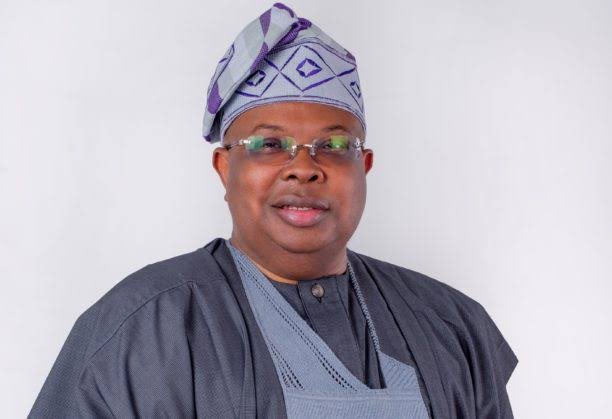
Power Minister Joseph Tegbe says recent electricity supply challenges across parts of Nigeria have been resolved, following the completion of maintenance work at Egbin Power Station.
Speaking on TVC on Monday, Tegbe said the government had addressed the problems that caused outages in four states, including Lagos and the Federal Capital Territory (FCT).
He had earlier blamed the disruptions on power station maintenance, gas supply constraints and alleged sabotage of transmission lines.
“Number one, we’ve sorted out this little challenge we had in the last few days. It was painful for most of you. But look, we fixed it. And we will ensure that that stability remains. My focus is to ensure grid stability,” he said.
Tegbe also confirmed that electricity had returned to several parts of Lagos after making personal calls to check the situation.
“I’m sure in Lagos, I confirm as at last night because I made personal calls, Ajah, Leki, Ikoyi, Magodo, Ikeja, lights are back,” he said.
He added that residents had confirmed the improvement through messages and urged Nigerians to remain patient as efforts to improve power supply continued.
The minister projected that Nigeria could achieve more stable electricity within three to five years. He said some improvements were already visible despite the recent disruptions.
Tegbe explained that strengthening the country’s electricity system would require more infrastructure and additional generation and transmission capacity. He noted that growing demand from artificial intelligence, data services and people working from home made reliable electricity increasingly important.
The minister also announced plans for a $2 billion east-west super grid designed to increase transmission capacity from about 4,000 megawatts to 19,000 megawatts.
The proposed network will connect Funtua, Gwagwalada, Ikot Ekpene, Benin, Epe and Ilorin. According to Tegbe, procurement has started, with completion expected within two years.
He said the wider infrastructure improvements would help deliver more reliable electricity over the next three to five years.
“So give me a time horizon of three to five years. Nigeria will enjoy stable life. And as demand improves, it will get better,” he said.

