

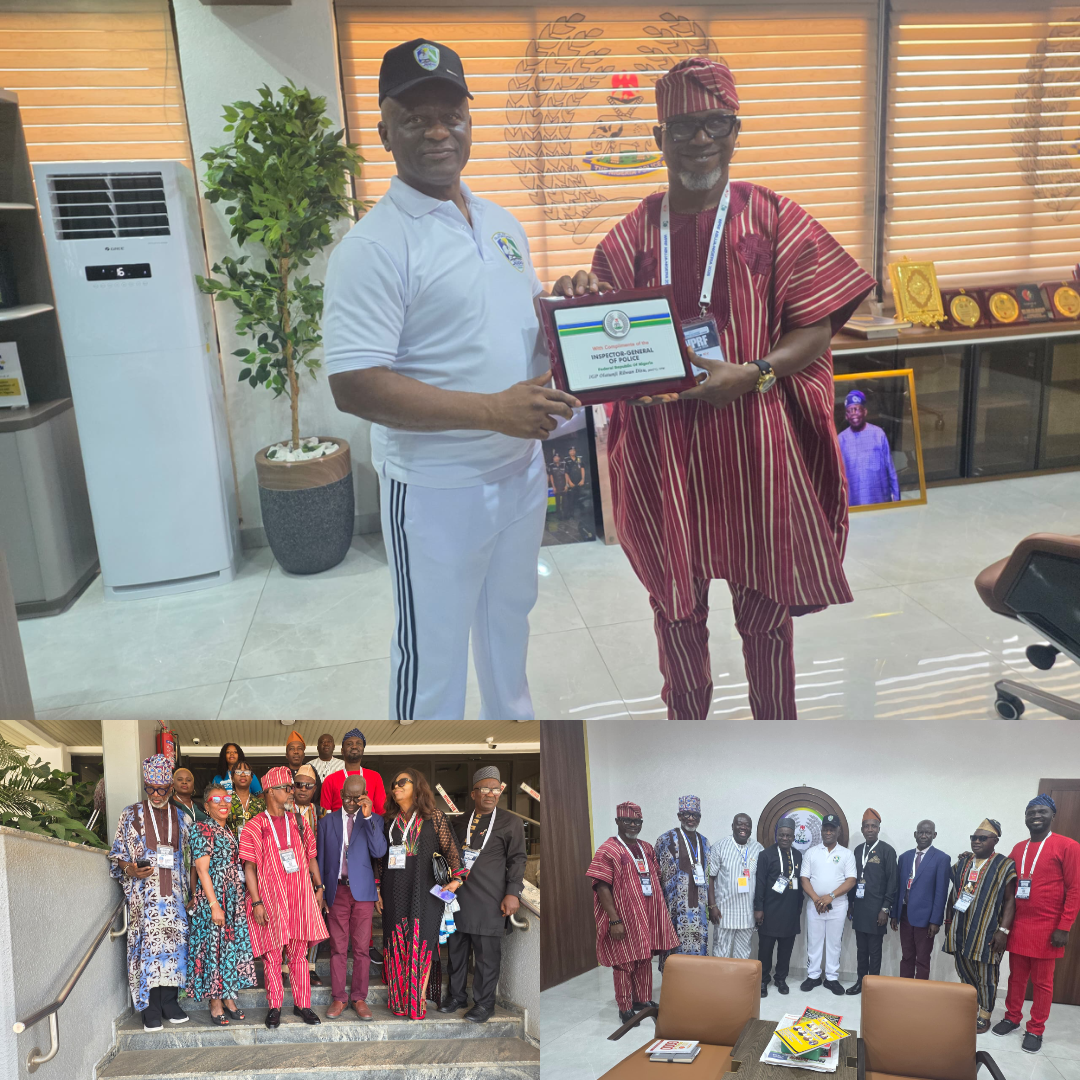
The professional body says it is proud of Disu, a member of its Lagos chapter, as the IGP recalls how members provided him with intelligence and feedback on police officers during his command in Lagos
The Lagos State Chapter of the Nigerian Institute of Public Relations (NIPR) has commended the Inspector-General of Police, IGP Olatunji Rilwan Disu, for his leadership and policing efforts, expressing satisfaction with the changes taking place in the Nigeria Police Force under his watch.
The commendation was made during a courtesy visit by a delegation of the institute, led by its Lagos State Chairman, Dr. Samuel Ayetutu, to the Inspector-General at the Force Headquarters in Abuja, the delegation congratulated Disu on his leadership and expressed its readiness to strengthen its relationship with the Police Force through sustained professional engagement and collaboration.
Ayetutu said the chapter was particularly proud of Disu because he was one of its members, adding that the institute had continued to follow his activities and appreciate his efforts in improving policing, he said the visit was an opportunity for the Lagos chapter to identify with one of its own, acknowledge his work and encourage further collaboration between the professional body and the Police Force.
The NIPR chairman said the chapter had observed positive developments in the policing system and was encouraged by the direction of the Force under Disu, he stressed the need for stronger engagement between the police and professional organisations, particularly the NIPR, noting that public relations practitioners could contribute meaningfully to improving public perception, communication and confidence in the institution.
Responding, Disu recalled the relationship he had maintained with members of the Lagos NIPR chapter during his time as Commander of the Rapid Response Team in Lagos, explaining that members of the institute were among those who regularly provided him with information about the activities and conduct of police officers.
He said the information provided by members helped him stay informed about developments involving officers on duty, including instances of good performance and misconduct , the feedback was not restricted to complaints, as members of the public also reported positive experiences and commended officers who discharged their responsibilities professionally.
The Inspector-General explained that whenever information about an officer’s misconduct reached him, he would invite the officer and address the issue, while reports of commendable performance also helped identify personnel deserving of recognition. He noted that some officers were often surprised by how information about their activities reached him, unaware that he maintained a wide network of people who provided feedback from different locations.
Disu used the engagement to emphasise that policing was a collective responsibility involving the entire population, insisting that officers must understand the importance of their relationship with the people they were employed to protect. He said the police could not effectively perform their duties without the cooperation of citizens and urged personnel to maintain positive interactions with members of the public.
He reminded officers that the Police Force was funded with taxpayers’ money and that citizens deserved to be treated with dignity and respect whenever they approached the police for assistance. He said the circumstances that brought people to police stations were often difficult, adding that officers should ensure that citizens did not leave in a worse emotional or physical state because of the manner in which they were treated.
The IGP also clarified the limits of police responsibilities in certain civil disputes, particularly disagreements between landlords and tenants. He explained that such matters were not necessarily within the jurisdiction of the police but said officers could still assist by advising those involved on the appropriate legal procedures, including writing to the court and pursuing the matter through the proper channels, rather than allowing the police to be used to settle disputes outside their mandate.
Disu expressed appreciation to the Lagos NIPR chapter for its continued relationship and support, while congratulating the chapter and welcoming its willingness to remain involved in initiatives that could improve policing. He expressed optimism about further collaboration, particularly in strengthening communication, information sharing and the relationship between the Police Force and the public.
Also speaking during the engagement, the Senior Special Adviser to the Inspector-General of Police on Media, BabaTunji Wusu, said public relations could not be successfully handled by one person or a single component of an organisation.
He described it as an inclusive responsibility requiring the contributions of different stakeholders, noting that every component had a role and an impact in shaping an institution’s relationship with the public.
Tunji welcomed the engagement between the NIPR and the Police Force, describing the emerging relationship as a positive development that could strengthen professional cooperation and public communication. He said the Police Force was ready to work with relevant stakeholders, stressing that effective public relations required synergy and the contributions of different people and institutions working towards a common objective.
The visit ended with the Lagos NIPR chapter reaffirming its support for Disu and expressing its commitment to deeper collaboration with the Nigeria Police Force, particularly in promoting professionalism, accountability, effective communication and stronger police-public relations.

