

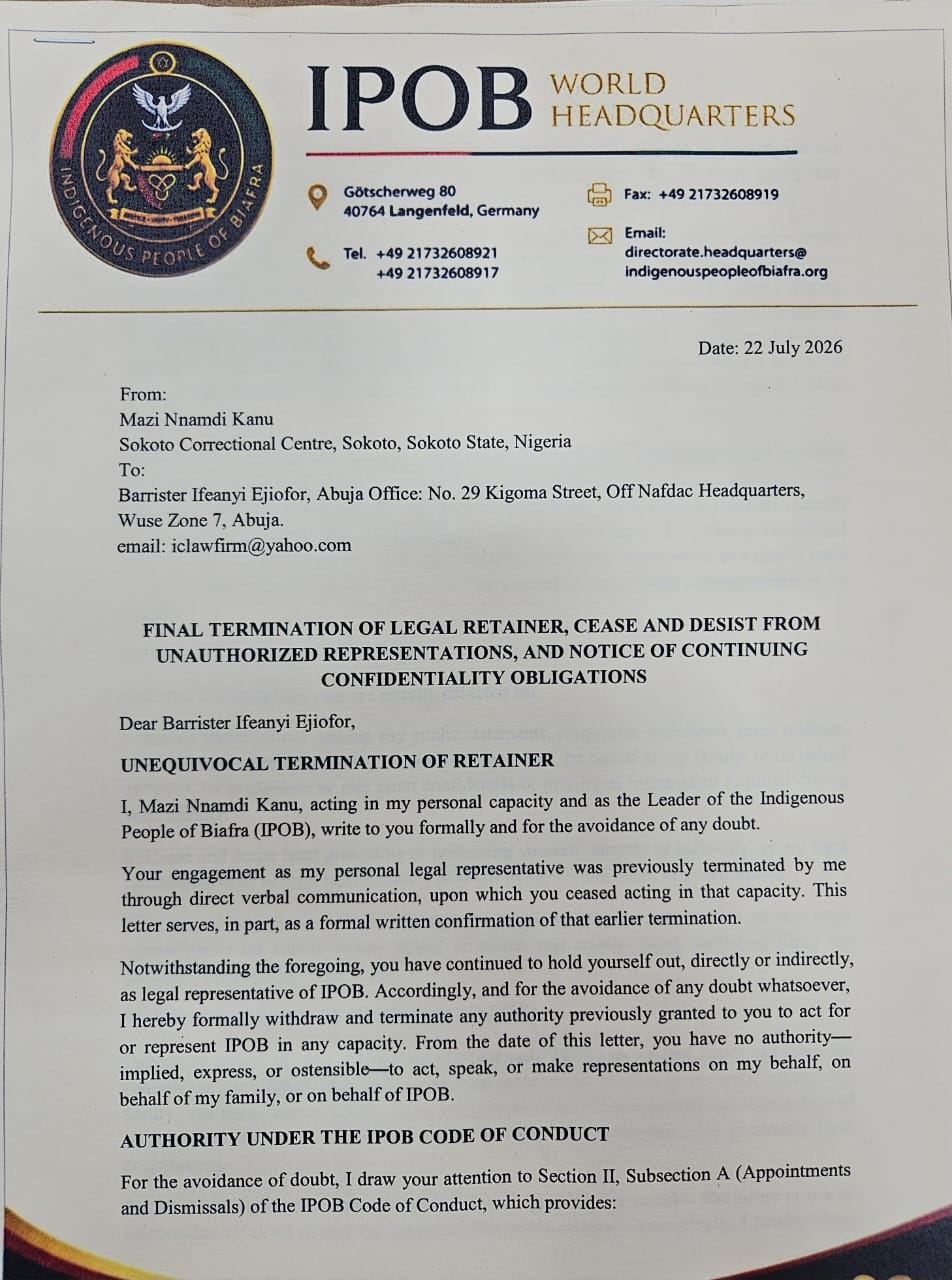
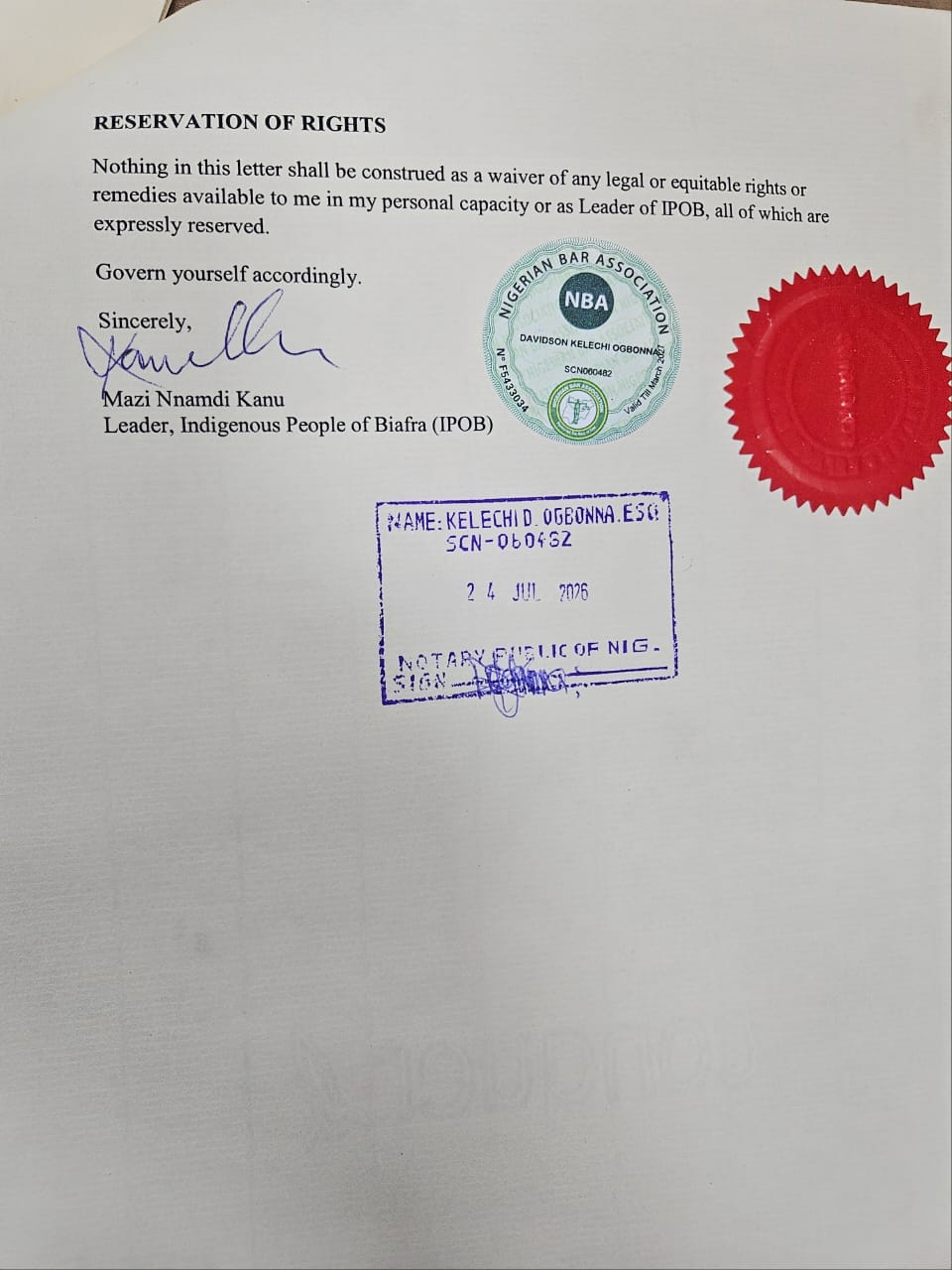
The leader of the Indigenous People of Biafra (IPOB), Nnamdi Kanu, has formally terminated the services of his longtime personal lawyer, Barrister Ifeanyi Ejiofor, directing him to immediately stop representing him, his family or IPOB in any capacity.
In a letter dated 22 July 2026 from the Sokoto Correctional Centre, Nnamdi Kanu said he had previously ended Ejiofor’s engagement verbally, adding that the latest correspondence served as formal written confirmation of the decision.
Kanu also withdrew any authority previously granted to Ejiofor to act or speak on behalf of IPOB, maintaining that the lawyer no longer has any express, implied or ostensible authority to represent the organisation.
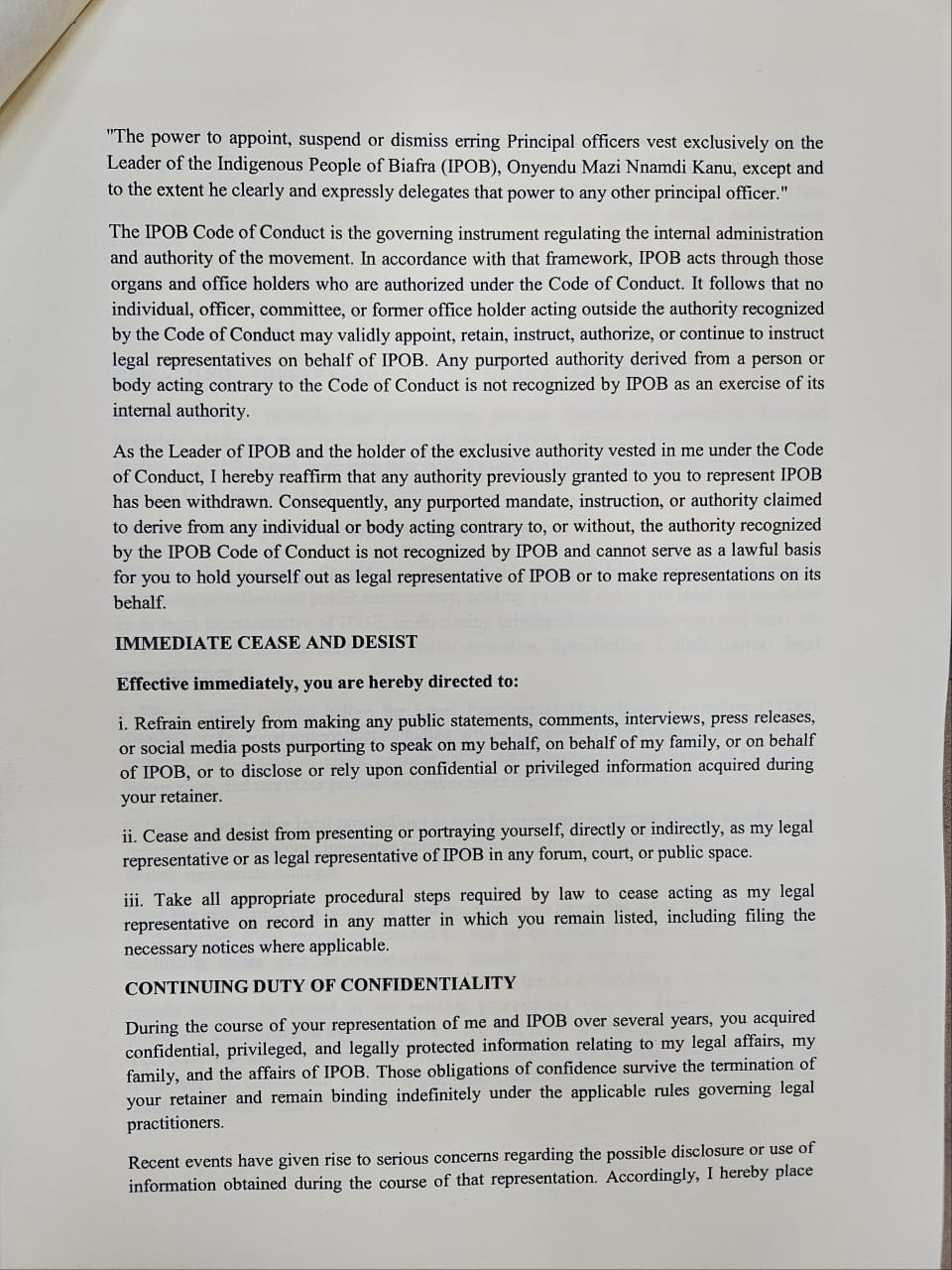
Citing Section II, Subsection A of the IPOB Code of Conduct, Kanu stated that only the IPOB leader has the authority to appoint, suspend or dismiss principal officers unless that power is expressly delegated. He added that no individual, committee or former office holder acting outside the code can validly appoint or retain legal representatives for the group.
As a result, Nnamdi Kanu said any mandate previously claimed by Ejiofor to represent IPOB is no longer recognised.
He further directed the lawyer to stop making public statements, granting interviews, issuing press releases or publishing social media posts on behalf of him, his family or the organisation. Kanu also instructed Ejiofor to withdraw from any pending legal matters where he remains counsel on record.
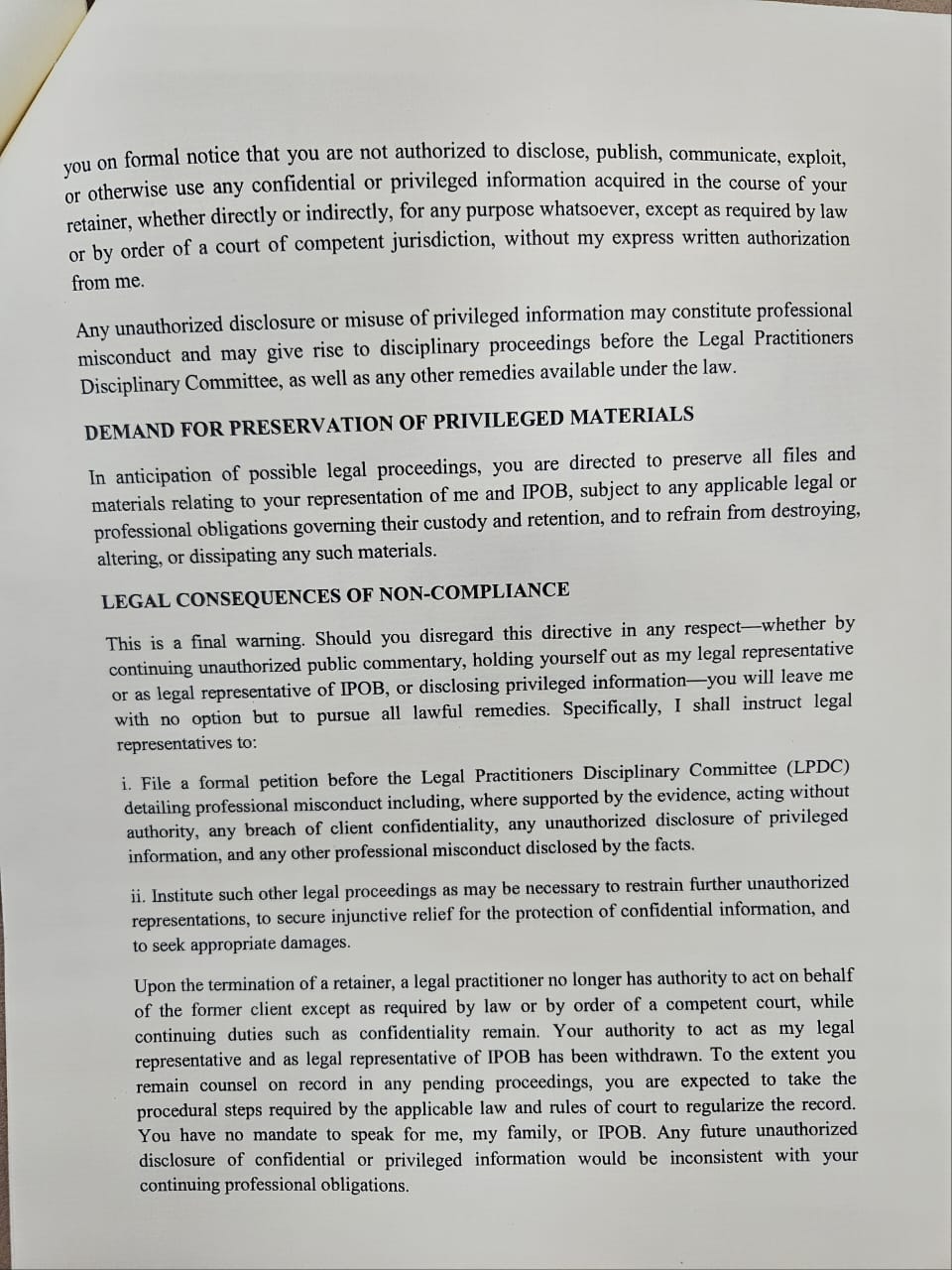
“Accordingly, I hereby place you on formal notice that you are not authorized to disclose, publish, communicate, exploit, or otherwise use any confidential or privileged information acquired in the course of your retainer, whether directly or indirectly, for any purpose whatsoever, except as required by law or by order of a court of competent jurisdiction, without my express written authorization from me.
“Any unauthorized disclosure or misuse of privileged information may constitute professional misconduct and may give rise to disciplinary proceedings before the Legal Practitioners Disciplinary Committee, as well as any other remedies available under the law,” parts of the statement read.
Kanu also warned that any unauthorised disclosure of confidential or privileged information could amount to professional misconduct and attract disciplinary action before the Legal Practitioners Disciplinary Committee (LPDC), in addition to other legal remedies.
Do you think public disputes between clients and legal representatives can affect confidence in legal proceedings?
About Author


