
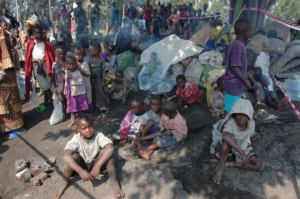
Fighting in North Kivu is threatening the lives of children. Tens of thousands of children have been displaced in the last weeks, in the confusion of flight children have been separated from their parents. Already malnourished children are now even more vulnerable. In the crowded makeshift camps measles and cholera are growing dangers. Thousands of children are unable to start the school year. Armed groups are using at least a 1000 children and more are being recruited. UNICEF, through a network of partners, is assisting 60,000 people around Muganga and Minova in the Kivus. UNICEF is identifying separated children and reunifying them with their families. Rape survivors are being given medical and psychosocial support. Clean water distribution and latrines have been set up. Displaced families have received temporary shelter materials, bedding and cooking sets. All children under the age of 14 are being vaccinated against measles and pregnant women against neo natal tetanus. 2000 children have been screened for malnutrition. Emergency education programmes have started. UNICEF’s partners are AVSI, Caritas, the International Rescue Committee, Heal Africa, the Norwegian Refugee Council, Save the Children UK, Solidarités, World Vision International and the provincial health service of the Democratic Republic of Congo. UNICEF has assisted 350,000 displaced persons since the start of fighting in Sake last November. UNICEF’s actions are part of a coordinated response with other UN organizations; Office Coordination for Humanitarian Affairs, United Nations High Commission for Refugees, World Food Programme, World Health Organisation & The Mission of the United Nations in the Democratic Republic of Congo. Despite all this the majority of displaced persons remain inaccessible due to the fighting. UNICEF calls upon all parties to the conflict to; protect the rights of children, end the recruitment of children and ensure humanitarian access to all displaced persons.

More than 24,000 people have fled their homes in the past month due to renewed violence in Kasai in the Democratic Republic of Congo, the United Nations said Friday.

The UN Refugee Agency said violence in the south-central region forced 1.4 million to flee in 2017 – and it is concerned that renewed tensions could trigger another wave of mass displacement.

“Until recently, the region had experienced a relative period of uneasy calm,” UNHCR spokesman Babar Baloch told a press briefing in Geneva.

“But in the past month, more than 24,000 people have fled three separate conflicts related to land disputes, clashes over resources, and confrontations between different ethnic groups, authorities and militias.”

He said those newly displaced were reporting that “killings, rape, torture, looting and burning of homes” had taken place in recent weeks.

Baloch said that in Katende in central Kasai, clashes between two communities over mineral and timber resources had worsened throughout August.

The UNHCR has so far distributed plastic sheeting, blankets, soap and cooking kits to more than 4,000 people, while thousands more have received shelter kits and cash to buy food.

“UNHCR is calling for renewed focus on the Kasai to restore peace and defuse tensions,” said Baloch.

The agency is also concerned for the safety of some 16,000 Congolese expelled from Angola last year, who are now living in precarious conditions in near-inaccessible areas in the region.

The UNHCR is assessing road conditions should their situation deteriorate further and urgent humanitarian assistance is required.

(AFP)


About Author

Show Buttons
Hide Buttons