
By peterside Rejoice
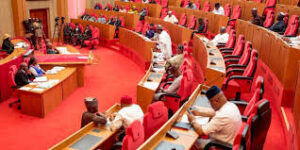
The National Assembly Joint Committee on Cooperation and Integration in Africa and NEPAD has approved the 2025 budget performance of the AUDA-NEPAD Nigeria following a detailed review of its financial records and implementation claims.
The approval was granted during a joint budget defence session on Wednesday after a motion to that effect was moved and seconded by members of the committee.
However, the endorsement came after lawmakers subjected the agency’s management to intense scrutiny over discrepancies in reported fund utilisation, particularly its declaration of “nil utilisation” despite acknowledging a 24 per cent capital release.
Committee members challenged the claim, drawing attention to several budget lines that reflected partial spending. They cited figures including N15 million spent out of N50 million, N19 million out of N300 million, N22.5 million out of N75 million and N60 million out of N200 million, arguing that these entries clearly indicated utilisation.
Responding, the National Coordinator and Chief Executive Officer of AUDA-NEPAD Nigeria, Hon Jabiru Salisu Abdullahi Tsauri, explained that the 24 per cent referenced an administrative release approved as part of a 30 per cent tranche agreement between the Executive and the National Assembly but not fully backed by cash for implementation.
He disclosed that the agency had formally written to the Office of the Accountant General of the Federation over a six per cent shortfall and other funding gaps that affected execution of projects.
Not satisfied with verbal clarifications alone, the committee directed the agency to submit all supporting documents within 48 hours, including correspondence and letters of instruction relating to the capital releases.
Beyond the 2025 performance assessment, lawmakers also examined the agency’s 2026 budget proposal and raised concerns about vague descriptions in several zonal intervention projects. Members observed that some line items lacked clear project locations and detailed cost breakdowns, which they said could undermine accountability and effective oversight.
The committee subsequently instructed the agency to revise and resubmit aspects of the proposal with clearer project descriptions to improve transparency.
Compliance with the federal character principle also came under review. An examination of the agency’s nominal roll suggested imbalances in staff representation across states and regions. While Tsauri maintained that staff postings are handled by the Office of the Head of Service, the agency’s Human Resources representative admitted that full compliance had not yet been achieved.
The committee stressed that adherence to the federal character principle is mandatory for all government institutions and urged management to collaborate with relevant authorities to address the disparities.
Lawmakers further expressed support for a proposed bill seeking to grant NEPAD full commission status, a move that would empower the agency to independently recruit and manage its personnel. The committee pledged to prioritise consideration of the bill once formally presented before the National Assembly.
After deliberations, the committee approved the agency’s 2026 budget proposal of N9.52 billion, comprising N328.6 million for personnel costs, N549.8 million for overhead and N8.64 billion for capital projects.
Nevertheless, lawmakers cautioned the agency against committing to projects without confirmed cash releases and emphasised the need for prudent financial management and strict transparency in implementation.
Speaking with journalists after the session, Tsauri described the approval of both the 2025 performance and the 2026 proposal as a reaffirmation of accountability mechanisms within government.
“This is an annual process. We are accountable to the people of Nigeria through the National Assembly. I am fully satisfied that our 2025 budget performance has been approved and that our 2026 proposal has also received the endorsement of the Joint Committee,” he said.
He acknowledged that funding delays remain a systemic challenge across government agencies, noting that budgetary allocations must be supported by timely releases to ensure effective execution.
“It is well known that without releases, budgets cannot be implemented as planned. We experienced challenges in 2024 and 2025 due to release constraints,” he stated.
Tsauri, however, commended President Bola Ahmed Tinubu for ongoing fiscal reforms aimed at improving funding efficiency and expressed optimism that current measures would enhance budget performance going forward.
“As a growing nation, reforms are continuous. Adjustments will be made until sustainable solutions are achieved, and we are already seeing progress under this administration,” he added.
About Author


