

Agency warns proposed institute would duplicate existing roles, strain resources, and undermine ongoing rehabilitation efforts
By Rejoice Peterside
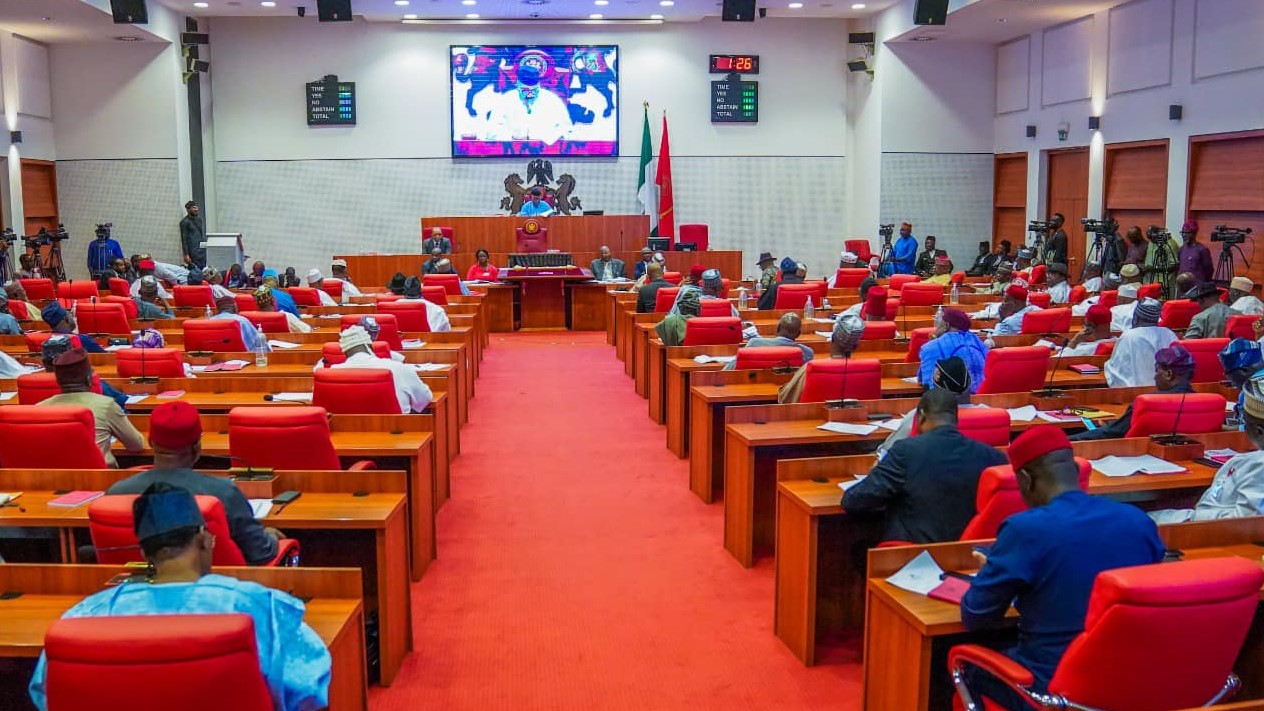
Senate on Tuesday held a one day public hearing on a bill seeking to establish the National Institute on Drugs Awareness and Rehabilitation, sparking intense debate among stakeholders over the need for a new agency dedicated to drug education, rehabilitation, and reintegration.
Organised by the Senate Committee on Drugs and Narcotics, the public hearing brought together representatives from various federal ministries, agencies, and civil society groups to deliberate on the proposed legislation, sponsored by Senator Rufai Hanga.
While some stakeholders praised the bill as a timely intervention in Nigeria’s worsening drug abuse crisis, others argued that it would duplicate the functions of the National Drug Law Enforcement Agency (NDLEA) and strain limited government resources.
In his address at the hearing, Senator Hanga said the bill was designed to address the growing gap in Nigeria’s current response to drug abuse, which he described as enforcement-heavy and lacking in sustained rehabilitation and public awareness.
Backing the proposal, another senator, who had earlier proposed a similar bill for a National Centre for Substance Abuse Management in Delta State, stated:
“NDLEA’s primary mandate is interdiction and enforcement, but the real crisis lies in rehabilitation, school outreach, and long-term reintegration. During my recent visit to my constituency, I was approached by a student-led NGO with a draft bill on this same issue. That tells you how urgent and widespread the concern is.”
Ministry of Justice, NDLEA Oppose Bill, Cite Duplication and Waste
However, officials from the Federal Ministry of Justice and NDLEA strongly opposed the proposed law, asserting that the agency already carries out most of the proposed institute’s responsibilities.
“All the functions listed in the bill awareness campaigns, rehabilitation, school sensitisation, and research are already being implemented by NDLEA. We collaborate with the Ministry of Health, have training institutes, and operate rehab centres across our commands. Creating a new agency would lead to duplication, resource wastage, and inter-agency conflict.”
The Ministry of Justice submitted that instead of creating a new institute, existing agencies like NDLEA and NAFDAC should be empowered and funded to expand their operations. They also cited sections of the 1988 UN Convention on Psychotropic Substances, which describe a multidisciplinary agency model that NDLEA already embodies.
Federal Ministry of Health Urges Senate to Strengthen Existing Institutions
The Federal Ministry of Health and Social Welfare aligned with the Ministry of Justice’s position, warning that establishing a new agency could undermine years of policy development and inter-agency coordination.
“We already oversee drug demand reduction services, operate treatment and rehab centres, and maintain evidence-based data systems. Instead of creating a parallel structure, we urge the Senate to strengthen existing frameworks and promote legal backing for ongoing programs through an Act.”
The ministry also recommended incorporating drug treatment into state health insurance schemes and advocated for the inclusion of drug education in primary and secondary school curricula.
The Nigerian Correctional Service (NCoS) and Nigeria Customs Service took a contrasting stance, endorsing the bill while advocating for inter-agency collaboration and inclusion in the proposed institute’s governance structure.
The NCoS pointed out that it oversees the custody and rehabilitation of over 1,900 inmates involved in drug-related offences.
“Our omission from the bill’s governance and operational framework is a gap that must be addressed. We gather intelligence and rehabilitate offenders daily,” a representative said.
Similarly, the Nigeria Customs Service emphasized that drug-related crimes are increasing at an alarming rate and underscored the strain on enforcement agencies.
“We have just about 200 psychiatrists in Nigeria, meaning one psychiatrist for every million citizens. With over 14.4% of Nigerians reportedly addicted to drugs, we need a dedicated national institution to coordinate awareness and rehabilitation. The time to act is now,” a Customs official said.
The Federal Ministry of Women Affairs supported the bill, urging the inclusion of a female representative on the proposed institute’s board and advocating for family-oriented rehabilitation programs.
“Addiction affects women and children disproportionately. We must ensure that the institute is gender-sensitive and inclusive in its structure and services,” the ministry submitted.
On the other hand, the National Agency for the Prohibition of Trafficking in Persons (NAPTIP) cautioned against establishing a new body, warning that it may create “fragmented services, resource conflicts, and diminished efficiency.”
“We already work closely with NDLEA on cases where drug abuse and trafficking intersect. Creating another agency could complicate this synergy and cause operational confusion.”
In his closing remarks, the Chairman of the Senate Committee on Drugs and Narcotics, Senator Ibrahim Dankwambo thanked all stakeholders for their submissions and assured that the committee would carefully weigh the arguments on both sides.
“This hearing has underscored the urgency of tackling Nigeria’s drug crisis. Whether through a new institution or strengthening existing ones, what matters most is impact, efficiency, and sustainability,” the Chairman said.
The bill will proceed to further readings and committee reviews in the coming weeks, as the Senate considers the most strategic approach to improving Nigeria’s national drug response.
Over 1,900 inmates undergoing rehabilitation in correctional facilities.

