
By Adekoya Samson, Abuja
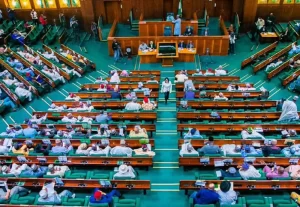
The House of Representatives on Tuesday abruptly adjourned its plenary session for one week following a protest by local contractors demanding payment of outstanding funds for projects executed under the 2024 Budget.
The adjournment came amid widespread criticism over the delay in presenting the 2026 Budget by the Presidency, as well as an earlier protest by retired police personnel at the National Assembly gate.
The decision was prompted by a motion of urgent public importance moved by Hon. Kingsley Chinda (PDP, Rivers) under Order 8 Rule 5 of the House Rules. The motion, titled “Need for the House to Intervene on the Non-Implementation of the 2024 Budget and Non-payment of Local Contractors,” was seconded by the Chief Whip, Hon. Bello Kumo.
Leading the debate, Hon. Chinda lamented that legislative activities at the National Assembly had been disrupted by the ongoing demonstration of local contractors who were demanding payment for projects completed since January 2024.
He recalled that several meetings had been held between the House leadership, the Minister of Finance, and the Minister of Budget and National Planning, but the issue remained unresolved. Chinda noted that funds for the contractors’ payment were duly provided for in the 2024 Budget and urged the House to mandate relevant government officials to begin payment within seven days.
However, when Deputy Speaker Hon. Benjamin Kalu was about to put the motion to a vote, Hon. Ahmadu Maipalace (PDP, Zamfara) proposed an amendment calling for an immediate one-week adjournment to allow the federal government time to settle the contractors.
The Chairman of the House Committee on Rules and Business, Hon. Francis Waive, seconded the amendment, explaining that the contractors had vowed to make the chamber unconducive for legislative business if their demands were not met.
Following deliberations, the Deputy Speaker put the amended motion to a voice vote, and the House overwhelmingly agreed to adjourn plenary until Tuesday, November 11, 2025, to allow for resolution of the payment crisis.
About Author


