

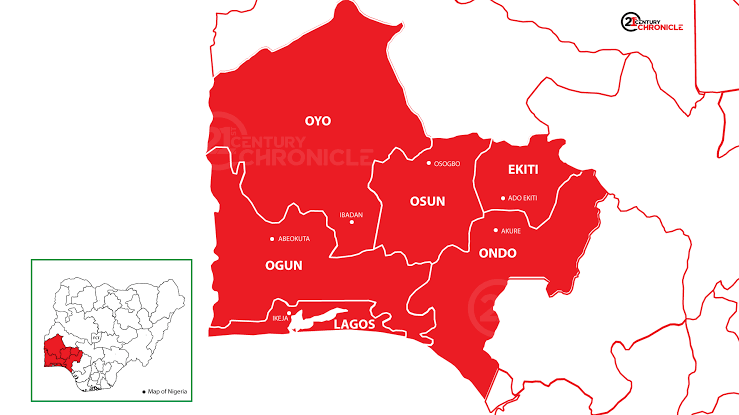
South-West fuel consumption remained the highest in Nigeria during the first half of 2026, with the region leading petrol, diesel and cooking gas demand.
The Major Energies Marketers Association of Nigeria (MEMAN) revealed in its Nigeria Half Year Downstream Industry Report that the South-West accounted for the largest share of petrol (PMS) consumption at 29.95 per cent. It was followed by North Central (18.36 per cent), North West (16.02 per cent), North East (10.11 per cent), South East (10.08 per cent) and South South (5.48 per cent).
The report also showed that the South-West topped diesel (AGO) consumption with 31.79 per cent, ahead of South South (19.65 per cent), North Central (17.30 per cent), North West (15.18 per cent), South East (8.40 per cent) and North East (7.68 per cent). In liquefied petroleum gas (LPG), commonly known as cooking gas, the region again ranked first with 41.20 per cent, followed by South South (18.72 per cent), North Central (14.97 per cent), South East (12.34 per cent), North West (11.09 per cent) and North East (2.07 per cent).
Lagos State emerged as the country’s biggest consumer of petrol, diesel and cooking gas. It accounted for 12.56 per cent of petrol consumption, ahead of Ogun, the Federal Capital Territory, Oyo and Kano. Lagos also led diesel demand with 16.80 per cent, followed by Ogun, Rivers, Kano and Delta, while it recorded the highest cooking gas consumption at 17.55 per cent. The report identified Jigawa, Ebonyi, Yobe, Bayelsa and Ekiti as the states with the lowest petrol consumption.
MEMAN said South-West fuel consumption reflects the country’s economic activity, with the region remaining Nigeria’s largest downstream energy market. The report also noted that cooking gas showed the widest regional gap, highlighting significant growth opportunities outside the southern regions.
The report added that petrol supply peaked at 64.9 million litres per day in January 2026 before dropping in February due to global market tensions. Supply later recovered to about 50.6 million litres per day by June as the market shifted from imports to stronger domestic refining. Diesel supply also improved despite temporary disruptions linked to Middle East tensions, while LPG supply remained stable throughout the period, supported mainly by local production. According to MEMAN, sustained domestic refining and better logistics will be vital to meeting future South-West fuel consumption and improving energy distribution across Nigeria.
Do you think stronger local refining will reduce fuel costs and improve supply across all parts of Nigeria?

