
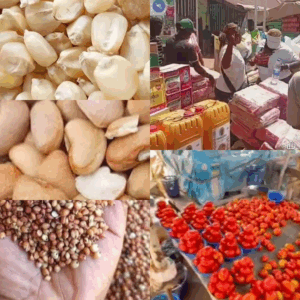
Inflation drops to 18%, yet market prices remain stubbornly high………
By Peterside Rejoice
Despite the National Bureau of Statistics announcing a drop in Nigeria’s headline inflation rate to 18.02 percent in September 2025, the lowest in nearly three years, the reality in major markets across the country tells a different story.
From provisions to household consumables, prices have remained stubbornly high, leaving traders and buyers questioning where exactly the relief is being felt.
According to the NBS, the inflation rate eased for the sixth consecutive month, declining from 20.12 percent in August to 18.02 percent in September, a feat the government has hailed as evidence of its ongoing economic reforms. Food inflation also reportedly declined to 16.87 percent, driven largely by seasonal factors, especially the ongoing harvest of grains such as maize, millet, and sorghum.
However, findings from markets in Abuja, particularly Karu and Nyanya markets, show that this statistical progress has not translated into cheaper goods on the shelves.
At the Karu Market in Abuja, Aisha Mohammed, a provisions trader who has operated her stall for more than seven years, expressed frustration at the widening gap between official figures and market realities.
“They are saying inflation has reduced, but the price of spaghetti, milk, and even noodles have not come down. I still buy a carton of spaghetti for N19,300, the same price as last month. Milk, too, is even going up because suppliers say transport from Lagos is still high,” she lamented.
One clear example is Golden Penny Spaghetti, one of the most consumed household products in Nigeria. In 2015, a carton was sold for about N2,000. It rose to N2,100 in 2016, N2,800 in 2017, N3,200 in 2019, N4,100 in 2020, N4,600 in 2021, N5,500 in 2022, and N7,600 in 2023. Now, in 2025, the same carton sells for as high as N19,300 in many retail shops.
According to her, customers are buying in smaller quantities, with many opting for sachets or half cartons instead of bulk purchases. “People just come and price, then walk away. We don’t even sell like before. Maybe inflation has gone down in papers, not in the market,” she added.
At the Nyanya Market, a different picture emerged from the grain section, where traders acknowledged a slight reduction in prices, which they attributed to the harvest season.
Suleiman Adamu, a grain merchant who has been in the business for over a decade, explained that the drop in prices of maize and millet was seasonal, not due to government intervention. “This is harvest period, so farmers are bringing new grains from the North. That is why maize is now N58,000 per bag, compared to N65,000 in August. Millet and guinea corn too have reduced slightly. But it is not because inflation has come down, it is because there is more supply now,” he said.
He noted that once the harvest season ends and transportation costs rise again, the prices are likely to climb back up.
One major factor traders continue to highlight is transportation cost. With fuel prices hovering around N900 per litre in some parts of the country and high interstate haulage charges, many suppliers and retailers say there is little room to reduce prices.
A transporter who identified himself as Emmanuel John, said moving goods from Kano to Abuja now costs nearly twice what it did a year ago. “Before, we charged N180,000 for a full truck. Now, it is N320,000 because diesel is too high. Even spare parts and tyres are costly. So, the trader will still add the transport cost to the goods before selling,” he explained.
Many traders in Karu and Nyanya said the situation is discouraging both sellers and buyers. Those who depend on daily income find it difficult to meet up with rising living costs, even though government data suggests improvement.
The federal government insists that its policies, including fiscal tightening, border efficiency, and support for local production, are yielding results. Officials from the Ministry of Finance maintain that the downward inflation trend is a sign of economic recovery.
But for ordinary Nigerians, the celebration seems premature.
Aisha Mohammed summed up the general mood at the market: “We hear that things are getting better, but our pockets say otherwise. If inflation has truly gone down, let it show in the market, not just in the news.”
While Nigeria’s inflation figures may suggest progress, the situation in local markets paints a more complex picture. The price of grains may have eased due to seasonal harvests, but essential goods and processed items remain out of reach for many families.
Until transportation costs drop, local production strengthens, and supply chains stabilize, the average Nigerian will continue to feel the weight of inflation, regardless of what the numbers say.
About Author


