

By Jerry Williams
At least 30 people have died and more than 354,000 have been impacted by relentless flooding in India’s northern Punjab state, where authorities have now declared all 23 districts as flood-hit.
Rivers and reservoirs have surged to near-danger levels, submerging roads, homes, and farmland. The Sutlej, Beas, and Ravi rivers continue to overflow, putting hundreds of low-lying areas at serious risk.
Officials evacuated around 20,000 residents from vulnerable zones and established hundreds of relief camps to offer emergency shelter and essential supplies.
Chief Minister Bhagwant Mann described the floods as the worst since 1988 and urged the nation to “stand by the state” during the crisis. Touring the flood-hit Ferozepur district by boat on Tuesday, he said the situation was grim and appealed to the federal government for immediate aid.
Punjab, often called the “food basket” of India, is seeing widespread devastation across its agricultural belt. The state government reported that torrential rains have damaged crops across nearly 148,000 hectares of farmland. With nearly a quarter of the state’s 30 million people reliant on agriculture, concerns over rural livelihoods are mounting.
Residents along riverbanks are keeping vigil throughout the night, watching for rising water and patching up vulnerable dams with sandbags. “The water is high. The dam is seeping… wherever it breaks, we fix it,” Jasveer Singh, a villager in Sabra, told BBC Punjabi.
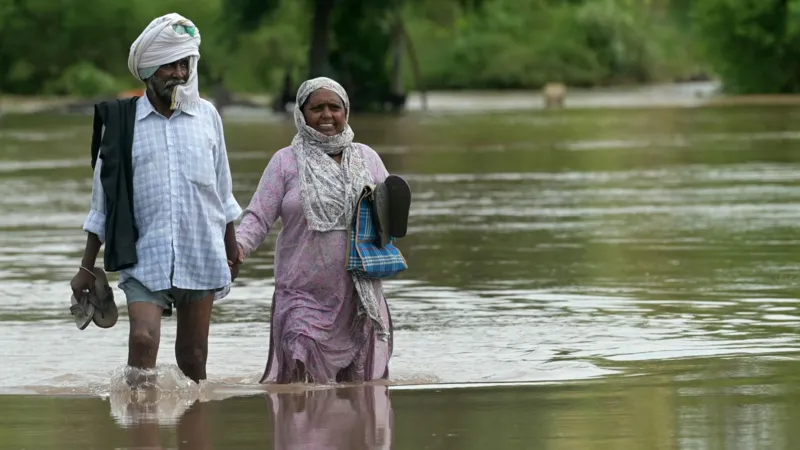
In Ludhiana, floodwaters have poured into homes, leaving furniture floating in the streets. Images from across the state show rescue teams navigating submerged villages in boats while residents wade through waist-high water with belongings and cattle.
Rescue efforts have intensified with the deployment of multiple disaster response teams. The Indian Army, Air Force, and Navy have mobilized over 100 boats and 35 helicopters to reach stranded families.
India’s meteorological agency attributes the unprecedented rainfall to a clash between active monsoon currents and western disturbances. These systems have drenched not only Punjab but several other northern states.
Meanwhile, across the border, Pakistan’s Punjab province is facing a parallel crisis. More than two million people there have been affected by similar flooding over recent weeks, worsening the regional humanitarian emergency.

