

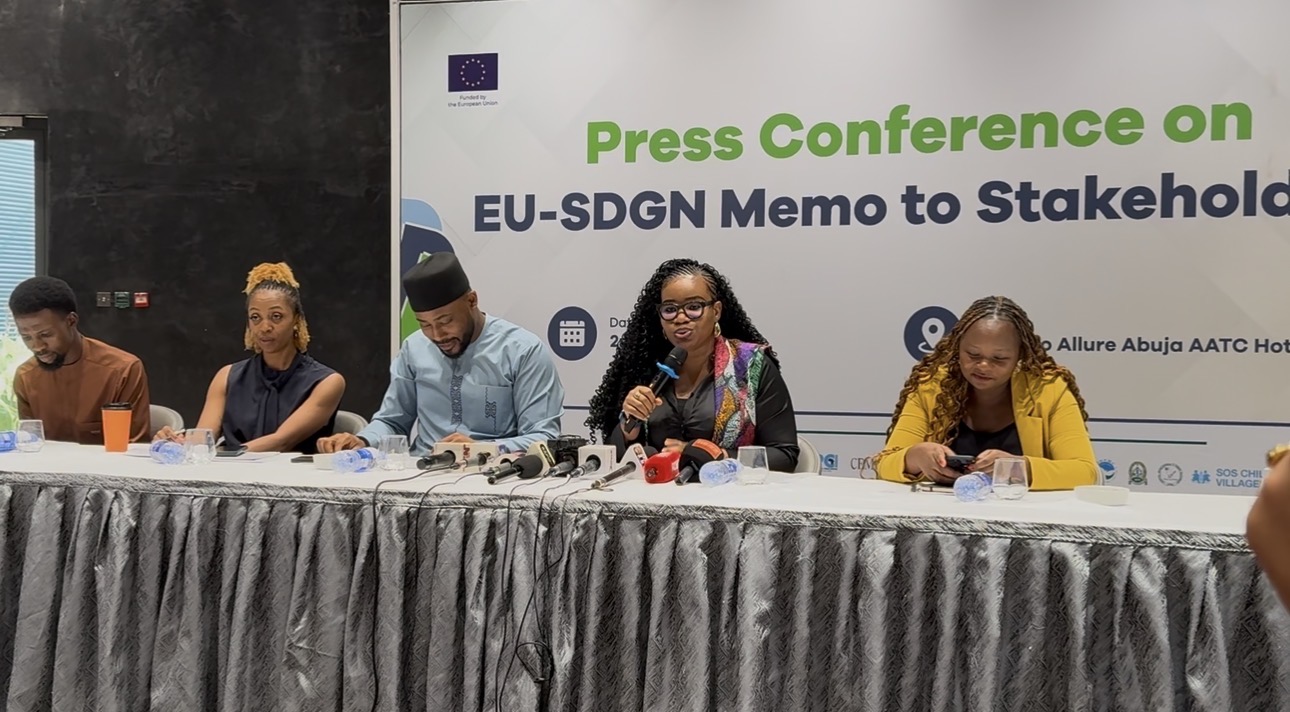
Six civil society organisations have challenged the Independent National Electoral Commission (INEC) to provide Nigerians with verifiable evidence of its preparedness for the 2027 general elections, particularly the readiness of its election technology, results management systems, logistics and personnel.
The organisations made the demand in an open memorandum issued ahead of INEC’s World Press Conference on preparations for the elections, warning that decisions being taken now by electoral authorities, political parties, security institutions and other public bodies would have a direct bearing on the credibility, peaceful conduct and acceptance of the outcome of the polls.
The memorandum was endorsed by the Centre for Media and Society, International Press Centre, Nigerian Women Trust Fund, TAF Africa, The Kukah Centre and Yiaga Africa.
The groups noted that INEC has scheduled the presidential and National Assembly elections for January 16, 2027, while the governorship and State House of Assembly elections are fixed for February 6, 2027.
With the first round of voting approaching, the organisations said there was little room for avoidable delays, weak coordination or inadequate public information, particularly in an environment already affected by insecurity, inflammatory campaign rhetoric and concerns over public confidence in state institutions.
They called on all stakeholders to take urgent, practical and verifiable steps to strengthen the electoral process, insisting that public confidence should be built on evidence that citizens, political parties and observers can independently examine.
On election funding, the CSOs urged the Federal Government to ensure the timely release of adequate funds to INEC to enable the Commission to properly plan and execute its electoral operations.
They said election logistics remained a critical component of effective election administration and that late funding could affect procurement, deployment of materials, recruitment and training of personnel and other preparations required ahead of polling.
The organisations also noted that the 2027 elections would be conducted under security conditions different from those of previous general elections, requiring INEC to make additional logistical arrangements for polling locations and other election operations in areas affected by insecurity.
They therefore stressed that timely funding was necessary not only for routine election activities but also for contingency planning and the deployment of resources to locations where security and infrastructure challenges could complicate election operations.
The CSOs also called on the Federal Government to begin the process of appointing national commissioners whose tenure is expected to end later this year.
According to them, the appointments should be based on independence, competence, integrity and proven capacity, stressing that members of the Commission’s leadership must be people capable of inspiring confidence among citizens and stakeholders.
They urged the government to ensure that individuals appointed to the Commission are non-partisan and possess the requisite knowledge, character and experience to contribute effectively to the administration of the 2027 elections.
The organisations said delays in filling vacancies in critical positions could affect institutional continuity and urged that the process be concluded early enough to allow incoming commissioners to properly understand their responsibilities ahead of the polls.
INEC readiness dashboard demanded
Turning to INEC, the CSOs said the Commission must move beyond general assurances and provide regular, verifiable evidence of its operational preparedness.
They asked INEC to publish a detailed readiness dashboard containing measurable indicators and deadlines covering procurement, delivery, storage and secure distribution of sensitive and non-sensitive election materials.
The dashboard, they said, should also provide information on contingency arrangements for polling locations and other election facilities affected by insecurity, poor infrastructure or other operational challenges.
The organisations argued that such information would enable citizens, political parties, observers and other stakeholders to track progress rather than rely solely on broad statements of preparedness.
They also called on INEC to publish regular readiness reports identifying responsible officials, timelines and measurable targets for different aspects of election preparation.
On election personnel, the groups demanded greater transparency in recruitment and training.
They urged INEC to disclose the criteria for recruiting election personnel, the number of personnel required and engaged, training schedules, deployment plans and welfare arrangements for ad hoc staff who will participate in the elections.
The organisations said vacancies in critical positions should be filled transparently and early enough to strengthen institutional capacity, preserve institutional memory and ensure operational continuity throughout the election cycle.
Focus on BVAS, IReV and results management
A major part of the memorandum focused on election technology, particularly the Bimodal Voter Accreditation System (BVAS) and the INEC Result Viewing Portal (IReV).
The organisations called on INEC to explain in clear and accessible language how the Electoral Act 2026, its regulations and guidelines would govern voter accreditation, polling-unit results, collation and publication of results.
They specifically requested clarification on the use of electronic Form EC8A and how electronic results would be managed from the polling unit through the different stages of collation and final publication.
The CSOs also demanded comprehensive stress tests of key technologies intended for the 2027 elections, including BVAS and IReV, with the results of those tests made public.
They said it was not enough for INEC to simply assure Nigerians that its systems were ready, arguing that the Commission should provide evidence demonstrating that the technology could withstand the operational demands of a nationwide election.
The groups further demanded that INEC publish clear fallback procedures that would apply in the event of technological failures.
They also called for transparent audit trails showing how corrections are made and how delayed uploads of election results are handled, saying such procedures would help strengthen confidence in the integrity of the results-management process.
2023 IReV glitch must be addressed
The organisations placed particular emphasis on the technical difficulties experienced with the uploading of results to IReV during the 2023 presidential election.
They demanded that INEC publish verifiable evidence demonstrating that the problem has been identified and rectified before the 2027 polls.
According to the groups, the readiness of the database, IReV and other election technologies should be independently assessed before the elections to reduce the possibility of a recurrence of the difficulties experienced in 2023.
They called for the improvements to be subjected to further verification by observers during INEC’s planned mock accreditation exercise.
The organisations said the exercise should provide an opportunity for stakeholders to examine the performance of the technologies and determine whether the systems are capable of supporting the demands of the 2027 elections.
PVC collection, downloadable voter cards
The CSOs also raised concerns about voter access to Permanent Voter Cards and called on INEC to publish comprehensive guidelines for their collection and distribution.
They said the guidelines should clearly outline the logistical arrangements, locations, personnel and other resources required to ensure that eligible voters are not prevented from collecting their cards before the elections.
The organisations also asked INEC to clarify arrangements for downloadable voter cards and issue clear instructions to its officials on how such cards should be handled during the elections.
They cited an incident in Osun State in which some officials were reportedly unaware that certain voters had downloadable voter cards, warning that similar gaps in awareness could result in eligible voters being denied the opportunity to vote.
They therefore urged INEC to ensure that all personnel are adequately trained and provided with clear, uniform instructions on the various voter-identification arrangements applicable to the 2027 elections.
Parties urged to reject hate speech, intimidation
The memorandum also placed significant responsibilities on political parties and candidates, urging them to make the 2027 campaigns about genuine policy choices rather than fear, exclusion and inflammatory rhetoric.
The organisations called on parties and candidates to avoid messages that stigmatise communities or inflame ethnic, religious, gender-based or regional divisions.
They urged political parties to comply with the existing electoral code of conduct and the peace accord signed by political actors, while also taking disciplinary action against members who repeatedly violate agreed standards.
Parties and candidates were further urged to promptly correct false or malicious claims circulated on their behalf, particularly where such claims could inflame tensions or undermine public confidence in the electoral process.
The groups also called on political actors to reject voter intimidation, coercion, vote buying, profiling and obstruction of lawful political activities.
They stressed that every Nigerian eligible to vote should be able to make and express a political choice without threats or retaliation.
The organisations also raised concerns about the use of incumbency advantages during campaigns, urging public authorities to ensure that opposition parties are not denied access to campaign venues, outdoor advertising spaces or other shared resources.
They called for transparent and non-discriminatory rules governing access to such facilities.
Security agencies asked to publish election plan
On election security, the CSOs called on the Nigeria Police Force and other security agencies to publish a coordinated election-security framework ahead of the polls.
They said the framework should contain threat assessments, risk-mitigation strategies, command responsibilities, rules of engagement, measures for protecting vulnerable communities and procedures for rapid response to election-related incidents.
They also called for clear complaints mechanisms through which citizens and stakeholders could report incidents involving security personnel or other threats to the electoral process.
The organisations stressed that security personnel must operate impartially and should not be used as instruments of partisan coercion.
Media, judiciary also given responsibilities
The media was also urged to play a responsible role in the election cycle by providing equitable and issue-based coverage of political parties and candidates.
The organisations called on media outlets to clearly distinguish journalism from sponsored content, verify viral claims before amplifying them and prominently correct errors when inaccurate information is published.
They said responsible reporting would be particularly important as political campaigns intensify and misinformation and inflammatory claims circulate across traditional and social media platforms.
Religious and community leaders were similarly urged to reject violence, exclusion and collective blame, while the judiciary was encouraged to resolve election-related disputes within stipulated timelines and publish reasoned decisions promptly.
CSOs pledge stronger oversight
The organisations also acknowledged that civil society must improve its own coordination and accountability.
They pledged to support voter education, independent election observation and constructive oversight but said civil society organisations must verify claims before using them in advocacy and maintain independence and consistency in their reporting.
“We must demand from ourselves the same transparency, fairness and accountability we demand from public institutions,” the organisations said.
The groups said the credibility of the 2027 elections would not be determined solely by what happens on polling day but by the quality of preparations and decisions taken months before Nigerians cast their ballots.
They therefore called on INEC, the Federal Government, political parties, security agencies, the media, judiciary, community leaders and civil society to clearly state what they intend to do, when they intend to do it and how Nigerians will be able to independently assess their progress.
The organisations maintained that providing measurable and verifiable evidence of preparedness would be critical to strengthening public confidence in the electoral process ahead of the January 16 and February 6, 2027 elections.

