

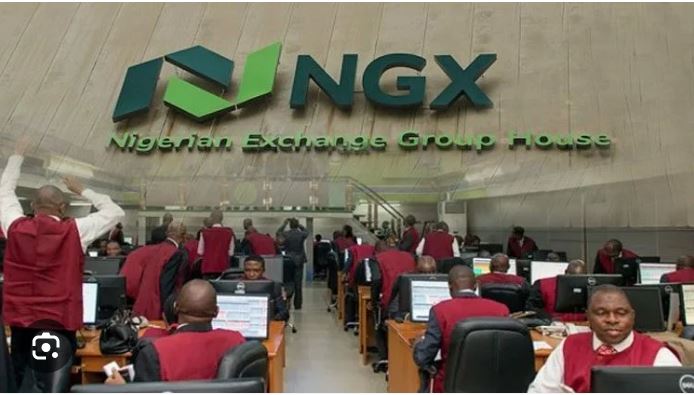
The Nigerian stock market recorded another monthly gain in October 2026 as renewed investor interest in major companies pushed the benchmark Nigerian Exchange (NGX) All-Share Index above the 250,000-point mark.
The rally added ₦2.01 trillion to the market’s total value, supported by strong price increases in selected large companies across the industrial goods, financial services and energy sectors.
Analysts said the rise reflected improved investor confidence. However, they noted that the gains were concentrated in a limited number of stocks, suggesting that investors were still being selective with their investments.
This uneven performance between the main index and the wider market remains important when assessing whether the rally can continue.
Figures for October showed that market capitalisation rose from ₦163.104 trillion in September to ₦165.114 trillion.
The NGX All-Share Index also increased by 1.2 per cent, closing at 254,299.49 points compared with 251,211.67 points in September.
The market recorded stronger growth on a week-on-week basis. Market capitalisation gained ₦4.595 trillion, rising from ₦160.519 trillion in the previous week to ₦165.114 trillion last week.
Similarly, the All-Share Index climbed by 2.9 per cent from 247,222.27 points to 254,299.49 points over the same period.
Meanwhile, global oil prices remained a major factor for investors. The recent retreat in crude prices reflected a reassessment of geopolitical risks as diplomatic efforts continued to revive peace negotiations.
Analysts warned that the oil market remained sensitive to developments in the region, with renewed tensions capable of changing price expectations quickly.
For Nigeria, crude oil prices affect government revenue, foreign exchange supply and wider economic expectations. Higher prices can improve public earnings and external balances, although the benefits depend on production levels, domestic fuel costs and other economic conditions.
Lower prices may ease some cost pressures but could weaken government revenue if the decline continues. The impact on listed companies also varies according to their exposure to energy prices, exchange rate movements, production costs and domestic demand.
On the market outlook, analysts at InvestData Consulting Limited advised investors to consider global oil price movements alongside domestic economic indicators and developments within individual companies.
They said: “Investors should therefore consider international oil movements alongside domestic economic indicators and company-specific developments rather than treating changes in crude prices as a uniform signal for the entire equities market.
“More broadly, expectations regarding interest rates, inflation, corporate earnings and foreign exchange conditions may influence portfolio allocation decisions.
“Where investors anticipate improved corporate profitability and more favourable financing conditions, equities may continue to attract demand. Conversely, uncertainty over costs, earnings and valuations could encourage profit-taking in stocks that have recorded substantial price appreciation.”

