

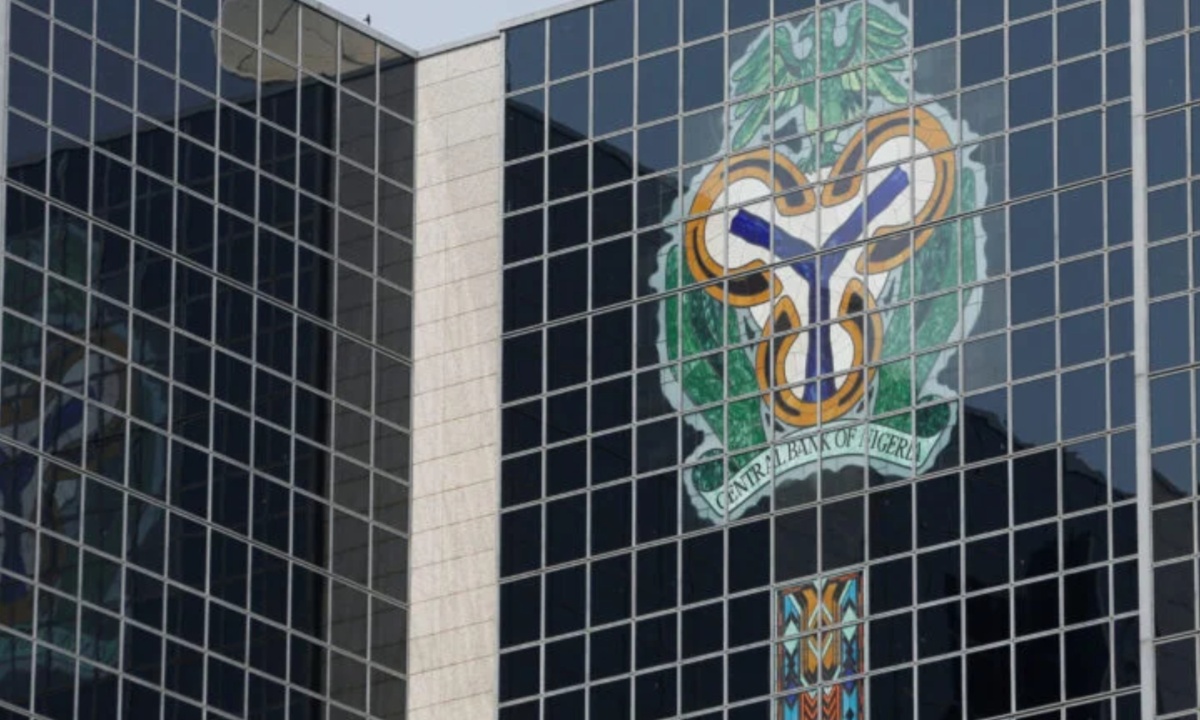
Nigerian businesses are yet to enjoy cheaper loans despite repeated interest rate cuts by the Central Bank of Nigeria (CBN), as commercial banks have raised average prime lending rates in several important sectors.
The CBN began reducing its Monetary Policy Rate (MPR) in September 2025, cutting it from 27.5 per cent to 27 per cent. It made another 50-basis-point reduction to 26.5 per cent in February 2026 before announcing a larger 350-basis-point cut to 23 per cent in September 2026.
The latest reduction followed a steady decline in inflation. The rate dropped from 15.93 per cent in May 2026 to 15.39 per cent in August, before falling further to 14.63 per cent in September.
The 450-basis-point reduction in the MPR over 13 months raised hopes that banks would also lower their lending rates, giving businesses and households some relief.
However, Financial Vanguard’s analysis of CBN interest rate schedules for August 2025 and October 2026 showed that average prime lending rates increased in eight of 11 major economic sectors. These are preferential rates offered to corporate borrowers considered less risky.
The affected sectors include agriculture, forestry and fishing, construction, government, human health and social work, real estate, manufacturing, education, and finance and insurance.
Agriculture recorded the largest increase, with its average prime lending rate rising from 23.44 per cent to 24.77 per cent. Construction rates climbed from 25.25 per cent to 26.40 per cent, while government borrowing rates increased from 25.52 per cent to 26.49 per cent.
The average rate for human health and social work rose from 26.11 per cent to 26.96 per cent. Real estate increased from 25.82 per cent to 26.57 per cent, while manufacturing moved from 23.79 per cent to 24.36 per cent.
Education rates also climbed from 26.33 per cent to 26.85 per cent. Finance and insurance recorded a smaller increase, from 25.55 per cent to 25.88 per cent.
In contrast, prime lending rates declined in arts, entertainment and recreation, oil and gas, and information and communication. The reductions were 0.66, 0.24 and 0.08 percentage points, respectively.
The trend differs from the movement in average maximum lending rates. Across 10 sectors, these rates fell from 33.78 per cent to 32.58 per cent, representing a 1.20-percentage-point reduction.
The findings suggest that some borrowers are seeing lower quoted rates, but the benefits have not reached all preferred customers in the productive economy.
Uneven impact of CBN rate cuts
Tunde Abioye, Head of Equity Research at Quest Merchant Bank, said the difference between the MPR and sectoral prime lending rates did not necessarily mean monetary policy was failing.
He explained that banks consider several factors when setting lending rates, including funding costs, available liquidity, borrower profiles and credit risks.
Abioye said the figures could reflect a delayed and uneven response to lower policy rates rather than a complete failure of monetary easing to reduce borrowing costs.
Nnamdi Nwizu, Co-Founder of Lagos-based investment bank Comercio Partners, also attributed the trend to differences in how banks price loans.
An independent analysis by his firm found that, out of 174 comparable bank-sector prime lending rate observations across seven identified sectors, 65 recorded reductions, 79 remained unchanged and 30 increased.
Nwizu said this showed that the rise in average prime rates came mainly from significant increases at a smaller number of banks, rather than a general increase across the banking system.
Deposit rates also decline
While some lending rates have increased, the returns banks offer customers on deposits have fallen.
Financial Vanguard found that the average savings deposit rate dropped from 7.81 per cent in August 2025 to 6.61 per cent in October 2026.
Average time-deposit rates fell by 2.24 percentage points, from 14.52 per cent to 12.28 per cent. Demand deposit rates also declined slightly, moving from 1.59 per cent to 1.48 per cent.
The benchmark savings rate offered by major commercial banks fell from 8.25 per cent to 6.90 per cent.
The average time-deposit rate also dropped from 14.52 per cent, within a range of 6.91 to 21.51 per cent, to 12.28 per cent. The range narrowed to between 0.10 and 17.04 per cent.
Nwizu said the figures showed that some banks had already adjusted their rates, but the benefits of monetary easing had yet to reach all prime borrowers.
He cautioned against judging the full impact of the CBN’s September decision too early. The 350-basis-point reduction took effect on September 22, just 17 days before the October lending-rate figures were recorded.
The CBN described the adjustment as an operational recalibration. Nwizu also referred to a June 2026 International Monetary Fund study which found that lending rates in Nigeria respond faster to monetary tightening than to easing.
This means businesses may have to wait longer before lower policy rates translate into cheaper loans.
Higher borrowing costs threaten business growth
The gap between prime and maximum lending rates could affect companies planning to expand production, buy equipment or finance daily operations.
Abioye warned that high lending rates for prime borrowers could raise financing costs and discourage businesses from taking new loans. He said this could particularly affect expansion plans, capital spending and long-term investments.
Nwizu added that sustained high borrowing costs could weaken private investment, reduce corporate profitability and slow job creation.
He explained that expensive loans increase the cost of financing raw materials, inventories and working capital for manufacturers and agricultural businesses.
In real estate, higher financing costs could make projects less viable and delay new developments. Companies in education, technology and financial services may also reconsider expansion and capital spending plans.
At the wider economic level, prolonged high lending rates could limit investment and improvements in productive capacity. These pressures could also make it harder to achieve lasting reductions in inflation.
However, Nwizu stressed that the effects are not uniform across all banks and sectors.

