

The National Economic Council (NEC) has approved an additional N130 billion for the rehabilitation and upgrading of police training institutions across Nigeria, bringing the total funding for the programme to N230 billion.
The approval is expected to accelerate ongoing rehabilitation projects, improve training infrastructure and strengthen the capacity of police institutions ahead of the Federal Government’s proposed recruitment of 50,000 additional police personnel.
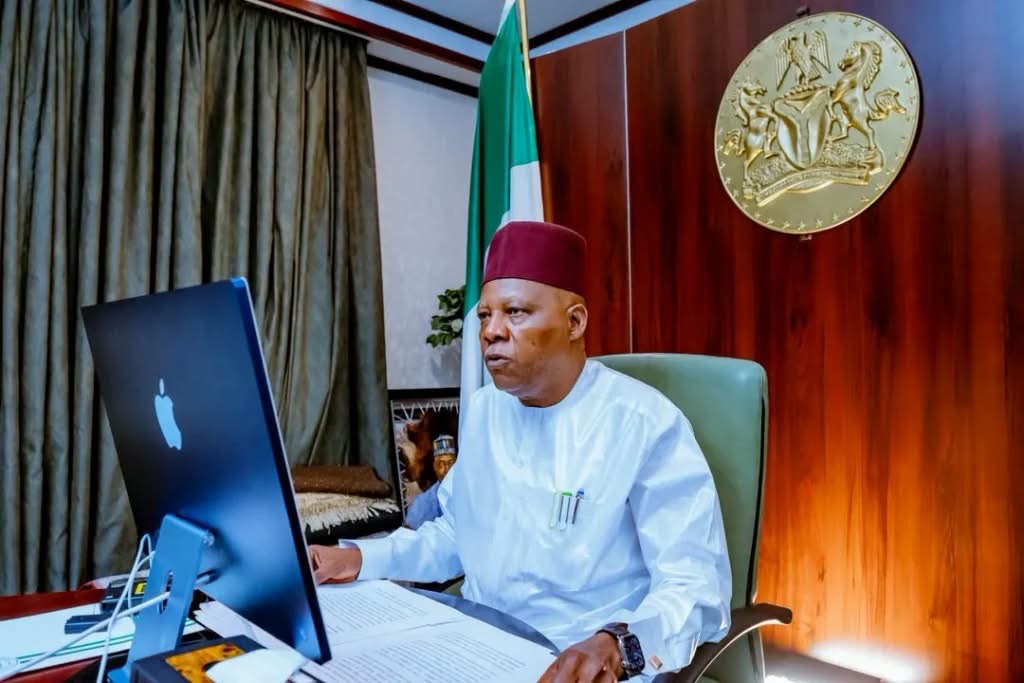
The decision was reached on Monday, November 23, 2026, during the council’s 162nd meeting, chaired by Vice President Kashim Shettima.
The additional funding followed a progress report presented by the NEC Ad-Hoc Committee on the Rehabilitation of Police Training Institutions, chaired by Enugu State Governor, Peter Mbah.
According to the committee, rehabilitation work is ongoing at 13 locations across the country, with approximately 30 per cent of the overall work completed.
The council had earlier approved N100 billion for the programme following the establishment of the ad-hoc committee in October 2025, on the recommendation of President Bola Ahmed Tinubu.
With the latest approval, the total financial commitment to the rehabilitation programme has increased to N230 billion.
The additional allocation is expected to accelerate construction and renovation work, upgrade existing training facilities and provide the necessary infrastructure to accommodate the expected increase in police recruitment and training activities.
A statement signed by Stanley Nkwocha, Senior Special Assistant to the President on Media and Communications in the Office of the Vice President, confirmed the development.
According to the statement, the additional funding would accelerate rehabilitation works, upgrade training facilities and strengthen the capacity of police institutions to accommodate increased recruitment and training requirements.
The statement added that the intervention was expected to support preparations for the recruitment of 50,000 police personnel and improve the country’s security training infrastructure.
The proposed recruitment is part of the Federal Government’s broader efforts to strengthen the Nigeria Police Force and improve the country’s security architecture.
The rehabilitation of police training institutions is considered essential to ensuring that additional personnel receive adequate professional training and are equipped with the necessary skills to perform their responsibilities.
The council also endorsed two major development projects involving proposed World Bank financing of $850 million.
The projects comprise the $350 million Accelerating Resilience through Investment Systems and Engagement (ARISE-Nigeria) Project and the $500 million State-Led Early Childhood Development Programme.
The ARISE-Nigeria Project is a six-year programme designed to strengthen Nigeria’s capacity to prepare for and respond to natural disasters, including floods, droughts, fires and other emergencies.
The initiative is expected to improve emergency operations centres, early warning systems, weather monitoring facilities and disaster response financing at federal and state levels.
Between five and 10 states are expected to participate in the initial phase of the programme, with selection based on their exposure to disaster risks, institutional readiness and commitment to emergency preparedness.
The project is expected to strengthen the ability of governments to respond to emergencies, reduce economic losses and protect communities from the effects of natural disasters.
Speaking on the initiative, Vice President Kashim Shettima said the programme was designed to reduce the damage that disruptions could cause to household incomes, businesses and public services.
He stressed the importance of protecting families and businesses from the consequences of disasters, particularly those with limited financial resources to recover from unexpected losses.
Shettima also emphasised the need to involve citizens and communities affected by development interventions in the planning and implementation of such programmes.
The second project endorsed by the council is the State-Led Early Childhood Development Programme, which has proposed World Bank financing of $500 million.
The initiative is designed to improve children’s access to healthcare, nutrition, early learning and protection services across Nigeria’s 36 states and the Federal Capital Territory.
A major component of the programme will be the establishment of early childhood development hubs to connect primary healthcare facilities with childcare services, preschool education and other essential social services.
The facilities are expected to particularly benefit children and families in underserved communities.
The proposed $500 million World Bank financing is also expected to be complemented by potential additional grant support of $30 million from the Global Financing Facility.
At the meeting, the Minister of Finance and Coordinating Minister of the Economy, Taiwo Oyedele, presented an update on Nigeria’s economic performance.
According to the minister, the country’s real Gross Domestic Product grew by 4.43 per cent in the second quarter of 2026, compared with 4.23 per cent recorded during the corresponding period in 2025.
The council was also informed that headline inflation declined for the fifth consecutive month to 14.06 per cent in October, its lowest level since September 2020.
External reserves reportedly stood at $54.87 billion as of November 12, 2026.
Nigeria’s trade surplus also increased from N10.2 trillion in the first half of 2025 to N20.1 trillion during the corresponding period in 2026.
Similarly, net revenue distributed through the Federation Account Allocation Committee increased by 44 per cent, rising from N15.2 trillion in 2024 to N21.9 trillion in 2025.
Despite the improvements in key economic indicators, Oyedele acknowledged that the positive developments had yet to translate sufficiently into relief for households and businesses.
He identified persistent challenges involving food prices, electricity costs, access to affordable credit and employment opportunities.
Food inflation remained at 19.13 per cent in October, while high lending rates and energy costs continued to put pressure on businesses and household incomes.
The council also called for stronger collaboration between the National Identity Management Commission and state governments to accelerate national identity registration and the integration of the National Identification Number into public services.
The initiative is expected to improve access to government services, strengthen public administration and support the implementation of government programmes across the country.
On pension reforms, the council approved a proposal presented by the Director-General of the National Pension Commission, Omolola Oloworaran, titled “Securing the Retirement of Nigerian Workers While Strengthening State Finances.”
The council urged state governors to adopt clear implementation timelines for the Contributory Pension Scheme and directed their administrative and finance teams to work with PenCom on the necessary arrangements.
The proposed reforms are aimed at improving retirement security for Nigerian workers while strengthening the financial sustainability of state pension systems.
Earlier in his address, Vice President Shettima said the success of President Bola Tinubu’s economic reforms depended on building strong institutions capable of sustaining their benefits.
He called on federal ministries and state governments to cooperate in addressing practical challenges associated with the implementation of government policies.
Shettima noted that successful practices in one jurisdiction could provide useful lessons for others, while recognising differences in institutional capacity and circumstances across the country.
He maintained that cooperation among government institutions would play an important role in determining the country’s development outcomes.
The Vice President also reiterated the importance of protecting vulnerable households and businesses from economic disruptions and natural disasters.
The decisions reached at the 162nd NEC meeting covered security, economic development, disaster preparedness, early childhood development, national identity registration and pension reforms.
However, the additional N130 billion approved for police training institutions stands out as a major intervention in preparations for the proposed recruitment of 50,000 police personnel and efforts to strengthen Nigeria’s security infrastructure.

