

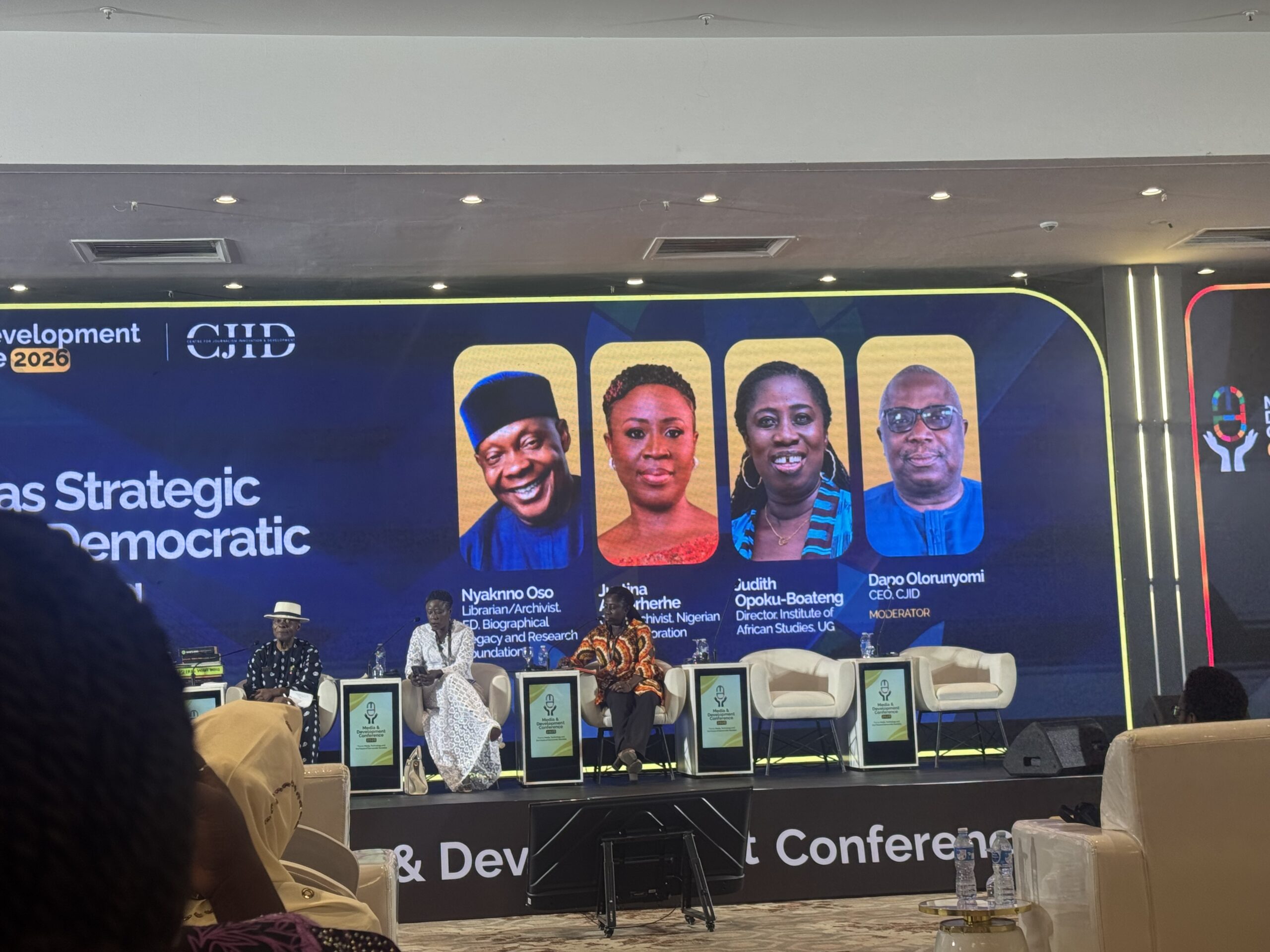
Stakeholders at the 2026 Media and Development Conference call for stronger media institutions, sustainable journalism funding and safeguards against the misuse of emerging technologies.
The growing influence of Artificial Intelligence on journalism and increasing threats to press freedom have prompted media stakeholders and development partners to call for responsible technology use and stronger protection of independent journalism across Africa.
The call was made on Monday in Abuja at the 2026 Media and Development Conference (MDC), organised by the Centre for Journalism Innovation and Development (CJID) in partnership with other stakeholders.
The conference, themed, “Media, Technology and the Future of Democratic Societies”, brought together media professionals, development partners and other stakeholders to examine the relationship between journalism, technological advancement and democratic governance.
Speaking at the event, the Chief Executive Officer of CJID, Dapo Olorunyomi, described journalism as an essential democratic infrastructure rather than merely a commercial enterprise, stressing that independent media remained critical to accountability, national development and citizens’ participation in democratic processes.
Olorunyomi said journalism played a significant role in preserving national history, providing credible information and ensuring that those in positions of authority were held accountable for their actions.
He, however, expressed concern over the growing use of laws purportedly designed to combat misinformation in some West African countries, warning that such regulations were increasingly being deployed to suppress criticism and restrict freedom of expression.
According to him, vaguely defined offences, disproportionate penalties and excessive executive powers to remove online content could create an atmosphere of fear, encourage self-censorship and discourage investigative journalism.
He maintained that while governments had legitimate reasons to address harmful content in the digital space, regulations must not become instruments for silencing independent voices.
The CJID chief executive called for digital regulations that were necessary, proportionate, transparent and consistent with fundamental human rights, adding that their enforcement should be subjected to independent oversight and judicial review.
On the sustainability of the media industry, Olorunyomi advocated stronger media institutions supported by credible internal policies, sustainable revenue models and professional development opportunities for young journalists.
He urged media organisations to move beyond dependence on short-term development projects and external funding, arguing that building lasting institutional capacity was necessary for the survival and independence of journalism.
Addressing the growing adoption of Artificial Intelligence in newsrooms, Olorunyomi acknowledged that the technology offered significant opportunities for improving journalistic work, particularly in transcription, translation, data analysis and investigations into public expenditure.
He, however, warned that the technology also presented risks, including the generation of misinformation and the reproduction of existing inequalities.
He urged media organisations to develop clear editorial policies guiding the use of AI-generated content, while ensuring rigorous verification, protection of confidential sources and adherence to professional journalistic standards.
Also speaking, the Deputy Ambassador of the Netherlands to Nigeria, Ronald Sonnemans, raised concerns over the increasing threats confronting journalists across the world.
Sonnemans said journalists continued to face harassment, threats, imprisonment and killings for carrying out their professional responsibilities.
Describing journalism as the oxygen of democracy, he argued that democratic institutions could gradually lose their ability to hold leaders accountable and sustain public trust without free and credible information.
He noted that Artificial Intelligence could provide smaller newsrooms with opportunities to strengthen their operations by analysing large volumes of documents, supporting fact-checking processes and translating reports into local languages.
However, he cautioned against the misuse of the technology to create fake images, cloned voices and fabricated news reports capable of misleading the public and undermining trust in the media.
The Dutch envoy reaffirmed his country’s commitment to supporting press freedom through journalist training, dialogue platforms, innovative tools and research initiatives in collaboration with organisations such as CJID.
In her remarks, the African Director of the MacArthur Foundation, Dr Kole Shettima, represented by the foundation’s Deputy Director, Amina Salihu, described journalism as indispensable to the functioning of democracy.
Shettima said citizens must not only have access to credible information but must also be empowered to use such information to engage government and participate meaningfully in democratic processes.
He urged development partners to support media organisations through funding arrangements that protect editorial independence while allowing them the flexibility to respond to emerging challenges in the industry.
He also expressed concern over limited awareness of Nigeria’s National Artificial Intelligence Strategy, urging journalists and media organisations to familiarise themselves with emerging policies and actively participate in conversations surrounding technology and governance.
According to him, the MacArthur Foundation’s priorities for the next five years include young people, prosperity and ensuring that technology creates opportunities accessible to everyone.
He warned that unequal access to emerging technologies could deepen existing social divisions, particularly if disadvantaged communities and groups were excluded from the benefits of the digital economy.
Shettima further called for stronger collaboration among African journalists, researchers, policymakers and technology stakeholders, stressing that the continent must move beyond being merely a source of data to actively shaping and benefiting from the global digital economy.
The stakeholders maintained that the future of journalism in Africa would depend not only on technological innovation but also on the strength of media institutions, the protection of press freedom, sustainable funding and the commitment of journalists to professional ethics.
They stressed that Artificial Intelligence should complement rather than compromise journalism, insisting that credible reporting, editorial independence and public accountability must remain central to the media’s democratic responsibility.

