
By peterside Rejoice Eneky
The International Finance Corporation (IFC), a member of the World Bank Group, has revealed that Nigeria requires an estimated $2 trillion over the next two decades to close its infrastructure investment gap and support sustainable economic growth.
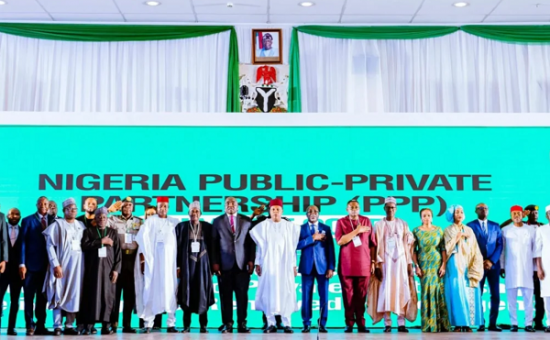
Speaking at the Public-Private Partnership (PPP) Summit hosted by the Infrastructure Concession Regulatory Commission (ICRC) in Abuja, IFC’s Regional Director for Central Africa and Anglophone West Africa, Dahlia Khalifa, disclosed that the Corporation facilitated $5 billion in investments in Nigeria in 2024 alone.
According to Khalifa, the investments include major transactions such as a $1.3 billion financing deal for telecommunications infrastructure firm IHS Towers and another $1.3 billion for Eleme Fertilizer, underscoring the IFC’s commitment to expanding private sector participation in Nigeria’s infrastructure development.
“IFC does more than just provide advisory services. We also put our money where our mouth is,” Khalifa stated, adding that Nigeria’s path to development depends on attracting private capital amid global fiscal constraints.
She stressed the need for predictability, regulatory clarity, and efficient dispute resolution to sustain investor confidence.
“Investors follow predictability. They invest where contracts are binding and where disputes are resolved swiftly and fairly,” she said.
The IFC praised recent efforts by the Nigerian government to strengthen the PPP framework, noting the ICRC’s updated national guidelines and the public disclosure of a transparent project pipeline as key reforms driving investor trust.
The Corporation is also collaborating with the Ministry of Budget and Economic Planning to develop infrastructure projects aligned with the National Integrated Infrastructure Master Plan (NIIMP), which envisions $2.3 trillion in investments by 2043.
“The IFC will help the government of Nigeria achieve its objectives, which we already see they are well on their way to doing,” Khalifa said.
She affirmed that the IFC’s increasing involvement reflects a growing interest by development finance institutions in Nigeria’s infrastructure sector as the country seeks to attract long-term investment, create jobs, and spur economic growth.
About Author


