

Says most loans are for consumption, not development urges transparency, fiscal accountability across Africa……
By Peterside Rejoice
The Executive Director of the Civil Society Legislative Advocacy Centre (CISLAC) and Head of Transparency International Nigeria, Auwal Musa Rafsanjani, has raised concerns over the deepening fiscal crisis across Africa, warning that the continent is heading towards an unsustainable debt trap.
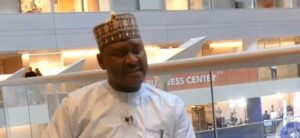
Rafsanjani made the remarks at the 2025 Annual Meetings of the International Monetary Fund (IMF) and the World Bank held in Washington D.C., where he called for urgent reforms in global financial governance and debt management frameworks for African countries.
Speaking on The Policy with Leah, a current affairs programme hosted by Leah Katung Babatunde, Rafsanjani decried Nigeria’s growing debt profile, describing the borrowing pattern as reckless and unproductive. He said most of Nigeria’s loans are spent on recurrent expenditure instead of capital projects that would stimulate development.
“Most of the loans we take are not for development but for consumption,” Rafsanjani said. “There is little or no accountability around them. Civil society must be involved in monitoring these debts, especially when even lawmakers lack access to full disclosure.”
He supported ongoing calls for debt cancellation for developing countries, particularly where borrowed funds have failed to produce meaningful results. He aligned with the G24’s recent position that Africa’s debt situation has become a trap, stressing that the continent’s economic vulnerability is worsened by weak governance, corruption, and illicit financial flows.
Rafsanjani also criticised what he called the unequal power structure within the IMF and the World Bank, saying the influence of developed nations undermines fair representation and decision-making for African countries. He called for greater transparency, inclusiveness, and fairness in global financial policies.
On Nigeria’s domestic economy, Rafsanjani lamented the country’s overdependence on oil, decaying infrastructure, and growing insecurity, which continue to discourage foreign investment. He faulted recent government policies, including the removal of subsidies in education, healthcare, and transportation, saying such actions have worsened poverty among citizens.
“It is ironic that while developed countries continue to subsidize critical services, we are removing support for the poor under the guise of reforms,” he said.
He further urged the Nigerian government to prioritize investments in science, technology, and education, warning that the country risks being left behind in the global digital economy if it fails to empower its youths with quality education and innovation-driven skills.
“Without quality and affordable education, our youths cannot compete in the digital economy,” he said. “Our universities are underfunded, research is dead, professors are struggling to survive, and laboratories are non-functional.”
Rafsanjani advised governments at all levels to adopt Artificial Intelligence (AI) tools to strengthen accountability and fiscal transparency. He said AI can improve budget tracking, automate auditing, and detect leakages in public finance.
He also urged state governors to improve internally generated revenue instead of relying solely on monthly allocations from the Federation Account Allocation Committee (FAAC). According to him, the recent increase in FAAC disbursements must translate to better living conditions for citizens.
“The fuel subsidy savings must also be transparently accounted for by governors,” Rafsanjani said. “These funds belong to the people and must be used to improve healthcare, education, and infrastructure, not to enrich political elites.”
He condemned the high cost of governance in Nigeria and the extravagant lifestyle of public officials, saying such waste contrasts sharply with global best practices.
“You cannot expect development assistance from abroad while living lavishly at home,” he said. “Ministers abroad fly economy class; in Nigeria, one official moves with 20 cars. That kind of waste is unsustainable.”
Rafsanjani concluded by calling on African leaders to embrace sustainable development financing, strengthen institutions, and invest in human capital. He warned that without bold fiscal and governance reforms, the continent risks remaining trapped in a vicious cycle of debt and underdevelopment.

