
By Peterside Rejoice
The Senate and the National Automotive Design and Development Council (NADDC) have rolled out a renewed automotive policy aimed at strengthening local content, reducing import dependency, and blocking revenue leakages in Nigeria’s automobile sector.
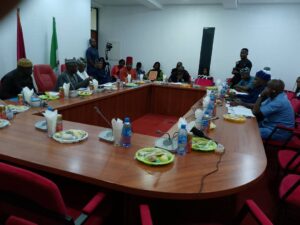
The Director-General of NADDC, Joseph Osanipin, disclosed this on Tuesday after a budget performance review session with the Senate Committee on Industries chaired by Senator Francis Fadahunsi at the National Assembly, Abuja.
Osanipin said the new direction will reposition Nigeria’s auto industry through partnerships with local manufacturers and a clear plan to build production capacity across the country. He explained that concerns raised by lawmakers over the Council’s revenue figures were due to a misinterpretation of expenditure data rather than any form of mismanagement.
“What they saw was what we’ve actually spent, and after our explanations, they were satisfied,” he stated.
Despite recording ₦25 billion revenue in 2024 and projecting ₦140.5 billion for 2025, Osanipin admitted that actual collections have fallen below expectations. He, however, assured that new measures are being put in place to address the shortfall and improve efficiency.
He disclosed that the Council is working closely with the Association of Local Component Manufacturers (ARCMAN), the Manufacturers Association of Nigeria (MAN), and the National Automotive Manufacturers Association (NAMA) to strengthen local component production.
“We’ve identified components that can easily be produced in Nigeria,” Osanipin said. “Our goal is to ensure that these local producers can meet the required volume for domestic use. Without capacity, the programme will fail, and we are determined not to let that happen.”
Senator Fadahunsi, while commending the Council for its initiatives, urged tighter revenue monitoring and better coordination with the Nigeria Customs Service to curb leakages and boost collections.
Discussions also focused on a proposed law to ban the importation of used vehicles, which the NADDC believes will encourage local vehicle assembly and create more jobs.
Osanipin further revealed that a credit scheme is being developed to make new vehicles more affordable for Nigerians, alongside a sectoral lending framework to support financing for manufacturers.
He added that a technical committee has been set up to map out local production chains for motorcycles and tricycles, which he described as vital to the growth of the auto industry due to high demand and simpler assembly requirements.
“It’s not just about producing; we must produce competitively,” Osanipin emphasized. “We’re working to provide the financial and technical support needed for our manufacturers to thrive.”
The NADDC boss noted that the new auto policy aligns with the economic objectives of the 1999 Constitution (as amended), particularly Section 16(1)(a–b), which mandates the State to harness the resources of the nation and promote national prosperity and an efficient, dynamic, and self-reliant economy.
He said the Council’s commitment is to ensure that the auto sector contributes meaningfully to national development, job creation, and economic independence.
“This is not just a policy on paper,” Osanipin said. “We are building a system that will make Nigeria self-reliant in vehicle production and reduce our dependence on foreign imports.”
The NADDC’s renewed focus, backed by legislative oversight, signals a new phase for Nigeria’s automotive sector one that seeks to empower local industries, boost revenue generation, and uphold the constitutional mandate of promoting national prosperity through industrial development.
About Author


