
By
Peterside Rejoice
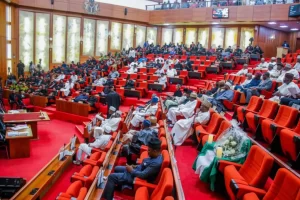
The Nigerian Senate has approved the death penalty for kidnapping and called for an urgent review of the country’s firearms law as part of sweeping measures to curb the rising wave of insecurity across Kwara, Kebbi and Niger States.
The resolution followed a motion sponsored by Deputy Senate Leader Lola Ashiru (Kwara South), who warned of growing attacks on schools, worship centres and rural communities, including the November 18 assault on Christ Apostolic Church (CAC), Eruku, where two worshippers were killed and 38 others abducted. The victims were later rescued through coordinated security operations alongside dozens of kidnapped students in Niger State.
Lawmakers expressed serious concern that persistent mass abductions have forced the closure of schools in several local government areas across Kwara, Niger and Kebbi, as well as all 47 Federal Unity Colleges nationwide.
They also raised the alarm over increasingly sophisticated criminal networks aided by internal collaborators and porous forest corridors through Kwara Kogi, Kebbi–Zamfara and Niger’s Shiroro–Rafi–Munya axis.
A major point of contention was the reported withdrawal of security personnel from Government Girls Secondary School, Maga in Kebbi shortly before a kidnapping incident. The Senate has ordered an urgent and transparent investigation into the development, questioning what led to the decision and who approved it.
Senator Sani Musa expressed concerns about the rescue of abductees without a single shot being fired, suggesting that ransom may have been paid.
He criticized the lack of technological deployment by the National Security Adviser and the Ministry of Communications, insisting that terrorists who use mobile devices should be traceable. Senator Enyinnaya Abaribe also accused the government of withholding the truth about the scale of insecurity, adding that some communities are reportedly paying taxes to terrorists to avoid attacks.
Senator Abdul Ningi described kidnapping as now more profitable than oil, while others called for the arrest of collaborators who provide logistics and intelligence to bandits. Borno South senator, Ali Ndume, said Nigeria’s armed forces are overstretched compared to countries like Egypt, despite having operations in 32 states.
President Bola Tinubu was commended for cancelling planned trips in order to personally coordinate security responses, actions which senators said contributed to the rescue of abducted students. Lawmakers called for the use of drones, improved surveillance and intelligence-led operations, as well as relief support for affected communities.
The Senate insisted that kidnapping should be classified as terrorism and attract the death penalty. It also called for a comprehensive review of the Firearms Act to allow responsible citizens bear arms in self-defence, arguing that the model aligns with international best practices.
To strengthen oversight, the chamber dissolved its standing committees on National Security, Intelligence and the Air Force for reconstitution. Senators also observed a minute of silence in honour of victims of insecurity.
Deputy Senate President Barau Jibrin said the country has reached a turning point and must address insecurity collectively, adding that lasting peace is only possible through a combination of policy reforms, intelligence gathering, technological deployment and community participation.
Senator Ashiru warned that failure to act could lead to mass displacement, long-term trauma and the continued collapse of rural livelihoods. He emphasised that affected communities risk becoming uninhabitable if the security crisis is not decisively addressed.
About Author


