

|By Adejumo Adekunle
Prominent digital and human rights activist, Muhammed Bello Buhari, has faulted the Federal Government’s newly announced ban on the admission and transfer of students into Senior Secondary School Three (SS3), warning that the policy ignores the harsh realities of insecurity and displacement in Northern Nigeria.
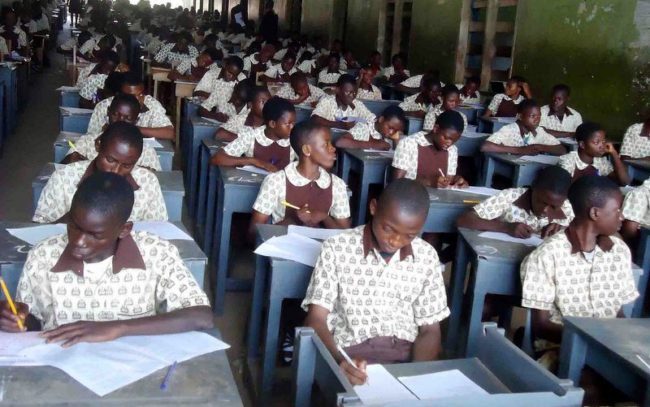
The Federal Ministry of Education recently imposed a nationwide ban on SS3 admissions and transfers in both public and private secondary schools. The directive, contained in a press release dated December 14, 2025, and signed by the Director of Press and Public Relations, Boriowo Folasade, will take effect from the 2026/2027 academic session.
According to the ministry, the decision followed “growing concerns over the increasing incidence of examination malpractice, including the use of so-called special centres during external examinations.” It added that “admission or transfer into SS3 will no longer be permitted under any circumstance.”
Reacting to the directive in a Facebook post on Sunday, Buhari argued that the policy unfairly targets children whose education has been disrupted by banditry, terrorism and forced migration, particularly in the North.
He stressed that many families relocate not to gain academic advantage, but to survive violent attacks that have destroyed homes and schools—realities he said were overlooked in the policy formulation.
“In the North, most of the people are not moving because they are chasing special centres,” Buhari wrote. “They are moving because their villages have been attacked. Because bandits came at night. Because terrorists burnt schools.”
He noted that displacement has become routine in states such as Zamfara, Katsina, Kaduna, Niger, Borno, Yobe, Plateau and Benue, forcing families to move with their children, often in the middle of an academic session.
Buhari questioned how the policy would affect students who complete SS2 but must enroll in new schools due to insecurity, as well as SS3 students whose families are compelled to relocate suddenly.
“Now imagine an SS2 student in an IDP camp who finally gets a chance to enroll in a new school,” he said. “According to this policy, if that child advances to SS3 in a different school, it becomes illegal.”
He maintained that the ban would fail to curb examination malpractice, insisting that cheating thrives because of weak supervision, poor teaching conditions and intense pressure to pass exams, not student mobility.
“Stopping SS3 transfers will not stop cheating,” Buhari said. “It will only stop vulnerable students from continuing their education.”
The activist also warned that the directive could worsen the already alarming number of out-of-school children in Northern Nigeria, where poverty, insecurity and displacement continue to limit access to education.
He urged the Federal Government to review the policy and introduce clear exemptions for displaced students and conflict-affected communities, stressing that education reforms must reflect Nigeria’s lived realities.
“If this policy goes ahead without exemptions,” Buhari warned, “it will only deepen exclusion and inequality, and once again, the North will pay the highest price.”

