

By Adeniran Bamisaye
Sometimes the most powerful insights about leadership do not come from official speeches or press statements, but from quiet, unexpected moments.
Years ago in Lagos, I had one such moment during a routine encounter with a police officer on the road. After stopping my vehicle to check my particulars, a casual conversation began. Somewhere in that exchange, I mentioned the name Olatunji Rilwan Disu.
At the time, he was not yet the Inspector-General of Police. He was serving in a senior capacity within the Nigeria Police Force. But the moment the officer heard the name, his reaction was immediate.
“Ah! That man…” he said, pausing briefly.
Curious, I asked what he meant. What followed was a simple but memorable testimony. The officer told me that when he served under Disu in Owo, one thing stood out clearly: officers under his command were never neglected.
According to him, it was not about charity or handouts, but about leadership that genuinely cared about the welfare of those serving under it.
That roadside conversation stayed with me.
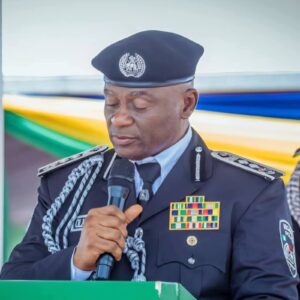
Years later, when Disu was appointed Inspector-General of Police, one theme stood out clearly in his leadership direction—welfare. And this time, the signals were not only spoken but also visible in action.
One early gesture was symbolic yet significant: the organisation of a proper pulling-out parade for his predecessor—an institutional tradition that had reportedly not taken place in about sixteen years. In many ways, it restored a sense of respect, continuity, and institutional memory.
Beyond symbolism, structural signals began to emerge. There has been a renewed emphasis on accountability, including visible disciplinary actions against erring officers. Channels such as the Police Complaint Response Unit (CRU) have also received renewed attention, reinforcing citizens’ ability to report misconduct.
At the same time, there has been a push toward modernisation and intelligence-led policing, strengthening investigative capacity and integrating technology into policing strategies.
Public discussions have also emerged around the legal framework guiding the tenure of the Inspector-General of Police. The Police Act 2020 introduced a notable provision stating that the Inspector-General shall hold office for a fixed term of four years, creating a leadership structure designed to balance continuity with stability.
Beyond institutional reforms, another element of leadership has been presence. In times of crisis, there have been visits to affected communities, including locations in Jos and Kwara State following incidents of violence. Such gestures, though symbolic, send a powerful signal to officers and citizens alike that leadership remains engaged with realities on the ground.
Perhaps one of the most emotional moments came during the disbursement of support funds to families of fallen officers. Watching widows and relatives step forward to receive assistance was a reminder that behind every uniform is a family carrying unseen burdens.
One widow struggled to collect her cheque—not because it was heavy, but because the moment itself was overwhelming.
Moments like that remind us that institutions are not just structures; they are made of people.
The theme of the National Police Day held on April 7, 2026, at Eagle Square — “Community Partnership: Building Trust” — reflects a broader direction for policing in Nigeria.
Trust, however, is never built through declarations alone. It grows through consistent actions, small signals of care, accountability, and responsiveness.
When officers feel valued, they carry themselves differently. When they feel seen, they are more likely to see others.
In the end, reform may not begin when it is announced, but when it is felt — in everyday encounters, in moments of compassion, and in leadership that moves beyond position to presence.

