

Police assure neutrality and professionalism as INEC pushes for violence free polls ahead of 2027 elections
As preparations gradually gather momentum for Nigeria’s forthcoming electoral cycle, the Inspector General of Police, IGP Olatunji Rilwan Disu, has reaffirmed the commitment of the Nigeria Police Force to ensuring peaceful, transparent, credible, and violence free elections across the country.
The assurance came on Wednesday when the Chairman of the Independent National Electoral Commission, INEC, Professor Joash Ojo Amupitan, paid a courtesy visit to the Force Headquarters in Abuja, where both institutions engaged in high level discussions focused on strengthening election security architecture and improving inter agency collaboration ahead of future polls.
The meeting, which brought together senior police officers and key electoral stakeholders, centered on proactive planning, intelligence sharing, operational coordination, and institutional preparedness to prevent electoral violence and protect the democratic process.
Speaking during the visit, Professor Amupitan said security remains one of the strongest pillars upon which free, fair, and credible elections must stand, stressing that without adequate security, public confidence in democracy becomes weakened.
He noted that Nigeria’s electoral system has over the years faced serious threats ranging from political violence, voter intimidation, attacks on electoral officers, destruction of election materials, vote buying, misinformation campaigns, and deliberate efforts to suppress voter participation.
According to him, these challenges continue to threaten democratic stability and must be tackled through strong collaboration between INEC and security agencies, especially the Nigeria Police Force as the lead agency for election security management.
Professor Amupitan explained that the Commission has adopted a strategic zonal risk classification model to strengthen election preparedness, categorizing electoral areas into green, amber, and red zones depending on the level of security threat identified in each area.
He said the system helps the Commission and security agencies determine where additional attention, manpower, and resources are required before, during, and after elections.
According to him, early identification of flashpoints allows for preventive action rather than reactive crisis management.
He further described election security as both “the first and last mile” of democratic integrity, explaining that the credibility of elections depends not only on voting day security but also on the protection of every stage of the electoral process, from voter registration to result collation and final declaration.
The INEC Chairman also stressed the importance of inclusive participation in the democratic process, noting that vulnerable groups such as Internally Displaced Persons, IDPs, and persons living with disabilities must not be excluded from voting opportunities.
He said the Commission remains committed to ensuring that every eligible Nigerian, regardless of physical condition or displacement status, is given the opportunity to participate in the electoral process.
“Democracy must work for every Nigerian. Security must protect every voter, every electoral officer, and every vote,” he stated.
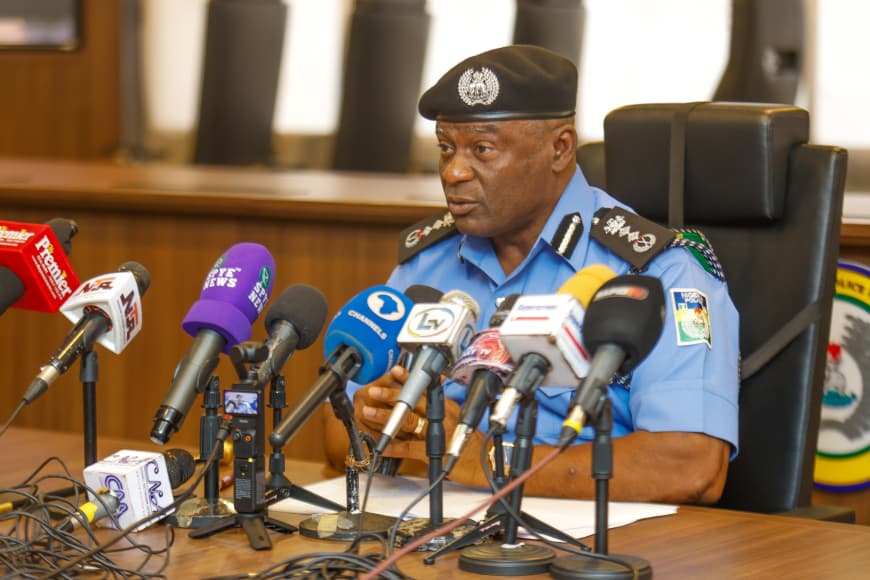
Responding, IGP Disu assured the INEC Chairman that the Nigeria Police Force remains fully prepared and committed to discharging its constitutional responsibility as the lead agency for election security in a professional, impartial, and lawful manner.
He said the Force would remain guided strictly by the Constitution, the Electoral Act, and all relevant legal frameworks governing elections in Nigeria.
According to him, the police have no political interest other than protecting the integrity of the democratic process.
“The Nigeria Police Force has no interest other than ensuring free, fair, and credible elections. Our duty is to protect the process, not to influence it,” the IGP stated.
He warned strongly that any police officer found engaging in partisan politics, abuse of office, voter intimidation, electoral malpractice, or any conduct capable of compromising public trust would face immediate disciplinary action and possible prosecution.
Disu said professionalism, neutrality, and accountability must remain the foundation of police conduct during elections.
He stressed that public trust in election security depends largely on how security personnel behave before, during, and after elections.
The IGP also called on INEC to ensure the timely release of election timetables, schedules, and operational plans, noting that early access to such information allows the police and other security agencies to conduct effective planning, intelligence gathering, deployment strategies, and inter agency coordination.
According to him, election security management cannot succeed through last minute preparations.
He further pointed out the importance of sustained collaboration among security agencies, saying joint operations, coordinated intelligence sharing, and continuous stakeholder engagement remain critical to preventing electoral violence and ensuring peaceful voting environments.
Disu disclosed that the Nigeria Police Force has already commenced nationwide threat assessments in anticipation of future elections, with strategic focus on major risk areas that could undermine peaceful polls.
Among the key concerns identified, he listed political violence, cult related clashes, arms proliferation, organized criminal interference, misinformation campaigns, fake news, hate speech, and attacks on electoral infrastructure.
He noted that some politically exposed actors often exploit vulnerable youths and criminal networks to create tension during elections, adding that the police are already taking preventive steps to neutralize such threats.
The IGP further revealed that specialized training programmes have been activated for officers across commands nationwide, focusing on election security management, crowd control, lawful use of force, human rights compliance, ethical conduct, and voter protection responsibilities.
He explained that officers assigned to election duties must understand that they are not merely providing security but protecting democracy itself.
“Our officers must understand that their conduct can either strengthen democracy or weaken public trust. We must choose professionalism at all times,” he said.
Disu also assured Nigerians that the Force would continue to work closely with INEC, the military, civil defence, and other sister agencies to guarantee a secure and peaceful electoral atmosphere where citizens can exercise their voting rights without fear or intimidation.
The meeting ended with both INEC and the Nigeria Police Force reaffirming their shared commitment to credible elections, democratic stability, institutional accountability, and the protection of citizens’ constitutional rights.
Political analysts say the collaboration between both institutions is crucial at a time when concerns over electoral credibility, insecurity, and voter apathy continue to shape national political conversations ahead of the 2027 general elections.
.

