

|By Babatunji Wusu
The Dangote Petroleum Refinery & Petrochemicals has been identified as a key catalyst in Nigeria’s improving economic outlook, following a sovereign credit rating upgrade by S&P Global Ratings.
S&P raised Nigeria’s long-term foreign and local currency ratings to “B” from “B-”, citing stronger economic growth, improved external balances, rising oil output, and expanded domestic refining capacity.
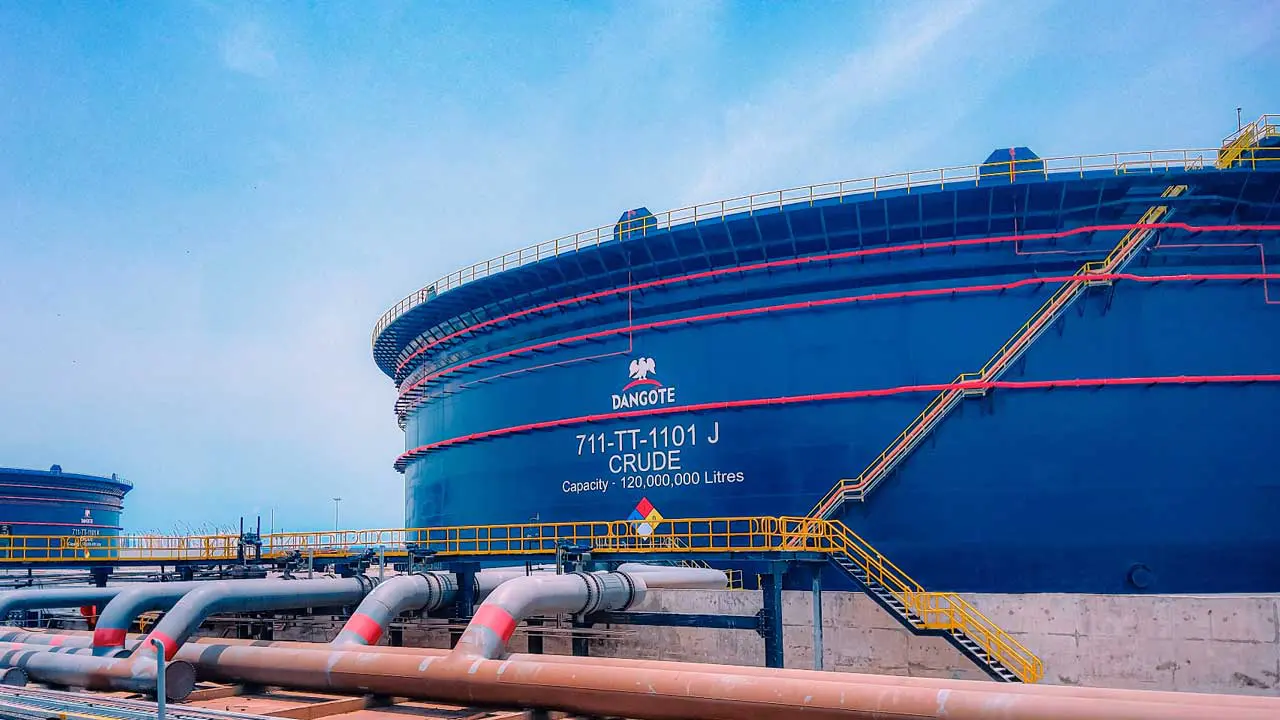
The ratings agency said the operational ramp-up of the 650,000 barrels-per-day Dangote Refinery is helping to strengthen Nigeria’s current account surplus, cut dependence on imported fuel, and boost foreign exchange liquidity.
It stated that “significant refining capacity is now also online,” noting that the facility has reached near full operational levels.
S&P projected Nigeria’s current account surplus would rise to 5.8 per cent of GDP in 2026, up from 4.8 per cent in 2025, supported in part by increased local refining and hydrocarbon exports.
The report added that the refinery is improving domestic availability of fuel, gas, and fertiliser, while also providing a buffer against global supply disruptions linked to geopolitical tensions.
It further credited the refinery’s output with strengthening Nigeria’s balance of payments position and broader economic resilience.
S&P said Nigeria’s external outlook has also been supported by reduced fuel imports, the removal of fuel subsidies, exchange rate reforms, and increased oil production.
Foreign exchange reserves have risen from about $33 billion in 2023 to nearly $50 billion by early 2026, aided by lower import demand following the refinery’s commencement of operations.
The agency also highlighted Nigeria’s shift from a crude oil exporter to an emerging supplier of refined petroleum products, describing it as part of a broader industrial transition in Africa’s largest economy.
Dangote Industries has reportedly begun feasibility studies to expand refining capacity to 1.4 million barrels per day, up from 650,000 barrels.
S&P said such expansion, alongside rehabilitation of other local refineries, could further strengthen Nigeria’s external position in the coming years.
While noting that global crude prices and market forces still influence domestic fuel costs, the agency stressed that increased local refining offers Nigeria greater energy security and reduces exposure to external shocks.
It also linked Nigeria’s improved macroeconomic outlook to reforms introduced since 2023, including exchange rate liberalisation, fiscal adjustments, higher oil revenues, and improved production linked to enhanced security in the Niger Delta.

