

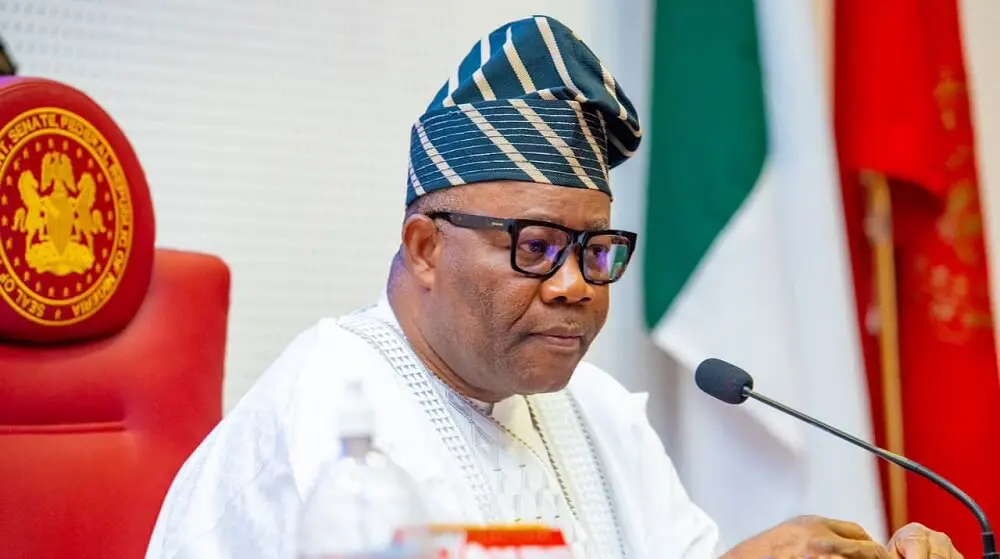
The Socio-Economic Rights and Accountability Project (SERAP) has called on Senate President Godswill Akpabio and House Speaker Tajudeen Abbas to urgently refer allegations involving about ₦6.3 billion constituency project funds to anti-corruption agencies for investigation and possible prosecution.
In its appeal, SERAP urged both leaders to ensure that any public officials, contractors, or firms found culpable face prosecution where there is sufficient evidence, and that all misused or unaccounted public funds are fully recovered and returned to the national treasury. The organisation also demanded full disclosure of contractors and companies that received constituency funds but failed to execute projects, including details of their shareholders and beneficial owners.
The allegations, contained in the Auditor-General of the Federation’s 2022 report, cover a wide range of ministries, departments, and agencies. These include the Environmental Health Registration Council of Nigeria (EHORECON), the Federal College of Animal Health and Production Technology, Vom, the Federal Polytechnic, Ukana, the National Agency for the Prohibition of Trafficking in Persons (NAPTIP), and the National Institute of Legislative and Democratic Studies (NILDS).
SERAP’s concerns relate to widespread claims of constituency project fund misuse, including payments into private accounts, contracts awarded without due process, inflated project costs, and failure to execute awarded contracts. The group said such practices amount to a serious breach of public trust and weaken governance.
According to the report, several institutions allegedly recorded irregular financial activities, including undocumented expenditures, questionable mobilisation fees, and contracts awarded to unqualified companies. In many cases, there was no evidence of project execution, procurement compliance, or proper financial records.
SERAP stated that corruption in constituency project funds in Nigeria undermines development, deepens poverty, and erodes trust in public institutions. It added that only strong accountability measures can restore confidence in governance.
The organisation gave the National Assembly a seven-day ultimatum to act or face legal action to compel compliance. It also stressed that lawmakers must lead by example in the fight against corruption.
SERAP further argued that the Fiscal Responsibility Act 2007 and the Public Procurement Act 2007 were repeatedly violated, citing failures in transparency, accountability, and procurement procedures across several MDAs.
It concluded that addressing constituency project fund misuse is essential for protecting public resources and improving service delivery to Nigerians.

