

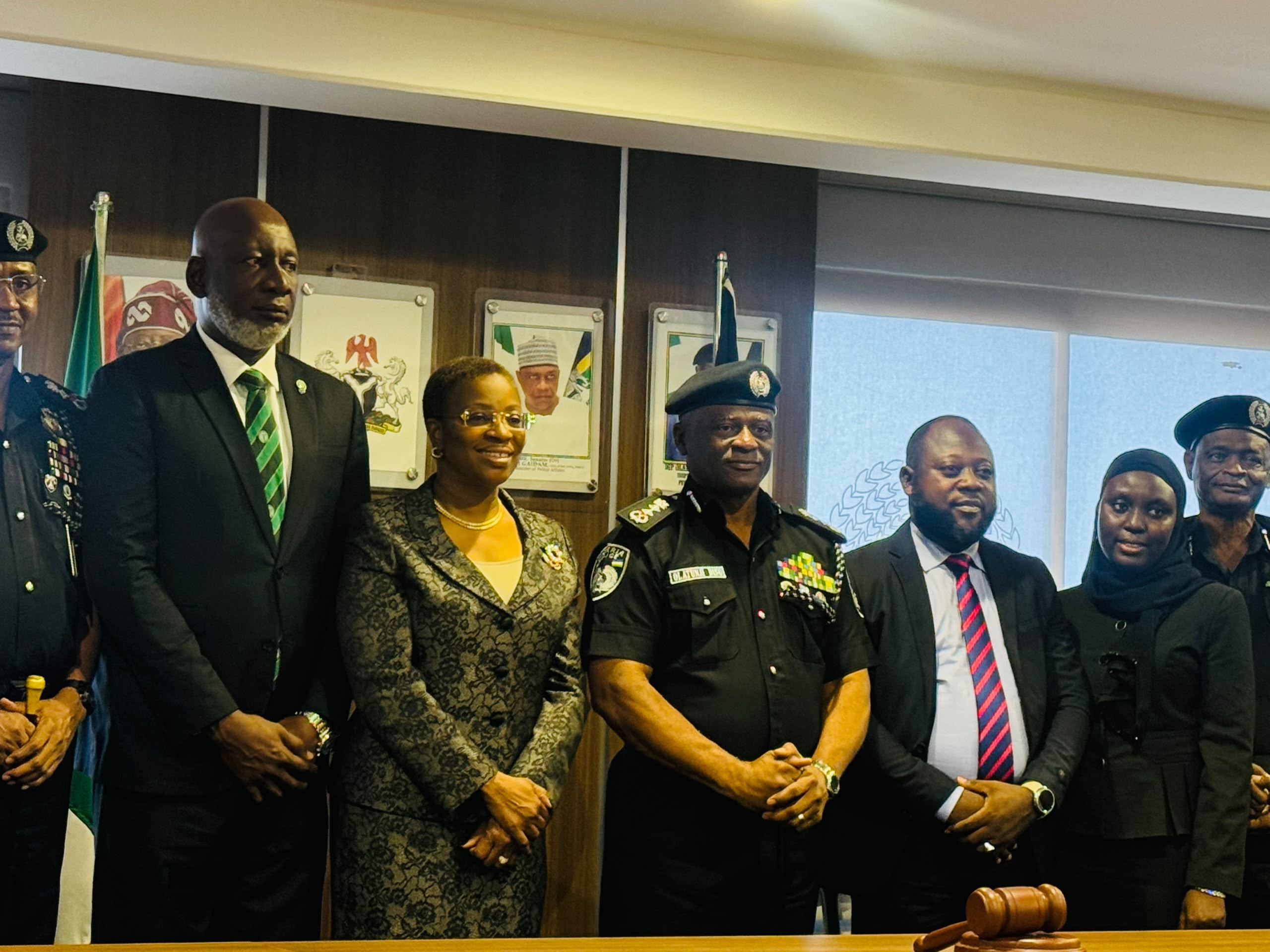
……IGP Disu, NBA President seek better police-lawyer relations, faster justice delivery, stronger rights protection
The Inspector-General of Police, IGP Olatunji Rilwan Disu, and the President of the Nigerian Bar Association, Oyinkansola Badejo-Okusanya, SAN, have called for stronger cooperation between the Nigeria Police Force and the legal profession to address recurring areas of friction, improve access to justice, protect citizens’ rights and strengthen the administration of criminal justice in Nigeria.
The call was made on Tuesday in Abuja when the NBA President, who recently assumed office, led members of her team on a courtesy visit to the Inspector-General of Police at the Force Headquarters, Louis Edet House. The meeting brought together the leadership of the two institutions to discuss areas of mutual concern and explore practical measures to improve relations between lawyers and police officers, particularly in the course of investigations, arrests, prosecution and other justice-related processes.
Badejo-Okusanya said building a stronger relationship with the Nigeria Police Force was one of the priorities of her administration, stressing that the police and legal profession occupy critical positions in the protection of democracy, public safety, the rule of law and citizens’ fundamental rights. She described the police as an important partner in the justice system and said the NBA was interested in developing a relationship that would promote mutual respect, professionalism and better outcomes for Nigerians.
According to her, many of the disagreements that frequently arise between lawyers and police officers could be reduced through sustained communication and institutional engagement. She called for an environment where lawyers could perform their legitimate professional duties without intimidation, while police officers would also be accorded the respect, cooperation and understanding necessary to carry out their responsibilities effectively.
The NBA President also advocated greater inclusion of lawyers serving within the Nigeria Police Force in the activities of the association. She proposed that police lawyers should have opportunities to participate in NBA committees, training programmes and other professional engagements, noting that the association should remain inclusive and relevant to lawyers irrespective of their place of service or practice.
She further raised concerns over restrictions placed on lawyers carrying mobile phones into some police formations. Badejo-Okusanya noted that modern legal practice increasingly depends on mobile devices for communication, documentation and access to information, and urged the police and NBA to engage on the issue with a view to understanding the security concerns involved and finding a mutually acceptable solution rather than allowing the matter to become another source of confrontation.
Another area of concern highlighted by the NBA President was children’s access to justice. She referred to an ongoing UNICEF project on criminal justice and expressed the association’s readiness to collaborate with the police in strengthening legal representation for children within the juvenile justice system. She said the partnership could include improving access to lawyers at police stations and strengthening the capacity of officers working at gender desks and other units that handle cases involving vulnerable persons.
Badejo-Okusanya also proposed the establishment of a mechanism through which the police could directly communicate with the NBA whenever a lawyer was found to have breached professional protocols. She explained that such a channel would enable the association to investigate complaints against its members and take appropriate disciplinary measures where necessary, while also helping to prevent individual disagreements from escalating into broader confrontations between lawyers and police officers.
Responding, IGP Disu described the police and legal profession as important partners in the administration of justice, noting that both institutions have distinct but complementary responsibilities. He said while the police are charged with protecting lives and property and enforcing the law, lawyers have a vital responsibility to safeguard citizens’ rights and ensure that justice is properly administered.
The IGP urged officers and members of the legal profession to understand and respect their respective roles, stressing that differences of opinion were inevitable in the justice system but should not be allowed to undermine professional relationships or the administration of justice. He called for disagreements between police officers and lawyers to be addressed through dialogue and established institutional channels rather than confrontation.
IGP Disu also expressed concern over the recording of police officers while carrying out their duties, particularly personnel deployed to difficult and sensitive locations such as highways, forests and remote communities. While acknowledging the rights of citizens, he said there was a need for responsible engagement that would not compromise police operations or unnecessarily expose officers performing sensitive duties to security risks.
The Inspector-General further raised concerns about the use of police intervention in civil disputes, particularly cases involving land ownership, titles and possession. He said the Force was working to ensure that police officers were not used as instruments for settling land disputes, stressing the importance of neutrality and proper assessment of petitions before police action is taken.
According to the IGP, there was also a need to improve coordination in the handling of petitions to prevent the same complaint from being presented before multiple police formations, which could result in duplication of investigations, conflicting processes and unnecessary delays. He said a more coordinated approach would help the Force to deploy its resources effectively while ensuring that legitimate complaints receive appropriate attention.
IGP Disu identified criminal justice reform as another major area requiring stronger collaboration between the police and the NBA. He listed improved criminal investigations, effective prosecution, case management, reduction of delays, evidence management, witness protection, human rights compliance, access to justice and the application of technology as areas where both institutions could work together to strengthen the justice system.
The IGP proposed a direct communication mechanism between the Nigeria Police Force and the NBA to enable both institutions to address emerging issues quickly and prevent misunderstandings from escalating. He encouraged the two sides to maintain the ability to disagree where necessary without becoming adversarial, stressing that constructive engagement and accountability were essential to improving public confidence in the justice system.
He assured the NBA leadership of his commitment to maintaining an open channel of communication and encouraged lawyers to continue holding the police accountable where necessary while also taking into consideration the operational realities and challenges faced by police officers in the discharge of their duties.
The meeting therefore underscored the need for sustained institutional engagement between the Nigeria Police Force and the Nigerian Bar Association as both bodies seek to reduce friction, promote professionalism and improve the overall administration of justice. The proposed areas of collaboration, particularly children’s access to justice, professional accountability, criminal justice reform, human rights protection and direct communication, are expected to provide a framework for a more constructive relationship between the police and legal profession.

