About Author


Lastest News Nigeria, Politics, Business, Sport, Interview
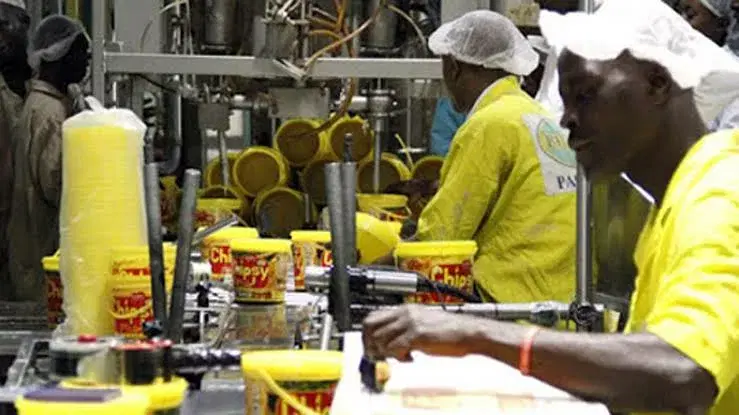
Manufacturing companies listed on the Nigerian Exchange Limited (NGX) entered the second quarter of 2026 with combined inventories of about N1.77 trillion, while their cost of sales reached N1.43 trillion.
The figures show growing pressure on the manufacturing sector, as companies hold more unsold goods while facing higher costs to produce and sell them. Combined inventories rose 10.6 per cent year-on-year from N1.597 trillion, while cost of sales increased 13.7 per cent from N1.261 trillion to N1.434 trillion.
Dangote Cement had the largest inventory at N703.58 billion, up 4.8 per cent from N671.55 billion. UACN recorded a sharp 231.8 per cent rise to N189.55 billion, while Okomu Oil Palm increased 90.3 per cent to N39.90 billion.
However, some firms reduced their stock. Northern Nigeria Flour Mills fell 34.6 per cent to N31.46 billion, while NASCON Allied Industries declined 17.1 per cent to N14.34 billion.
Fiona Ahimie, President of the Chartered Institute of Stockbrokers, said higher inventories reflect both supply and demand factors. She noted that manufacturers increased production as operating conditions improved, but consumer demand had not grown at the same pace.
“Although inflation has moderated, prices remain elevated relative to household incomes, which have continued to weigh on consumer spending.”
Production costs also remain high because of energy, transport, logistics, raw materials and financing expenses.
Analysts said stronger purchasing power, reliable electricity, better infrastructure, affordable financing and improved security could help manufacturers reduce inventories and lower costs.
The manufacturing sector could therefore benefit from stronger consumer demand and lower operating costs, while sustained pressure may continue to affect businesses and households.
Will stronger consumer purchasing power help Nigerian manufacturers clear their rising inventories?

