

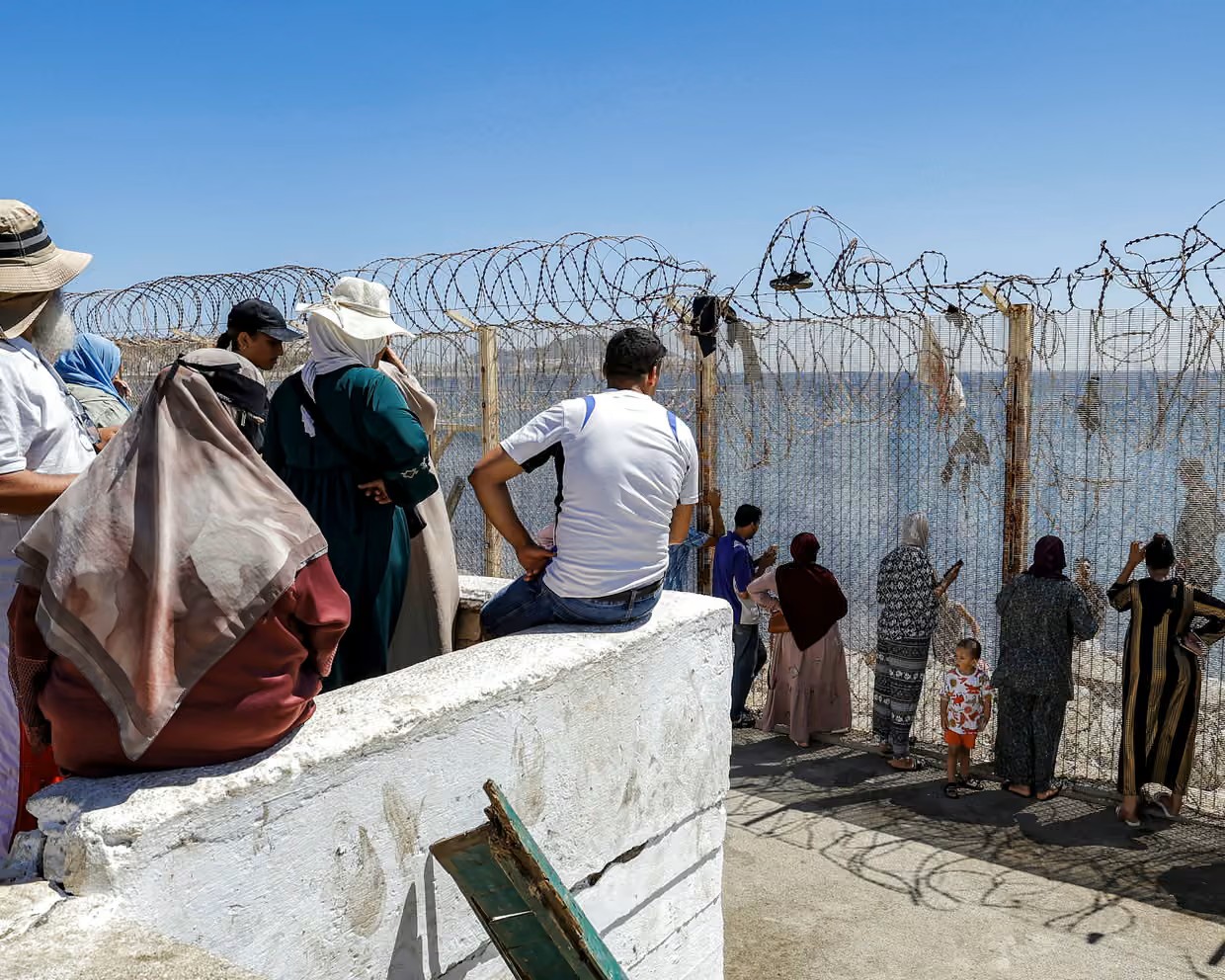
Hundreds of families have gathered in Fnideq, northern Morocco, desperately searching for relatives who disappeared during the recent Ceuta border crisis. Holding photographs of missing loved ones, they lined the streets near the Spanish border in the hope that someone would recognise them as attention turned from the mass crossing to the growing human cost of the tragedy.
According to local officials, at least 88 people died on the Spanish side in Ceuta, while another 11 people lost their lives in Morocco. Dozens more remain unaccounted for. Around 72,000 migrants crossed into the Spanish enclave last week, with an estimated 70,000 since returned to Morocco.
Among those waiting was Hadijja, who travelled from Tangier in search of her 23-year-old son. She said she had received no contact from him since he left and feared he was among those who attempted the crossing. “I have just one son,” she said. “I haven’t had any news of him; he’s not answering his mobile phone.”
Some returnees said they chose to go home after facing hunger and uncertainty in Ceuta, while others claimed Spanish police escorted them back to the border. Meanwhile, humanitarian organisations have raised concerns that some migrants eligible for international protection may have been returned before being allowed to seek asylum.
The Ceuta border crisis has also left many children vulnerable. Spanish authorities estimate that about 2,000 people remain in Ceuta, including at least 862 unaccompanied minors. UNICEF Spain warned that more children could still be wandering the city without protection, while Spanish police have opened a dedicated office to receive reports of missing persons.
Questions continue over what triggered the unprecedented crossing. Moroccan authorities blamed misinformation spread on social media, while Spanish officials rejected claims that they had received advance warnings about the scale of the incident. As investigations continue, families on both sides of the border remain focused on one hope—finding their missing loved ones alive.
What more should governments do to protect migrants while preventing tragedies like the Ceuta border crisis?

