

|By Adejumo Adekunle-
…Ex-Minister faults state interference, urges national debate on true decentralisation
…Calls Supreme Court ruling a positive step, but warns of deeper legal contradictions
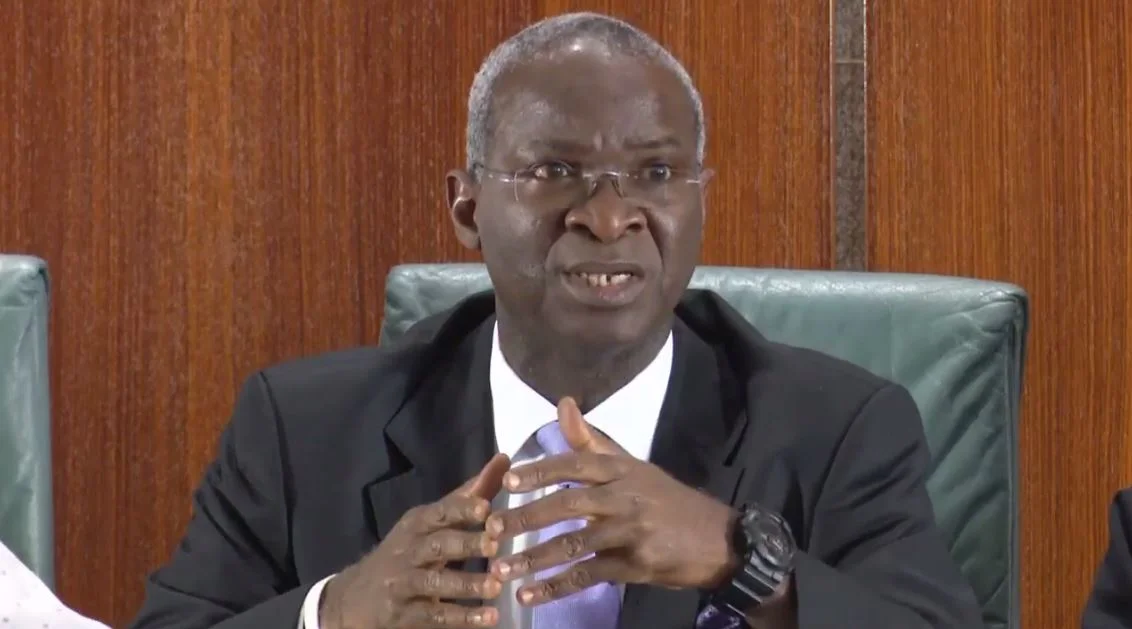
Former Minister of Power, Works and Housing, Babatunde Fashola, says it is unrealistic to expect local governments in Nigeria to function independently under the current constitutional arrangement.
Fashola made this remark during an appearance on Sunrise, a Channels Television programme aired on Saturday, where he argued that local councils remain structurally dependent on state governments and state houses of assembly.
According to him, “The debate we must have is whether we really want autonomous local governments. As it stands today, it is unrealistic to expect autonomy for local governments created by the Constitution.”
Fashola, a former Governor of Lagos State and Senior Advocate of Nigeria (SAN), emphasized that the Constitution clearly empowers state assemblies to make laws for local governments—an arrangement that, in his view, fundamentally negates the principle of autonomy.
He noted that critical resources needed by local governments—such as land for infrastructure development—remain under the control of state governments, further limiting their capacity to operate independently.
The former minister also linked the establishment of joint accounts between states and local governments to historical cases of financial mismanagement at the grassroots level. He recalled how, in the early years of Nigeria’s return to democracy in 1999, several local governments struggled to pay salaries and pensions of primary healthcare workers and teachers.
On the Supreme Court’s July 2024 ruling, which barred governors from dissolving elected local government councils and granted them financial autonomy, Fashola acknowledged the judgment as a progressive move. However, he expressed caution over its long-term validity.
“Though no patriot would say all is well with the local governments, legal practitioners are divided on whether the Supreme Court ruling can withstand constitutional scrutiny,” he said.
Fashola added that the conduct of regular and democratic council elections remains one of the clearest paths to achieving meaningful autonomy at the grassroots level.
The debate over local government independence has gained fresh momentum following the landmark Supreme Court judgment, which redefined the boundaries of state control and local administration. Still, as Fashola insists, any sustainable solution must begin with an honest national conversation about the constitutional design of local governance in Nigeria.

