
By peterside Rejoice
The National Assembly has disclosed plans to formally engage President Bola Ahmed Tinubu over persistent funding challenges confronting security and intelligence agencies, particularly the non-release of capital allocations captured in the current fiscal year.
The move follows closed-door deliberations between lawmakers and heads of key security and intelligence institutions, where concerns were raised about the operational impact of delayed or withheld capital releases.
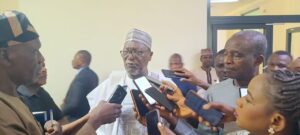
Chairman of the Senate Committee on National Intelligence, Senator Yahaya Abdullahi, who briefed journalists after the meeting, acknowledged that the problem of non-release of capital funds is not peculiar to defence and intelligence agencies but cuts across Ministries, Departments and Agencies (MDAs).
He said the committee, after reviewing submissions from relevant committees of both chambers, would reconvene to develop comprehensive recommendations aimed at addressing the funding gaps, particularly as preparations for the 2026 fiscal year gather momentum.
Abdullahi stressed that President Tinubu’s earlier declaration of a national emergency on security must be matched with adequate financial backing to avoid rendering the pronouncement symbolic.
“President Tinubu had declared that emergency, and therefore, if there is an emergency, there should be funding to back up that emergency. So we will have to come up with strategies to ensure that the words and declaration of the President do not go out in vain.
“We will sit down, even if it means going through the leadership to meet Mr. President, to take the plight of the security and intelligence agencies into account and report directly to him so that appropriate steps are taken to ensure that the agencies are given enough funds to pursue their constitutional responsibilities,” he said.
He warned that 2026 would be a critical year for Nigeria’s democracy, particularly against the backdrop of prevailing security challenges, noting that inadequate funding of security institutions could pose serious risks as the country approaches the next general elections.
According to him, the National Assembly may formally approach the President through its leadership to present the unified position and recommendations of both the Senate and the House of Representatives.
The lawmaker also expressed strong reservations about the continued use of the “envelope budgeting system,” describing it as outdated and no longer reflective of current national realities.
He recalled that the system was introduced during the administration of former President Olusegun Obasanjo as a temporary fiscal control mechanism at a time of declining oil revenues and financial constraints.
“This envelope system was developed years ago when I was in the civil service, and I think it has outlived its usefulness. For me, personally, it is my opinion.
“We are not budgeting based on needs. We are budgeting based on money. But it’s not just about having less money; it is about identifying the needs of institutions and the priorities that we should fund, not just giving people money and saying, ‘Go and share,’” Abdullahi stated.
He argued that the country’s present security and developmental challenges require a shift toward a needs-based budgeting framework that aligns allocations with national priorities, rather than strictly adhering to pre-set expenditure ceilings.
To this end, he disclosed that the committee would engage the Federal Ministry of Finance and the Budget Office of the Federation to reassess the continued relevance of the envelope system and explore reforms that would strengthen fiscal planning and resource allocation.
Abdullahi further revealed that the committee had concluded its preliminary reviews and was preparing formal reports for submission to the Appropriation Committee and the leadership of the National Assembly for further legislative action.
He maintained that ensuring sustainable funding for security and intelligence agencies remains central to safeguarding national stability and protecting Nigeria’s democratic process.
About Author


