

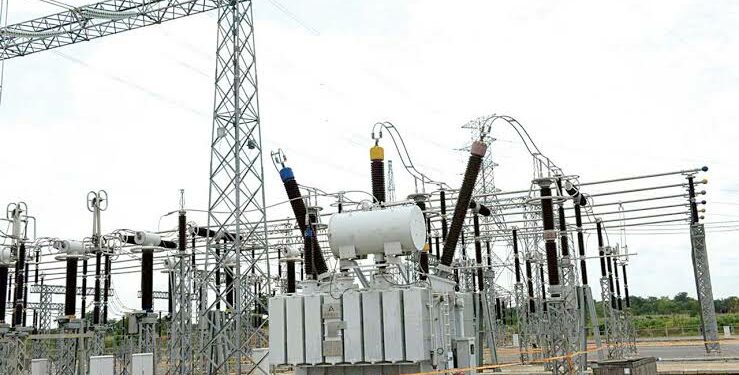
Nigeria’s power sector requires an estimated $228 billion in investment between now and 2045 to stabilise the national grid and meet the country’s growing electricity demand, according to the Special Adviser to the President on Power Infrastructure, Sadiq Wanka.
Speaking at Asharami Square 3.0 in Lagos, Wanka said the country needs about $12 billion in electricity investment every year through 2045, compared with the roughly $1 billion currently invested annually.
“Nigeria, potentially, needs $12 billion in electricity investments annually through 2045, versus $1 billion being spent currently,” Wanka said.
He explained that bridging the investment gap would require stronger policies, improved regulations and a focused strategy to attract private and public sector funding.
According to Wanka, about $6.1 billion is needed for electricity generation, $2 billion for transmission infrastructure, and between $2 billion and $4 billion to strengthen the distribution network between 2025 and 2045.
He noted that reforms under the Electricity Act 2023 have expanded state participation, improved sector governance and introduced new licence categories. Regulatory oversight has also shifted to subnational regulators in 16 states.
Wanka highlighted recent investments, including Imo State’s $200 million public-private partnership to expand electricity across all local government areas and a ₦50 billion equity investment by franchise state governments in KEDCO to improve embedded power generation and network infrastructure.
He added that the migration of Band A customers to cost-reflective tariffs has reduced electricity subsidies by ₦1 trillion annually, while reforms in the oil and gas sector have attracted $10 billion in final investment decisions for major gas projects.
Wanka urged investors, development partners and policymakers to work together to accelerate electricity investment, close Nigeria’s power gap and build a more reliable energy sector.
Can increased private investment help deliver stable electricity across Nigeria in the coming years?

