

By Peterside Rejoice
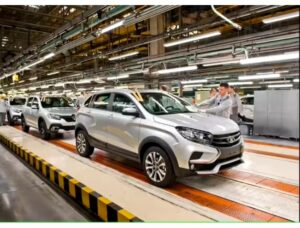
Two leading Russian automakers, UAZ and AvtoVAZ, are preparing to enter Africa’s fast-expanding automobile market through local vehicle assembly initiatives aimed at competing with dominant Asian manufacturers.
The companies are currently exploring opportunities to establish assembly operations across the continent, beginning with Ethiopia, as part of efforts to strengthen Russia’s economic presence in Africa and deepen bilateral relations with key nations.
According to a report by The Reporter Ethiopia, the Russian Embassy in Addis Ababa confirmed that both automakers are conducting feasibility studies and negotiations on potential partnerships for local vehicle production.
Russia’s Foreign Minister, Sergey Lavrov, said the country’s relations with Ethiopia are experiencing “successful and steady development,” noting that both sides are working to expand cooperation through a more active Intergovernmental Commission.
Similarly, Russia’s Ambassador to Ethiopia, Evgeny Terekhin, revealed that discussions are ongoing with Ethiopian authorities to ensure a smooth market entry for the automakers.
“The process involves detailed marketing and technical research to ensure the economic feasibility of the projects,” Terekhin said.
“We expect the results to enable Russian cars to take a worthy place on the roads of Ethiopia.”
The move is seen as part of Russia’s broader strategy to diversify its trade relations in Africa and challenge the dominance of Asian automakers who currently control much of the continent’s vehicle market.
Chinese brands such as BYD, Chery, and Great Wall Motors, as well as Indian manufacturers like Tata Motors and Mahindra, have already taken strong positions through affordable models and growing assembly partnerships.
With several African countries including South Africa, Morocco, Kenya, and Nigeria offering tax incentives and special economic zones to attract automotive investments, experts believe the arrival of Russian manufacturers could further stimulate local production and job creation.

