

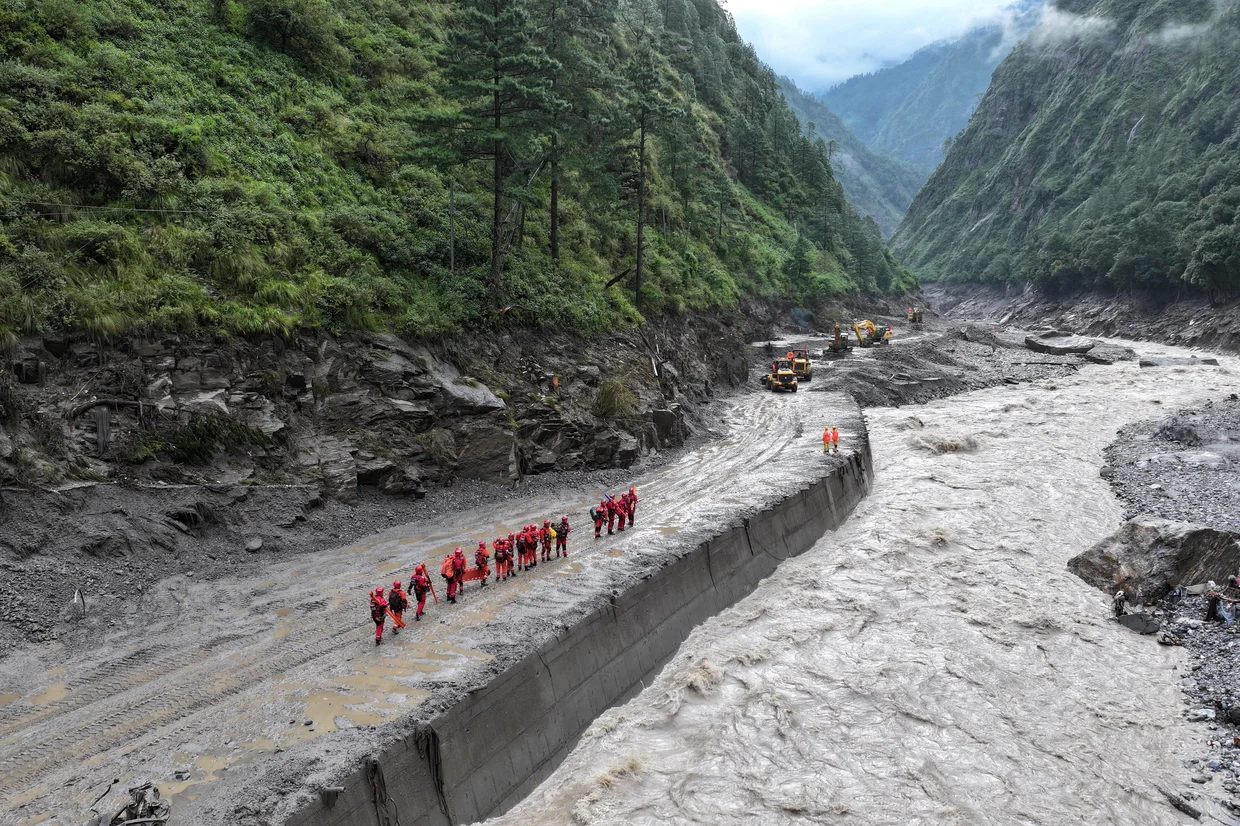
The Nepal flash floods have killed at least 584 people across Nepal and China, while thousands remain missing after catastrophic flooding and landslides.
Nepal’s National Disaster Risk Reduction and Management Authority said on Friday that the country’s confirmed death toll had reached 579, while Chinese state media reported five deaths on its side of the border.
More than 3,700 people have been rescued in Nepal, including thousands evacuated by helicopter. However, 1,924 people remain unaccounted for in Nepal, while Chinese authorities previously reported 558 missing. The Red Cross estimates that about 90,000 people may have been affected.
Authorities have also warned of further danger from a new lake formed upstream following Wednesday’s disaster. Nepal Police placed rescue and relief workers on high alert and urged them to move to safer locations if necessary.
Rescuers continue searching for survivors, including people trapped inside a hydropower tunnel in Rasuwa. Nepal Army teams have pulled survivors covered in thick mud from the tunnel as they work through the damaged area.
Scientists believe a major collapse involving bedrock and part of a glacier high in the Himalayas triggered the disaster. The resulting surge of rocks and melted water rapidly increased river levels, sending powerful torrents through valleys in Tibet and Nepal.
Geoscientist Jakob Steiner said, “What happened yesterday is unfortunately the new normal. It’s going to get worse from here onwards,” highlighting concerns about the effects of rising temperatures on Himalayan glaciers and mountain slopes.
Meanwhile, 90 Americans remain missing, according to the US State Department, while five have been rescued. Several missing people were part of a pilgrimage to Mount Kailash.
Survivor Karbir Gaire described the disaster as overwhelming, saying, “It was like a Hollywood movie scene. I don’t call it a flood, it was a tsunami.”
How can Nepal and neighbouring countries strengthen early-warning systems to prevent such disasters from causing even greater loss of life?

