

Rivers State forestry could help diversify the economy and create jobs if the sector is developed around sustainable plantations, manufacturing and community participation, according to Action Democratic Party governorship candidate Angel Lawson.
Mr Lawson made the proposal after visiting a forestry and paper mill in Jämsä, Finland. He said the visit showed how forestry could support a wider industrial chain instead of simply producing timber.
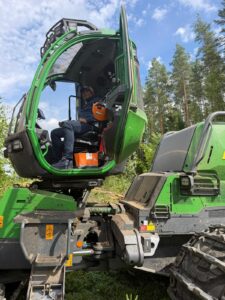
The Jämsänkoski mill is part of Finland’s established forest industry. Its operations include paper production and the use of wood pulp, while the facility also uses biomass-based fuels in its energy production.
Mr Lawson said Rivers State could develop commercial forestry and agroforestry alongside industries such as furniture, plywood, engineered wood, pulp, paper, packaging and biomass.
He argued that processing raw materials within the state could create more economic activity than exporting them without significant local processing.
He also highlighted the potential for jobs across the value chain. These could include tree nurseries, planting, forest management, transportation, sawmilling, manufacturing, logistics and professional services.
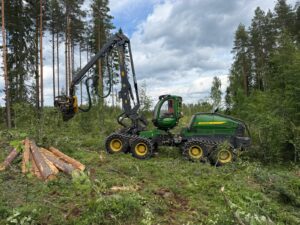
According to the World Bank, the global forest sector employs about 33 million people. It also says every 100 jobs in the forest sector support an additional 73 jobs across the wider economy.
However, Mr Lawson stressed that Rivers State forestry should not come at the expense of natural forests and mangroves.
He called for reforestation, commercial plantations on suitable land, biodiversity protection and responsible land-use planning.
He said his proposed approach would also involve communities, cooperatives, small businesses, investors, research institutions and private-sector partners.
Mr Lawson said further work would be needed to determine suitable locations and assess the commercial feasibility of a sustainable forest-products industry in Rivers State.
The proposal forms part of his wider argument for reducing dependence on oil and developing other productive sectors of the state economy.
About Author


