

|By Adejumo Adekunle-
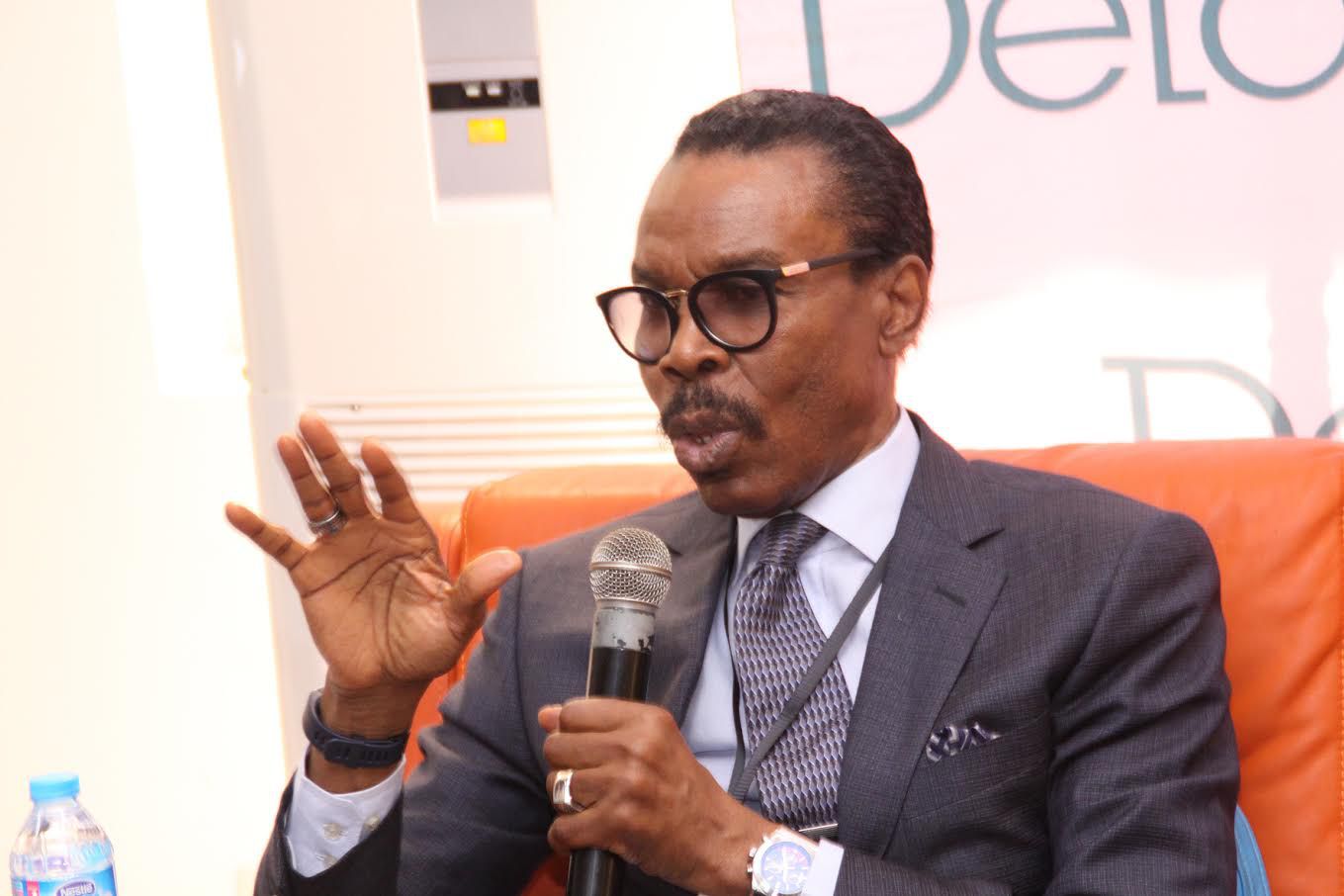
Popular economist and Chief Executive Officer of Financial Derivatives Company, Bismark Rewane, has revealed that late President Muhammadu Buhari had a deep fear of economic reforms that crippled his administration’s ability to respond to Nigeria’s fiscal crisis.
Rewane, who served as a member of Buhari’s economic advisory team, made the disclosure during a Channels Television tribute programme in honour of the late Nigerian leader. He said Buhari’s past as a military ruler largely shaped his reluctance to embrace bold reforms.
“He was scared of reforms,” Rewane said. “He has a phobia for reforms based on his antecedent when he was in the military. He was very cautious—many times, too cautious.”
The economist noted that Buhari’s delay in appointing a cabinet and the global oil price crash exposed the administration’s unpreparedness to tackle Nigeria’s mounting economic challenges.
“It took Buhari six months to appoint his cabinet,” he recalled. “By the time he sent his team, the external economy had become so volatile. The price of oil dropped to $40 per barrel from $110, so the circumstances were out of his and Nigeria’s control.”
According to Rewane, the government’s slow reaction to the global shock and internal policy weaknesses allowed the economy to deteriorate further. “We were not prepared and mobilised; therefore, we were slow to respond to the crisis, and it hit us badly,” he added.
President Buhari, who ruled Nigeria as a civilian from 2015 to 2023, died on Sunday, July 13, 2025, at the London Clinic. His burial, held on Tuesday in Daura, Katsina State, drew a crowd of dignitaries, including President Bola Ahmed Tinubu, Vice President Kashim Shettima, and former Vice President Atiku Abubakar.
Buhari’s legacy has remained a subject of national debate, especially on issues surrounding economic direction, monetary policy, and foreign investment climate.

