

|By Babatunji Wusu
The governments of Kaduna and Adamawa States have issued Certificates of Occupancy (C of Os) for strategic mini-grid project sites being developed by the Rural Electrification Agency (Rural Electrification Agency Nigeria), marking a significant push to expand clean energy access in underserved communities.
The approvals were granted swiftly after engagements with the REA and are being hailed as a decisive step toward accelerating renewable energy deployment, improving infrastructure delivery, and removing bureaucratic delays that often slow down energy projects in Nigeria.
The mini-grid sites fall under the Federal Government’s Minimum Subsidy Tender (MST) programme, a flagship intervention under the Nigeria Electrification Project (NEP), designed to fast-track electricity access in economically viable but underserved communities through a private sector-led competitive process.
Under the framework, the REA identifies and verifies communities, carries out sensitisation, and then invites developers to compete for subsidy support to build sustainable mini-grid systems.
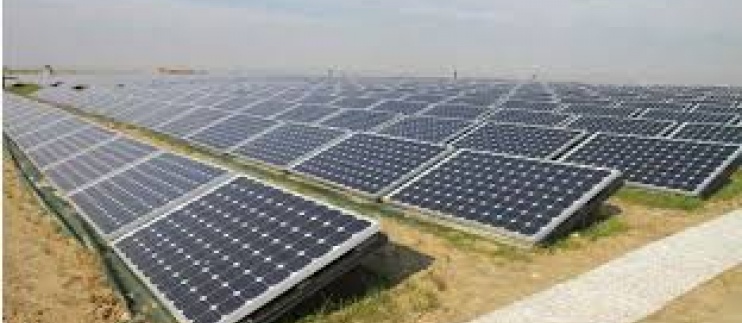
The programme is being implemented in phases, with the first phase covering more than 163 sites across several states, including Abia, Anambra, Bauchi, Cross River, Kano, Niger, Ondo, Ogun, Plateau and Kebbi. The initiative is projected to deliver about 213.436 MWp of solar photovoltaic capacity across participating communities.
To enhance efficiency and sustainability, the sites are grouped into state-based clusters to encourage scale and improve long-term operations.
In Kaduna State, land titles were issued for two sites: the Trapco site in Chikun Local Government Area, designed for about 3,100 connections with a 2.0 MWp capacity, and the Makarfi 1 site in Makarfi Local Government Area, expected to serve about 4,000 connections with a 4.0 MWp capacity.
In Adamawa State, Certificates of Occupancy were issued for three mini-grid sites under development. These include Kofare in Yola South Local Government Area, with an 8.0 MWp capacity and about 19,220 projected connections; Mbamba in Yola South, with a 0.8 MWp capacity and 2,282 connections; and Saminaka in Fufore Local Government Area, with a 2.5 MWp capacity targeting 4,660 connections.
Reacting to the development, the Managing Director of the REA, Abba Aliyu, commended the governors of both states for what he described as prompt and proactive leadership.
He said the speed of approval sends a strong signal to investors, developers, and financial institutions about the readiness of subnational governments to support large-scale electrification projects.
According to him, such cooperation is critical to unlocking private sector investment and accelerating Nigeria’s transition to clean and reliable energy access.

