

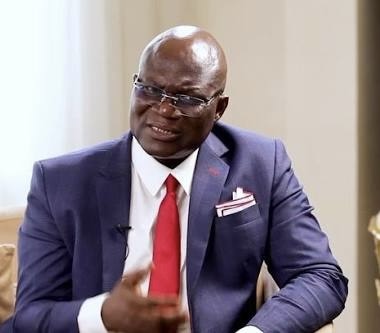
Abati warns that the rise of unregulated online publishers has blurred the line between professionaljournalists and untrained practitioners, making accountability increasingly difficult
Veteran journalist and media commentator, Reuben Abati, has raised concerns over accountability and professional standards in Nigeria’s media industry, questioning the absence of a comprehensive register through which members of the public can verify who is a journalist.
Abati made the remarks during a session at the 2026 Conference and Retreat for Senior Police Officers, CARSPO 2026, in Owerri, Imo State, where he spoke on the relationship between the media, the Police and other institutions of society.
He said the absence of a detailed and functional register of journalists had made it difficult to distinguish trained and professionally established journalists from individuals who publish information online without formal journalism backgrounds.
According to him, while professional bodies and media organisations exist, there remains a gap in identifying journalists in the same structured manner that other professions identify their practitioners.
“The question is, who is a journalist?” Abati asked, stressing the need for stronger mechanisms that would promote accountability within the profession.
He noted that the Nigerian media landscape had changed significantly with the growth of digital platforms, allowing virtually anyone to publish information and describe themselves as a journalist.
Abati said some individuals contributing to friction between the media and other institutions had never attended journalism school or worked in established media organisations, yet they publish information that may be only partly accurate.
He questioned the mechanism available to individuals or institutions seeking redress when such reports are published, noting that the absence of an effective intermediary system often leaves affected parties with litigation as one of the few options.
The former presidential spokesperson said the situation could be addressed through stronger professional and institutional mechanisms capable of receiving complaints, examining journalistic conduct and imposing appropriate sanctions where necessary.
He also discussed the role of media organisations in maintaining professional standards, noting that where a journalist is formally identified and a complaint is made to the journalist’s employer, the media organisation should have a responsibility to examine the matter.
Abati recalled efforts in the past to establish stronger institutional mechanisms for regulating the Nigerian press, noting that such initiatives had faced resistance from sections of the media who feared that government-backed regulation could become a means of censorship.
He said the challenge was therefore to establish accountability without undermining the independence of the press.
According to him, journalists must be held to professional standards while ensuring that any regulatory mechanism does not become an instrument for suppressing legitimate journalism.
Abati also stressed the importance of professionalism in managing conflicts between journalists and institutions, noting that journalists must learn how to manage their emotions when reporting on sensitive or contentious issues.
He said professionalism should remain central to the relationship between journalists, the Police and other public institutions.
His comments came during discussions on improving communication and relationships between the Police and the media, with participants examining how greater professionalism on both sides could reduce bfriction and improve public understanding of policing.
Abati’s intervention also underscored the changing nature of journalism in the digital age, where the distinction between established media organisations and individual online publishers has become increasingly blurred.
He called for stronger structures that can promote ethical journalism, identify practitioners and provide mechanisms for addressing complaints while preserving the independence of the media.
The discussion formed part of broader conversations at CARSPO 2026 on police communication, public relations, community engagement and the relationship between the Nigeria Police Force and the media.

