

By Rejoice Peterside
Founder and Chairman of the New Dawn for Women and Community Intervention Initiative (NEWOMCII), Bolaji Raji, on April 28, 2026, said empowering women remains one of the most effective ways to drive sustainable growth, strengthen families, and transform communities across Nigeria.
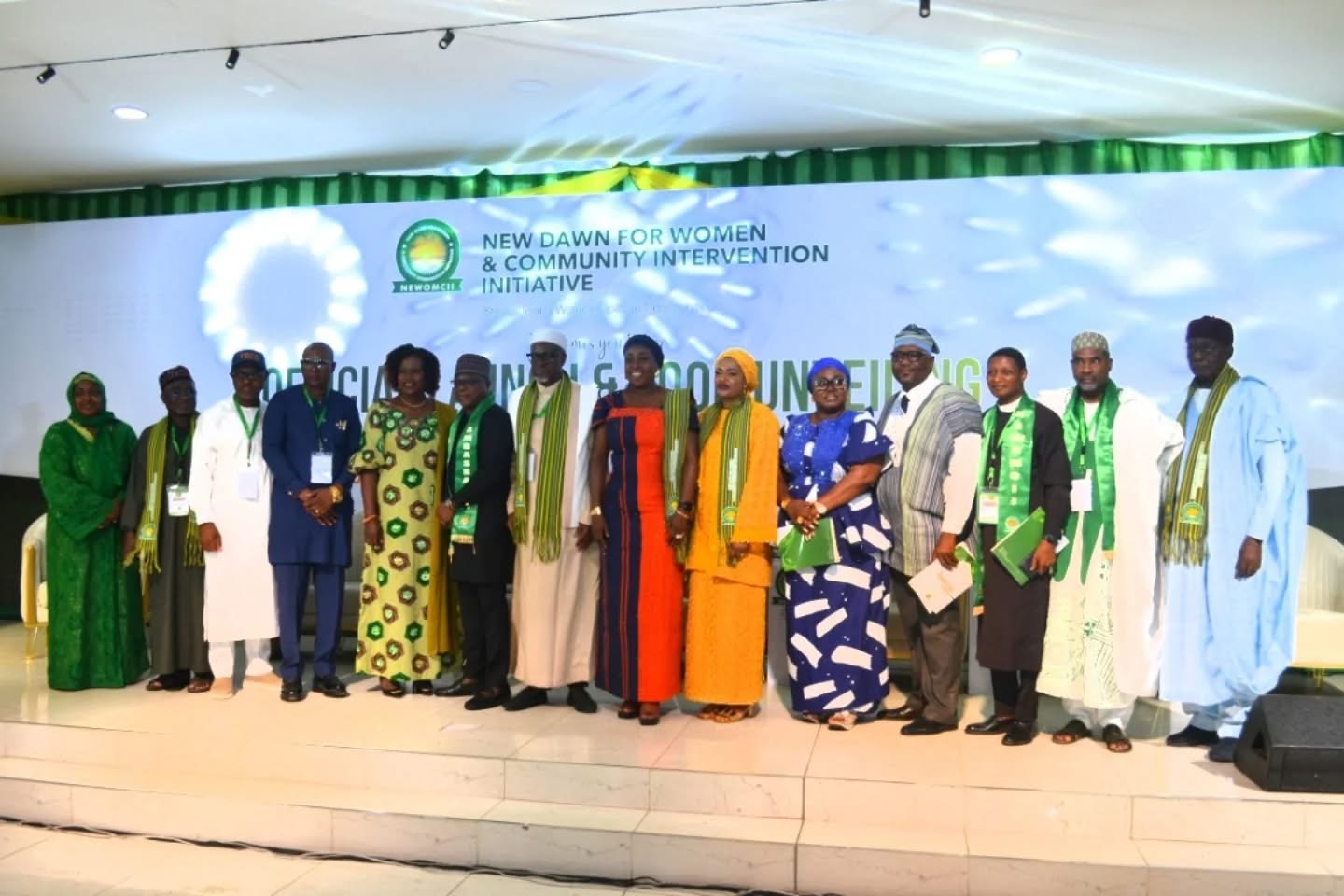
Raji stated this during the official launch and book unveiling of the organisation held at the Nigerian Army Conference Centre and Suites, where stakeholders from government, private sector, development organisations, traditional institutions, and civil society groups gathered to discuss practical pathways for grassroots empowerment and sustainable development.
The event, themed Empowering Women, Transforming Communities: Practical Pathways for Sustainable Development,”focused on advancing women’s inclusion, youth development, economic empowerment, and community-based interventions capable of creating lasting social and economic impact across Nigeria.
Speaking during the ceremony, Raji said the idea behind NEWOMCII was inspired by the visible gap in many communities where women and young people possess enormous potential but continue to lack access to opportunities, tools, infrastructure, and support systems needed to thrive.
According to him, the organisation was established to bridge that gap by creating practical solutions that directly improve livelihoods and complement government efforts in strengthening communities.
“A simple but powerful reality inspired the birth of NEWOMCII: across our communities, especially at the grassroots, many women and young people possess immense potential, yet lack access to the tools, opportunities, and support systems needed to succeed.
“We saw the gap. We saw the need. And we made a decision to be part of the solution by complementing government efforts and creating pathways for real empowerment,” he said.
The NEWOMCII chairman explained that the organisation focuses on practical interventions in agribusiness, arts and creative enterprise, youth empowerment, skills development, and community-based support programmes designed to improve economic independence and long-term sustainability.
Raji noted that women remain central to national development because when women are empowered, families become stronger and communities become more productive.
He stressed that women should not be seen merely as beneficiaries of social programmes but as strategic drivers of economic growth and social transformation.
According to him, supporting women at the grassroots would significantly reduce poverty, improve food security, strengthen education outcomes, and promote peace within communities.
He further stated that partnerships would be critical to achieving nationwide impact, noting that no organisation can create meaningful transformation in isolation.
Raji said NEWOMCII remains open to collaboration with government institutions, the private sector, donor agencies, development partners, non-governmental organisations, and the media to expand its reach and strengthen its impact across communities.
“Partnership is the key to real transformation. We must work together if we truly want to empower women, support young people, and build stronger communities,” he stated.
In her welcome address, National Coordinator of NEWOMCII, Hajia Sa’adatu Bokane Adamu, said the organisation is committed to strengthening women and uplifting communities through practical, grassroots-driven programmes that directly respond to local needs.
She noted that NEWOMCII operates in strategic areas including agribusiness, arts and craft development, youth empowerment, and community support initiatives aimed at improving the quality of life for vulnerable groups.
According to her, within a short period of operation, the initiative has already impacted several women groups and communities across the country, particularly in agriculture, creative skills development, social welfare, and medical support services.
She said the organisation’s vision is to ensure that women and young people are not left behind in the national development process.
Delivering the first keynote address, Managing Partner of Liberty Law Firm, Monrovia, Liberia, Chief (Barrister) Tupee Enid Taylor, said women remain central to development and nation-building across Africa.
Taylor described women as drivers of transformation and lasting change rather than passive participants in development.
“Women are not just participants in development, they are drivers of transformation and lasting change,” she said.
Taylor identified major barriers confronting women, especially at the grassroots, to include limited access to finance, lack of opportunities and infrastructure, restricted growth opportunities, inadequate institutional support, and cultural barriers.
She said these challenges continue to deny many women the opportunity to fully contribute to the economic growth of their families and communities.
Taylor called for stronger collaboration among governments, development organisations, the private sector, and community leaders, insisting that sustainable development can only be achieved through collective action and inclusive policies.
She also stressed the need for empowerment programmes that deliberately include women with disabilities, vulnerable groups, and marginalised populations.
“Empowerment that excludes is not empowerment,” she added.
In his keynote address titled *“Humanitarian Work: A Multidimensional Approach,”* the Director-General of the National Institute for Policy and Strategic Studies (NIPSS), Prof. Ayo Omotayo, highlighted the economic value of investing in women and the urgent need to stop viewing women as vulnerable groups and instead recognise them as strategic contributors to national development.
Omotayo urged women to embrace technology and artificial intelligence as tools for improving access to justice, legal aid, education, and economic opportunities, particularly in rural communities.
According to him, mobile technology can help women report discrimination, access legal support instantly, connect to financial services, and improve participation in governance and entrepreneurship.
Omotayo also called for stronger implementation of international gender protection frameworks such as the Convention on the Elimination of All Forms of Discrimination Against Women and the Maputo Protocol at the grassroots level.
He maintained that sustainable development would only become meaningful when women’s rights and empowerment policies are translated into practical realities within local communities.
“When we invest in a woman, we are not just performing a social good; we are making a high-yield economic investment,” he said.
Stakeholders at the event agreed that women’s empowerment must move beyond policy discussions and advocacy campaigns to become a deliberate national development strategy capable of driving inclusive growth, stronger communities, and long-term prosperity across Nigeria.
About Author


