

By Babatunji Wusu
-
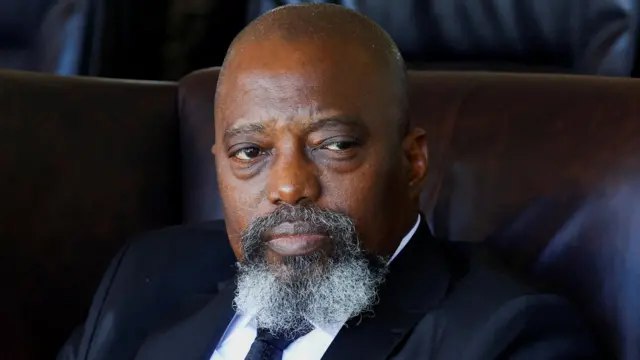
The treason trial of Joseph Kabila, former president of the Democratic Republic of Congo (DRC), has commenced in a military court in Kinshasa, facing charges including treason, murder, and rape.
-
Kabila, who denies all allegations and did not appear in court, labels the case “arbitrary” and a political instrument.
-
His successor, President Félix Tshisekedi, accuses Kabila of orchestrating the M23 rebel group, which controls a significant portion of eastern DR Congo.
-
The trial proceeds after the Senate stripped Kabila of his lifetime immunity, a move that followed his return from two years of self-imposed exile.
The high-stakes treason trial of Joseph Kabila, the former president of the Democratic Republic of Congo (DRC), officially began in a military court in the capital, Kinshasa, on Friday, July 25, 2025. Kabila faces a litany of grave charges, including treason, murder, and rape, stemming from his alleged support for the M23 rebels. This insurgent group currently controls a substantial portion of the resource-rich eastern part of the country. Despite the seriousness of the accusations, Kabila vehemently denies all allegations and chose not to appear at the initial hearing, requesting to be tried in absentia.
His successor, President Félix Tshisekedi, has publicly accused Kabila of being the mastermind behind the M23 rebels, suggesting a deep-seated political rivalry. In response, Kabila has dismissed the legal proceedings as “arbitrary,” asserting that the courts are being manipulated as an “instrument of oppression” against him. The first session of the trial was brief, adjourning to the end of the month following a request from prosecutors for additional time to review pertinent documents. This delay highlights the complex nature of the evidence and the potentially extensive legal battle ahead.
A significant development preceding the trial was the decision by the Congolese Senate in May to strip Kabila of his lifetime immunity, a privilege typically afforded to former presidents who serve as senators for life. This controversial move paved the way for his prosecution on various charges, including torture, participation in an insurrectionist movement, and the forcible occupation of Goma, a strategic city in eastern DR Congo. Kabila’s return to the rebel-held city of Goma in May from a two-year self-imposed exile in South Africa further intensified political tensions, suggesting a calculated move that may have triggered these legal actions.
The charge sheet, according to AFP news agency, explicitly identifies Kabila as “one of the initiators of the Congo River Alliance,” a broader rebel grouping that encompasses the M23 and other militia factions. This connection places Kabila at the center of the ongoing conflict in eastern DR Congo. Adding another layer of complexity to the situation, despite a ceasefire deal reached between the rebels and the government last week, fighting in the region has continued unabated. This persistent violence underscores the volatile security landscape that surrounds the trial and the broader political instability in the country. The international community, including the UN and several Western countries, has accused neighboring Rwanda of providing support to the M23, claims that Kigali steadfastly denies, asserting its actions are aimed at preventing the conflict from spilling over its borders. This trial, therefore, is not just a domestic legal matter but one with significant regional and international implications.

