
By peterside Rejoice Eneky
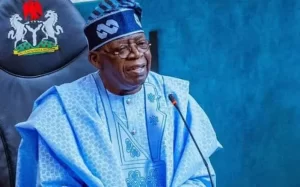
President Bola Ahmed Tinubu on Friday presented the 2026 Appropriation Bill to a joint session of the National Assembly, outlining a N58.18 trillion budget designed to consolidate economic reforms, strengthen national security and improve living standards for Nigerians.
The proposal, titled “Budget of Consolidation, Renewed Resilience and Shared Prosperity,” was presented at the National Assembly Complex in Abuja in fulfilment of the President’s constitutional responsibility.
Addressing the joint sitting, Tinubu described the budget as a defining step in Nigeria’s reform journey, noting that the past two and a half years had been spent confronting structural weaknesses, stabilising the economy, rebuilding confidence and laying a foundation for sustainable and inclusive growth.
He acknowledged that the reforms had imposed hardships on households and businesses but assured Nigerians that the sacrifices were beginning to yield results and would translate into shared prosperity.
The President highlighted improving economic indicators, including a 3.98 per cent growth in gross domestic product in the third quarter of 2025, an eight-month moderation in inflation to 14.45 per cent in November 2025, improved oil production and rising non-oil revenues driven by better tax administration. He also cited renewed investor confidence and external reserves reaching a seven-year high of about 47 billion dollars.
According to Tinubu, these gains were the result of deliberate policy choices and the focus of the 2026 budget is to consolidate stability and ensure that recovery is reflected in the daily lives of Nigerians.
Reviewing the 2025 budget performance, the President disclosed that as of the third quarter of the year, government recorded N18.6 trillion in revenue, representing 61 per cent of its target, while expenditure stood at N24.66 trillion, about 60 per cent of projections. He admitted that capital releases were constrained during the transition period but pledged stronger discipline in budget execution in 2026.
Tinubu said he had issued directives to key fiscal authorities to ensure strict adherence to approved timelines and allocations. He also warned heads of government-owned enterprises to meet their revenue targets, announcing plans for comprehensive digitisation of revenue collection to block leakages and strengthen accountability.
The 2026 budget projects total revenue of N34.33 trillion and total expenditure of N58.18 trillion, including N15.52 trillion for debt servicing. Capital expenditure is estimated at N26.08 trillion, while the projected deficit of N23.85 trillion represents 4.28 per cent of gross domestic product. The budget is based on a crude oil benchmark of 64.85 dollars per barrel, oil production of 1.84 million barrels per day and an exchange rate of N1,400 to the dollar.
Security remains a major priority, with N5.41 trillion allocated to defence and security. Tinubu said the funds would support the modernisation of the armed forces, intelligence-driven policing, border security and community-based peacebuilding. He announced a new national counterterrorism doctrine under which all armed non-state actors operating outside state authority, including bandits, kidnappers and their sponsors, would be classified as terrorists.
Education received an allocation of N3.52 trillion, while health was allocated N2.48 trillion. The President disclosed that more than 418,000 students had benefited from the Nigerian Education Loan Fund and announced over 500 million dollars in grant funding from the United States for targeted health interventions.
In his welcome address, Senate President Godswill Akpabio described the budget presentation as a defining national conversation about priorities and shared responsibility. He defended cooperation between the Executive and Legislature, saying history shows that nations make progress when institutions work together.
Akpabio said the Tenth Senate had recorded one of the highest levels of legislative output in Nigeria’s history, passing landmark bills on security, economic reform, governance, electoral integrity, infrastructure and social protection. He said the laws had strengthened the legal framework for national recovery and long-term prosperity.
Both leaders stressed that the success of the 2026 budget would depend on effective delivery, transparency and accountability. Tinubu said the true measure of the budget would not be its size but its impact on the lives of Nigerians.
The President formally laid the 2026 Appropriation Bill before the National Assembly and expressed confidence that sustained cooperation between the Executive and Legislature would ensure the delivery of the Renewed Hope Agenda and a more secure, competitive and hopeful Nigeria.
About Author


