
professionalism, intelligence-led deployment and inter-agency coordination will be critical to securing the 2027 elections
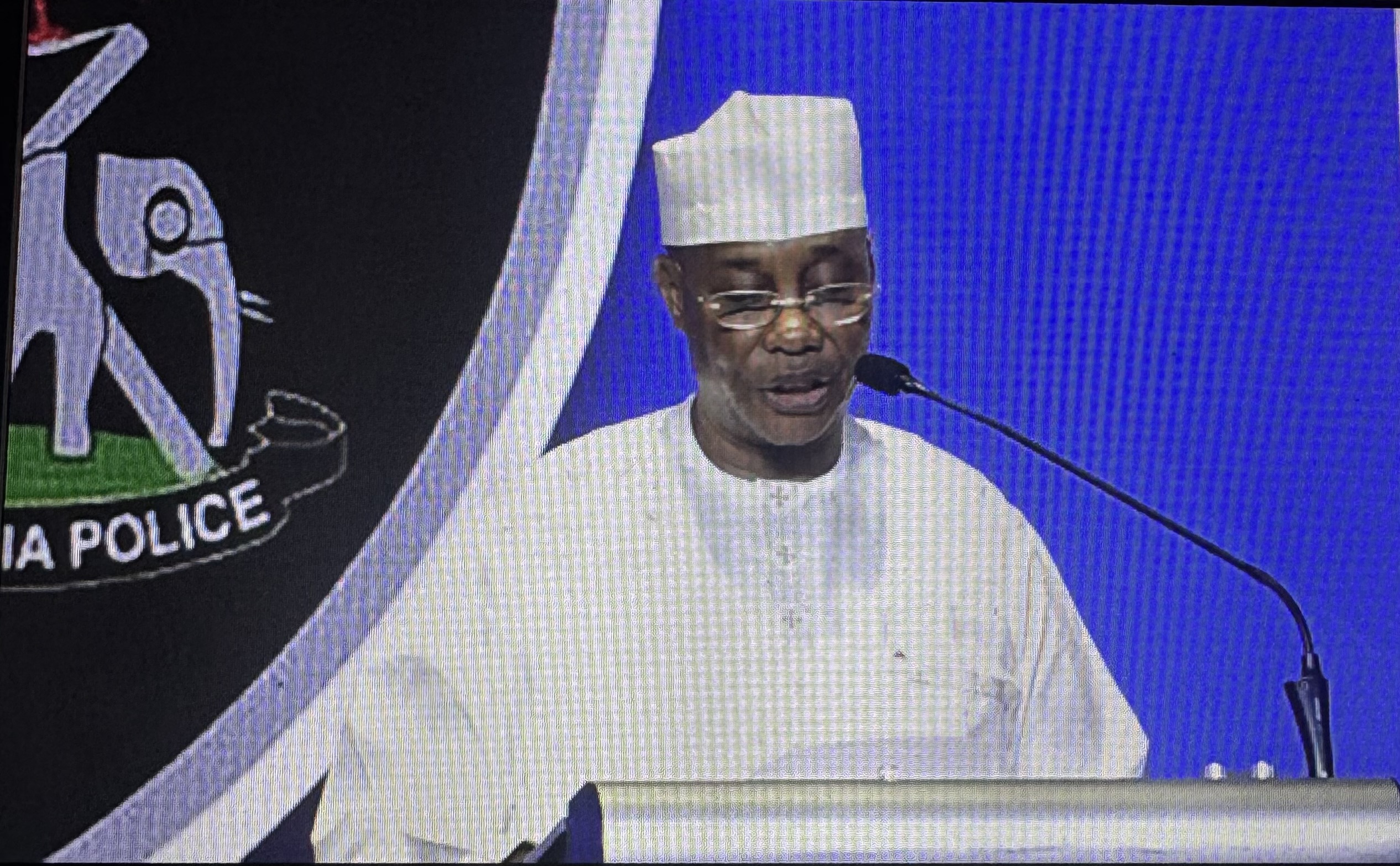
Former Inspector-General of Police, Usman Alkali Baba, has said the Nigeria Police Force has maintained a positive trajectory since Olatunji Rilwan Disu became Inspector-General of Police, urging the Force to sustain professionalism, intelligence-led operations and effective coordination with other security agencies ahead of the 2027 general elections.
Mr Alkali stated this in Owerri, Imo State, during the 2026 Conference and Retreat for Senior Police Officers, CARSPO 2026, where he presented a paper on election security governance.
The three-day conference, which began on Monday and ends Wednesday, is themed, “Developing a Nigeria Police Roadmap for Effective Management of Security During Elections.” The Police said the conference was convened to develop practical strategies for protecting voters, electoral officials, candidates, election materials and the general public during the 2027 elections.
Speaking on the performance of the Force under IGP Disu, Mr Alkali said the Police had not been bad since the current police chief assumed office, while stressing that the gains recorded must be consolidated through professionalism and sound operational planning.
He said the credibility and safety of the 2027 elections would depend significantly on the ability of security agencies to anticipate threats, coordinate their operations and deploy personnel based on credible intelligence.
According to him, election security should not be viewed as the responsibility of the Nigeria Police Force alone, but as a collective responsibility involving what he described as the “extended policing family.”
He listed the Department of State Services, National Intelligence Agency, Nigeria Security and Civil Defence Corps, Nigeria Immigration Service, Nigeria Customs Service, Economic and Financial Crimes Commission, Independent Corrupt Practices and Other Related Offences Commission, National Drug Law Enforcement Agency and Federal Road Safety Corps among agencies whose roles would be important to election security.
He added that the military could also provide support to civil authorities where constitutionally required, particularly in situations demanding additional security capacity.
“The task of security governance of the 2027 general election is the responsibility not just of the Nigeria Police, but of the extended policing family,” he said.
Mr Alkali said effective collaboration among the agencies would require clear responsibilities, intelligence sharing and coordinated deployment, particularly in areas identified as potential electoral flashpoints.
He urged police commanders to begin preparations early instead of waiting until election-related violence or other security threats had emerged before responding.
The former IGP said Nigeria’s existing security challenges must be factored into election planning, noting that insecurity in some parts of the country could discourage citizens from exercising their constitutional right to vote.
He recalled the security challenges associated with previous off-cycle elections, including the Anambra election, and stressed that security concerns should not become a reason to prevent citizens from participating in the electoral process.
Rather, he said, security agencies must develop strategies that would enable citizens to vote safely while dealing firmly with individuals or groups seeking to disrupt elections.
Mr Alkali identified kidnapping, armed robbery, murder, cultism, vandalism, rape, arms-related offences, cybercrime and terrorism among threats that could affect the security environment during the 2027 electoral cycle.
He also drew attention to the growing role of technology in elections, noting that while digital systems could improve election management, they could equally create vulnerabilities that criminals and other actors might exploit.
The former police chief urged the Force to strengthen its technical and intelligence capabilities to detect emerging technology-driven threats, including sophisticated methods of vote buying, movement of illicit funds and the spread of false information.
He said the experience of the 2023 general elections demonstrated the importance of understanding both the benefits and vulnerabilities associated with technology in the electoral process.
On the legal responsibilities of the Police, Mr Alkali said the Force had significant obligations before, during and after elections, including protecting electoral officials, election materials and polling locations.
He said Commissioners of Police must also ensure adequate security for political rallies and meetings while regulating situations where rival political parties sought to hold events at the same location or at conflicting times.
According to him, lawful political activities should not be unnecessarily restricted, but the Police must exercise theirregulatory responsibilities to prevent clashes and maintain public order.
Mr Alkali further stressed the importance of proper investigation of electoral offences, saying police officers must ensure that evidence is preserved and case files properly documented even where officers handling investigations could subsequently be redeployed.
He noted that the issue was particularly important during off-cycle elections because officers could be deployed from different commands and later return to their formations.
The former IGP also warned police commanders against relying on the Independent National Electoral Commission to provide transportation for police personnel deployed for election duties.
“Don’t rely on INEC to deploy your men for you,” he told the senior officers, urging the Force to make adequate logistical arrangements for its personnel.
He said proper logistics would enable commanders to move officers efficiently and ensure that personnel assigned to protect electoral officials and materials were deployed where and when they were needed.
Mr Alkali also called for stronger intelligence gathering, threat assessment, crowd management and traffic-control arrangements ahead of the 2027 polls.
His presentation came against the backdrop of the election-security framework unveiled by IGP Disu at the opening of CARSPO 2026.
IGP Disu outlined six pillars for the Force’s preparations: strengthened intelligence and early-warning systems; intensive training and preparedness; joint command and inter-agency coordination; effective communication and deployment of technology; sustained community partnership; and absolute neutrality.
Disu also directed Commissioners of Police to identify and map electoral flashpoints, criminal networks and emerging threats within their respective commands, while strengthening community-based intelligence and early-warning systems.
At the opening of the conference, President Bola Ahmed Tinubu, represented by Secretary to the Government of the Federation, George Akume, charged the Police to maintain professionalism and impartiality in the 2027 elections, stressing that the Force must not become an instrument of any political interest.
The President also pledged continued government support for police training, technology, operational logistics, welfare and institutional reforms as the Force prepares for the elections. The Sun Nigeria
The conference has brought together senior police officers, security agencies and other stakeholders to develop an actionable roadmap for managing election security before, during and after the 2027 general elections. Nigeria Police Force
About Author


