

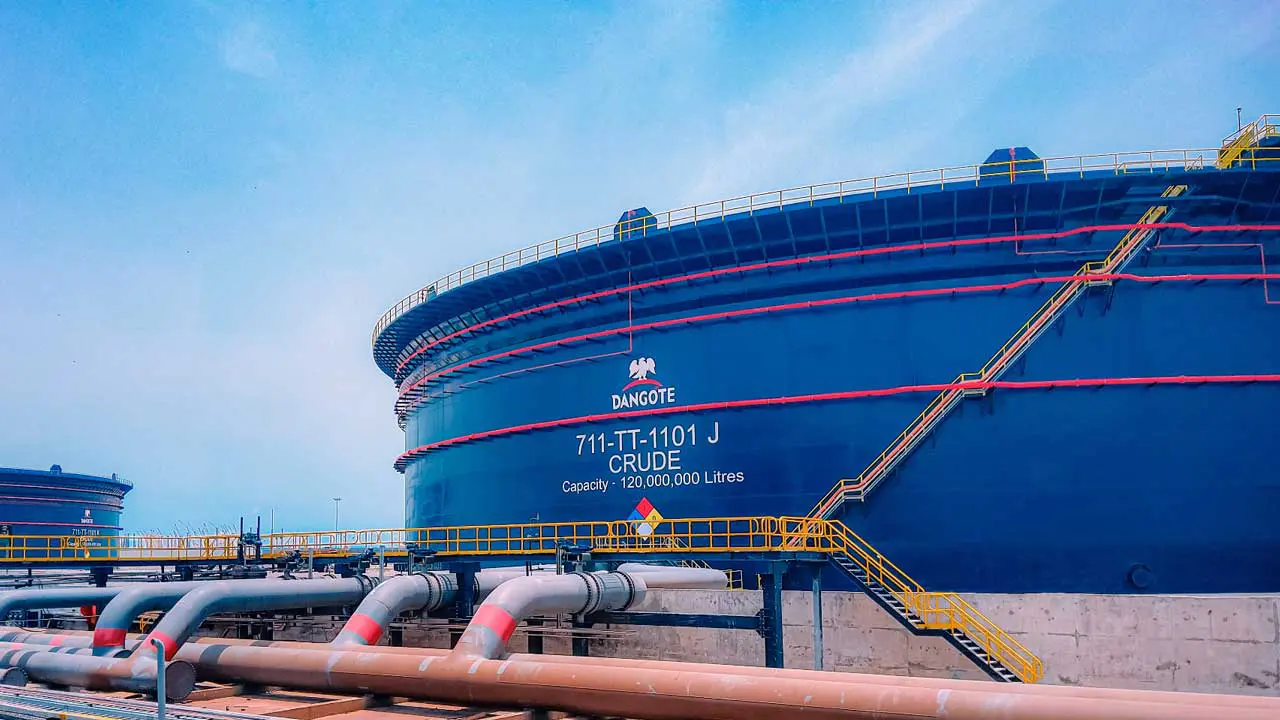
Dangote Petroleum Refinery and Petrochemicals has dismissed claims that its petroleum products are exported to Lomé, Togo, and later re-imported into Nigeria, describing the allegation as false, misleading and unsupported by facts.
In a statement issued by its management, the company said it generally avoids responding to unsubstantiated accusations. However, it decided to address the matter publicly to correct what it described as deliberate misinformation regarding its operations and product distribution network.
According to the refinery, the allegation lacks support from trade records, commercial realities and industry practices. Management stressed that one of the refinery’s key objectives is to strengthen domestic fuel supply and reduce Nigeria’s dependence on imported petroleum products. It noted that allowing imported products to compete directly with its own output would contradict that mission.
The company further revealed that all Dangote Refinery products are sold under contracts and tender agreements that expressly prohibit resale or re-importation into Nigeria. These contractual safeguards, it said, are designed to protect local supply and maintain market stability.
Management also challenged the economic logic behind the claim. According to the statement, transporting petroleum products from the refinery to Lomé and back to Nigeria would attract estimated logistics costs of between $82 and $90 per metric tonne, making such transactions commercially impractical.
“Dangote Refinery does not provide export discounts sufficient to offset these costs or create arbitrage opportunities between export and domestic markets. Simply put, no rational producer would incur additional shipping, storage, financing, and handling costs only for products to re-enter and compete in its primary market.”
The refinery also highlighted its strict product traceability system, which tracks lifting points, vessels, counterparties and declared destinations. These measures provide full visibility across the supply chain and help prevent unauthorised transactions.
Reaffirming its commitment to local refining, the company stated that encouraging re-importation would undermine Nigeria’s industrial growth, weaken foreign exchange reserves and work against efforts to achieve energy security. It maintained that the allegations have no strategic, economic or operational basis and do not align with established industry standards.

