

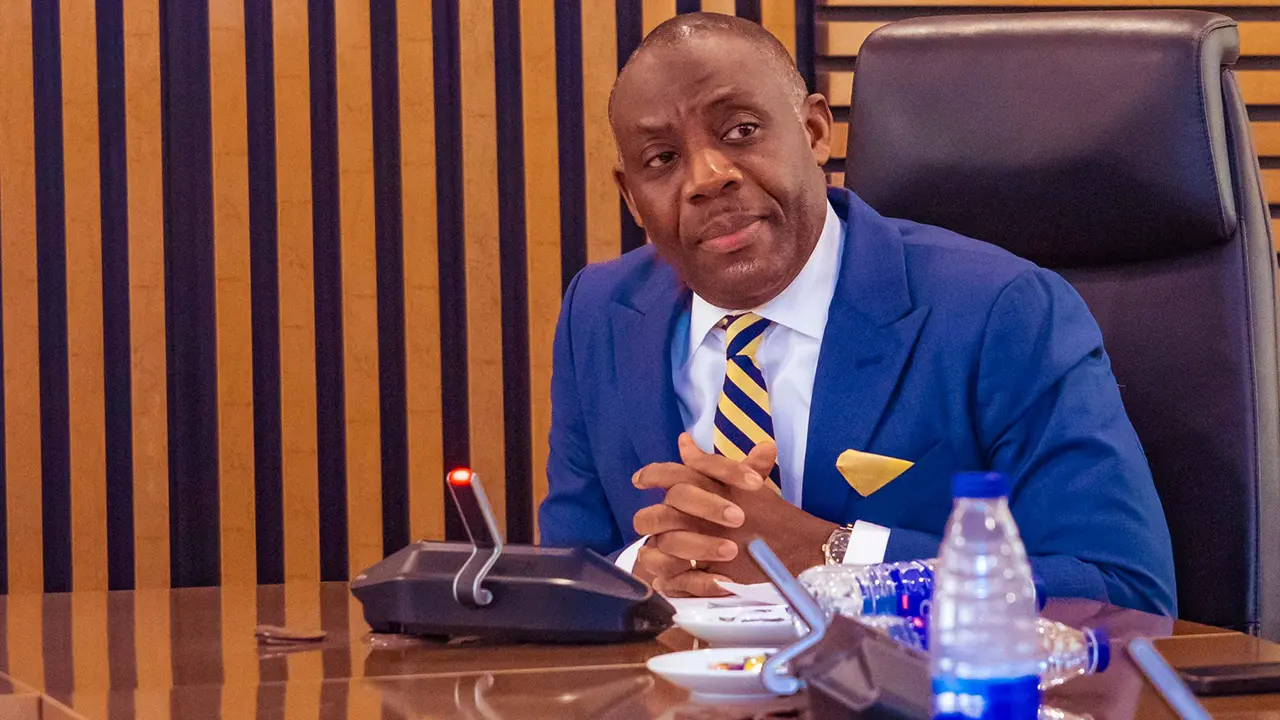
|By Chinwendu Nwani
The Federal Government has launched a nationwide digital infrastructure to strengthen the integrity of academic records and curb certificate fraud across post-secondary and tertiary institutions in Nigeria.
The Minister of Education, Maruf Alausa, announced the initiative on Thursday during a national capacity-building programme for school representatives organised to drive the implementation of the Nigeria Education Repository and Data Bank (NERD).
Alausa said the platform digitises and securely stores academic records, creating a centralised system for verifying students’ credentials across higher institutions in the country.
According to the minister, the initiative forms part of broader education reforms under the administration of Bola Ahmed Tinubu aimed at improving transparency, accountability, and reliability in education data management.
He explained that the digital repository will help combat academic fraud while ensuring that academic records remain secure and easily verifiable.
“Within four months of implementation, the system has preserved nearly 100,000 digital student submissions, integrated over 250 tertiary institutions, and enrolled more than 133,000 students and 6,800 lecturers on the platform,” Alausa said.
The minister also disclosed that the repository would play a crucial role in tackling certificate fraud, revealing that recent investigations uncovered cases of fake foreign credentials obtained from unaccredited institutions.
He added that participation in the NERD platform would soon become a requirement for graduates seeking participation or exemption from the National Youth Service Corps programme.
The Federal Government said the initiative forms part of efforts to build a transparent education system where academic records can be digitally verified and recognised globally.
Meanwhile, the Chief Executive Officer of NERD, Tunji Ariyomo, stressed the importance of preserving Nigeria’s academic knowledge base, warning that weak documentation had historically created significant gaps in the country’s intellectual development.
Ariyomo explained that the platform captures academic projects, theses, and dissertations alongside details of supervisors, co-supervisors, and departmental heads to improve accountability and strengthen academic supervision.
He expressed concern that valuable research outputs and academic records in Nigeria have often been lost due to poor preservation systems.
“Our knowledge is not able to climb on the shoulders of previous knowledge. So there is a gap,” Ariyomo said.
He added that nations that successfully preserve and validate knowledge over time are often those leading global development and innovation.

