
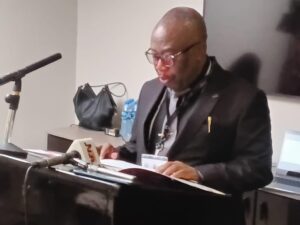
The Senate has called for greater transparency, accountability, and compliance in Nigeria’s public procurement system to ensure that every naira spent by government translates into tangible development and improved public services for citizens.
Chairman of the Senate Committee on Public Procurement, Senator Olajide Ipinsagba (Ondo North), made the call at a two-day retreat organised by LeadBold Resource Consulting with the theme, “Global Regulations and International Best Practices for Monitoring and Compliance in Public Procurement,” held at Fraser Suites, Abuja.
Senator Ipinsagba described public procurement as a vital mechanism for transforming government policies into real infrastructure, services, and sustainable national development.
“Public procurement is not merely a technical process—it is the engine that drives good governance,” he said. “The Committee remains committed to reforms that make Nigeria’s procurement practices a model of transparency, not just in Africa but across the world.”
He highlighted the achievements made since the enactment of the **Public Procurement Act of 2007 and the establishment of the Bureau of Public Procurement (BPP), noting that while progress had been recorded, there was a need for further reforms to align Nigeria’s system with global standards.
The lawmaker identified key reform areas, including the digitisation of procurement processes, enhanced compliance monitoring, capacity building for procurement officers, and broader public participation through open contracting standards.
According to Ipinsagba, public spending must reflect value for money in line with President Bola Ahmed Tinubu’s Renewed Hope Agenda, adding that the Committee will intensify oversight to ensure efficiency and integrity across Ministries, Departments, and Agencies (MDAs).
“Let the work that Mr. President is doing and the money being spent translate into good roads, better healthcare, improved education, and modern infrastructure. That is what we stand for,” he said.
He also warned that the Committee would not hesitate to recommend the suspension of procurement activities in MDAs that fail to properly account for previously allocated funds.
“If they cannot account for the money already spent, there is no need for them to spend more. Accountability must precede new spending as required by the Public Procurement Act of 2007,” Ipinsagba stated.
In his remarks, Barrister Kelechi Kingsley, Chief Executive Officer of LeadBold Resource Consulting, said the retreat was organised to strengthen the institutional capacity of the Senate Committee in promoting transparency and compliance in public procurement.
“This retreat is a leadership engagement aimed at empowering legislators with the tools to enhance oversight and accountability,” Kingsley said. “Strong institutions are built by empowered leaders who are informed, ethical, and courageous enough to demand excellence.”
Also speaking, Senator Diket Plang (Plateau Central) commended the initiative and called for regular training sessions to equip lawmakers with deeper understanding of the Procurement Act and their oversight responsibilities.
“You cannot carry out effective oversight if you don’t understand what the law says. This retreat has exposed knowledge gaps and reinforced the need for continuous capacity building,” he noted.
The retreat featured technical sessions on global procurement frameworks, digital transformation, and compliance monitoring, with experts stressing the importance of aligning Nigeria’s procurement system with international standards to curb corruption and enhance efficiency in public spending.
About Author


