

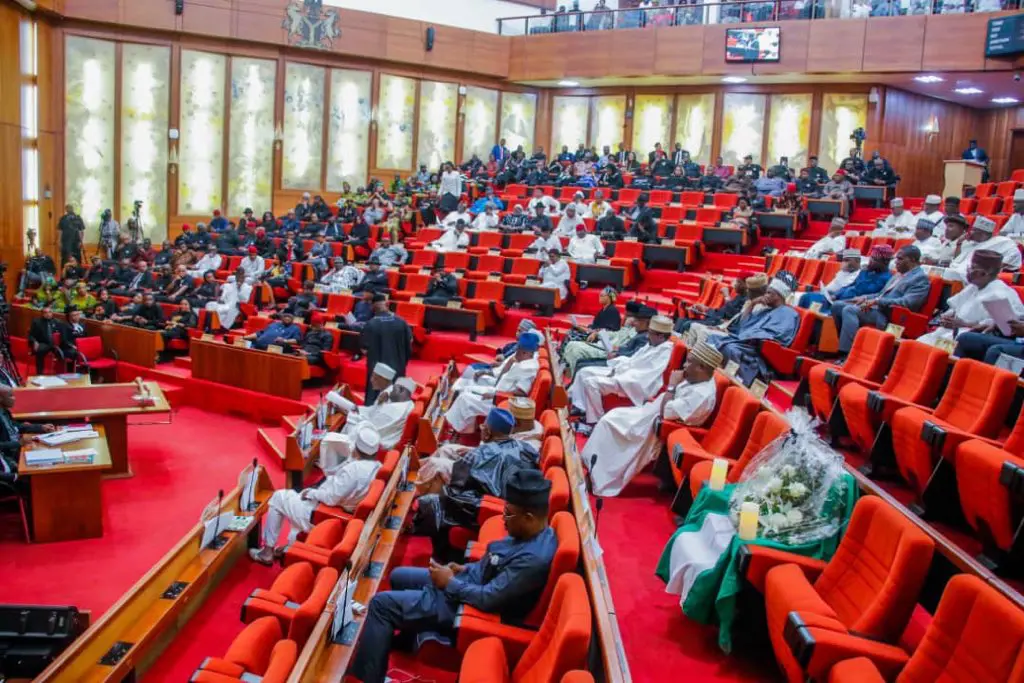
By Babatunji Wusu| The Senate has intensified efforts to establish state police, announcing that the constitutional amendment required to decentralise policing will receive priority attention this week.
Senate Leader Opeyemi Bamidele disclosed this in Abuja on Monday, saying the National Assembly is committed to fast-tracking changes to the 1999 Constitution as part of broader efforts to tackle Nigeria’s worsening security challenges.
According to Bamidele, the push for state police has gained strong support from President Bola Ahmed Tinubu, state governors and other major stakeholders, reflecting what he described as a growing national consensus on the need to reform the country’s policing structure.
The renewed move comes amid increasing concerns over insecurity, including terrorism, banditry, kidnapping and communal violence across several parts of the country. Recent incidents involving attacks on communities, security personnel and the abduction of pupils and teachers have further strengthened calls for decentralised policing.
Nigeria currently operates a centralised police system under Section 214(1) of the Constitution. However, Bamidele said many stakeholders now believe that creating state police formations would improve local security responses and enhance intelligence gathering at the grassroots level.
He revealed that consultations involving the Presidency, the National Assembly, the Attorney-General’s office, security agencies, constitutional review committees and other stakeholders have reached an advanced stage, paving the way for legislative action.
To speed up the process, lawmakers plan to separate the state police amendment from other constitutional review proposals and consider it independently. If approved by the National Assembly, the bill will be transmitted to the 36 state Houses of Assembly for ratification.
Under Nigeria’s constitutional amendment procedure, the proposal must secure the support of at least two-thirds of both chambers of the National Assembly and gain approval from no fewer than 24 state assemblies before it can receive presidential assent.
Bamidele expressed optimism that the amendment would progress smoothly, citing widespread backing from both federal and state authorities.

