

|By Babatunji Wusu
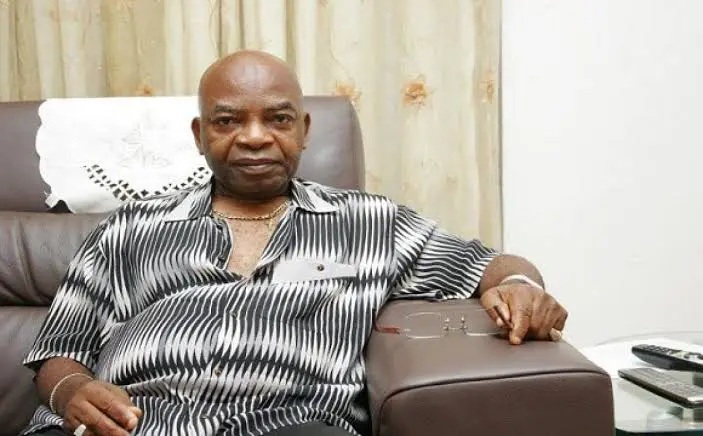
Senegalese authorities have revoked the offshore exploration license held by Atlas Oranto Petroleum, a Nigerian-owned oil and gas company founded by billionaire Arthur Eze, signalling a tougher regulatory posture against inactive petroleum assets.
The decision, first reported by Business Insider, aligns with Senegal’s renewed push to tighten oversight of its energy sector and fast-track the commercial development of its hydrocarbon resources.
The Ministry of Energy and Petroleum withdrew the Cayar Offshore Shallow exploration license after concluding that Atlas Oranto failed to meet critical operational and financial obligations tied to the block. Officials cited the company’s inability to provide mandatory bank guarantees and its limited exploration activity since the license was awarded in 2008, despite repeated deadline extensions.
The offshore acreage, covering roughly 3,600 square kilometres north of the Dakar peninsula, is considered oil-prospective but remains largely underexplored. Although seismic surveys identified several potential leads, Atlas Oranto did not drill a single exploratory well throughout the duration of the license.
Under the supervision of Energy and Petroleum Minister Birame Souleye Diop, the ministry formally terminated the license in September 2025, citing persistent breaches of contractual and financial terms. Industry sources familiar with the matter confirmed in early 2026 that there was no record of meaningful seismic advancement or drilling activity on the block.
Following the revocation, the Senegalese government reclaimed control of the acreage, describing the move as part of a broader reform agenda under President Bassirou Diomaye Faye aimed at enforcing compliance and applying stricter screening criteria to petroleum license holders.
The action places Senegal among a growing list of African oil-producing nations reassessing legacy exploration agreements signed during earlier licensing rounds. Across the continent, governments are under increasing pressure to ensure that oil and gas rights translate into concrete investment, drilling activity, and eventual production, rather than remaining idle for speculative purposes.
The development has also intensified scrutiny of Atlas Oranto’s regional operations. In Liberia, the company secured four offshore production-sharing contracts in September 2025 for Blocks LB-15, LB-16, LB-22, and LB-24 in the Liberian Basin. The agreements reportedly included signature bonuses estimated between $12 million and $15 million, with proposed investments exceeding $200 million per block.
Liberian authorities described those deals as part of efforts to revive a petroleum sector that has recorded minimal activity for more than a decade. Atlas Oranto, however, has not issued an official response to Senegal’s decision as of the time of filing this report.

