

.
A Literary Tribute to Character, Public Service and the Promise of Leadership
By Ibrahim Sani, BSc
A good name is a treasure, a reputation that titles alone cannot establish, and a legacy that time can preserve long after the privileges of office have faded. While political power may introduce a man to the public, it is his service, conduct and contributions that determine how deeply his name becomes rooted in the hearts of the people.
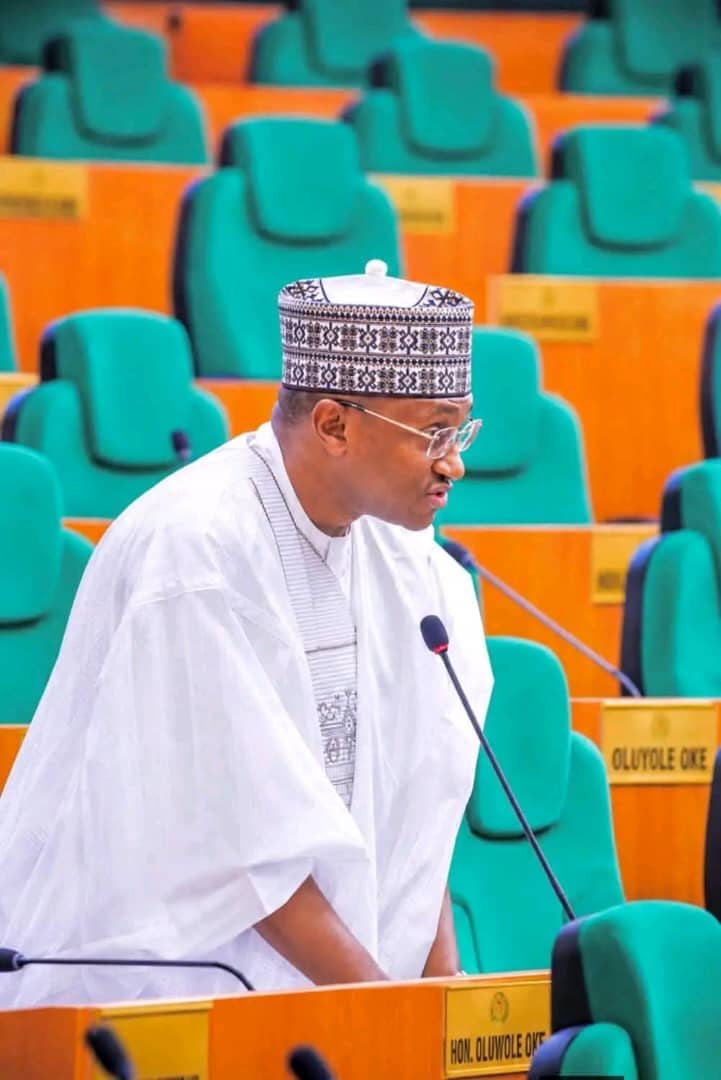
Honourable Sadiq Ango Abdullahi, Member Representing Sabon Gari Federal Constituency in the House of Representatives and Deputy Chairman of the House Committee on the Federal Roads Maintenance Agency (FERMA), occupies a notable place in the political and developmental affairs of his constituency.
A proud son of Professor Ango Abdullahi, the distinguished academic and former Vice-Chancellor of Ahmadu Bello University, Zaria, he comes from a family associated with scholarship, intellectual engagement and public affairs. Yet, beyond the distinction of his heritage lies the responsibility of building an identity through personal effort, public engagement and legislative service.
For a distinguished heritage may open the first chapter of a man’s story, but only his own deeds can determine the quality of the chapters that follow.
His political journey reflects persistence and determination. Following unsuccessful electoral attempts in 2015 and 2019, he secured victory in the 2023 general election with 33,616 votes, defeating the incumbent, Mohammed Garba Datti, who received 31,737 votes.
That victory marked a significant milestone in his political career and ushered him into the 10th National Assembly.
His journey offers a valuable lesson about perseverance: the road to public service is not always straight, and temporary setbacks need not become permanent barriers to ambition.
The measure of determination is not the absence of obstacles, but the courage to continue pursuing a worthy purpose when the journey becomes difficult.
Among the achievements reported in July 2024 was educational assistance benefiting more than 680 students in higher institutions of learning.
This initiative highlights an important dimension of constituency engagement: supporting the educational aspirations of young people whose ambitions may be constrained by financial difficulties.
Behind every student is a story of sacrifice, expectation and hope. Behind every educational opportunity is the possibility of a professional career, a stronger family and a more productive society.
For a student struggling to meet educational expenses, assistance can mean the difference between continuing an academic programme and abandoning a cherished dream. For parents, it can provide relief from financial pressure. For the community, it can help prepare a generation equipped with the knowledge and skills required for future responsibilities.
Education is the bridge between the limitations of today and the possibilities of tomorrow; every student helped across that bridge carries a portion of society’s future.
The reported support for more than 680 students therefore provides a meaningful indicator of the initiative’s reach. Although the total expenditure was not specified in the reports reviewed, the educational dimension of the intervention deserves recognition within the broader discussion of his constituency activities.
The lasting value of educational assistance will ultimately be reflected in the opportunities it creates and the progress beneficiaries achieve.
On 2 October 2024, a free medical outreach was reportedly conducted at the Samaru Health Care facility in Sabon Gari, in collaboration with the Small and Medium Enterprises Development Agency of Nigeria (SMEDAN).
According to the report cited in the source material, 200 residents benefited from the first phase of the programme. The reported breakdown included 30 patients who underwent eye surgeries for cataracts and pterygium, while 170 other residents received treatment for various health conditions.
The programme also featured health education covering hygiene, maternal health and malaria prevention.
Healthcare interventions carry a particular human significance because their impact is felt in the most personal aspects of life: physical well-being, independence, family responsibilities and the ability to participate fully in society.
For a person whose sight has been impaired, successful treatment can restore more than vision. It can renew confidence, improve mobility and open the door to greater independence.
The true value of healthcare is not merely found in the number of patients attended to, but in the relief provided, the suffering reduced and the dignity preserved.
The reported 200 beneficiaries and 30 eye surgeries offer measurable indications of the programme’s reach. A complete financial assessment would require verified records of medical supplies, professional services, surgical procedures and operational expenditure.
Nevertheless, the reported intervention illustrates the importance of bringing medical services closer to people who might otherwise struggle to obtain timely treatment.
In May 2025, reports documented the handover of two blocks of classrooms at Shika Dam in Zabi Ward, Sabon Gari Local Government Area, to the Kaduna State Universal Basic Education Board.
A classroom is far more than a collection of walls, windows and roofing sheets. It is a place where curiosity develops into knowledge, where discipline shapes character and where young minds begin to discover their potential.
Every properly maintained classroom provides an environment in which teachers can teach more effectively and children can pursue their educational aspirations.
A classroom built today can become the birthplace of an idea that transforms tomorrow; the value of education infrastructure is measured not only by its structure, but by the futures it helps to shape.
The reported handover of the classroom blocks represents a contribution to the physical learning environment in Sabon Gari. Their long-term effectiveness will depend on maintenance, appropriate learning materials, adequate staffing and continued attention to educational standards.
For the people of the constituency, the enduring significance of such facilities lies in their continued usefulness to pupils, teachers and the wider educational community.
In September 2023, a report by Blueprint Newspapers documented the distribution of a trailer-load of food items to vulnerable families in Sabon Gari.
The intervention was described as an effort to cushion the economic difficulties facing households following the removal of the petrol subsidy and the resulting pressures on living costs.
The report attributed the assistance to personal resources and contributions from friends and associates rather than constituency project allocations.
In February 2026, another report described a Ramadan food distribution involving bags of rice, millet, sugar, milk and spaghetti. The initiative was reported to be worth millions of naira, although an exact, independently verified total was not provided.
These programmes reflect the role that community assistance can play when families experience financial pressure, particularly during periods of heightened household expenditure.
For a vulnerable family, food assistance can provide immediate relief and help meet essential needs. Such interventions do not eliminate the structural causes of economic hardship, but they can offer practical support to people facing difficult circumstances.
Compassion becomes meaningful when it moves beyond words and reaches the person whose burden has become too heavy to carry alone.
The reported food distributions form part of the public record of his constituency engagement. A more comprehensive assessment would require details of the quantities distributed, the number of beneficiaries, the funding sources and the total expenditure.
Equally important is the opportunity to complement immediate relief with sustainable measures that strengthen household incomes and expand access to economic opportunities.
Reports published in July 2024 also highlighted financial assistance and practical support for young people and vulnerable women, alongside efforts to connect educated constituents with employment opportunities in ministries and government agencies.
The precise number of empowerment beneficiaries and the cumulative financial value of these interventions were not established in the reports reviewed.
Nevertheless, empowerment remains an important consideration in assessing the broader objectives of public service.
A financial grant may help someone overcome an immediate challenge. Vocational tools may provide the foundation for a small enterprise. Access to employment may enable an individual to support a family, develop professional skills and contribute to the local economy.
The greatest value of assistance lies not only in what it provides today, but in the independence, confidence and opportunities it helps create for tomorrow.
For constituency initiatives to produce lasting benefits, their assessment should extend beyond the distribution of resources to examine the progress of beneficiaries, the sustainability of their activities and the opportunities created over time.
This is how immediate support can become a foundation for long-term development.
As Deputy Chairman of the House Committee on FERMA, Honourable Sadiq Ango Abdullahi participates in legislative and oversight responsibilities relating to federal road maintenance.
Roads are essential to economic activity and social development. They connect farmers to markets, traders to customers, students to schools and patients to healthcare facilities.
Well-maintained roads can reduce travel difficulties, improve safety, support commerce and strengthen connections between communities.
His committee position provides an institutional platform for engaging with issues concerning federal road maintenance and infrastructure oversight.
However, the value of this responsibility must be distinguished from the financial cost of individual constituency projects. Official allocations, agency funding, contracts and actual expenditure must be established through the relevant records before precise monetary claims can be made.
Public office finds its greatest meaning when authority is translated into responsibility, responsibility into action, and action into benefits that citizens can recognise in their daily lives.
Legislative service is therefore about more than occupying a seat in the Green Chamber. It also involves examining public policies, participating in legislative deliberations, exercising appropriate oversight and contributing to discussions about the needs of the people.
The enduring significance of this responsibility lies in the quality of the work performed and the results that can be demonstrated.
In July 2024, reports stated that a constitutional amendment bill proposing the renaming of Sabon Gari Local Government Area as Zaria North Local Government Area, and Zaria Local Government Area as Zaria South Local Government Area, passed second reading in the House of Representatives.
The bill was sponsored by Speaker Abbas Tajudeen and co-sponsored by Honourable Sadiq Ango Abdullahi, who reportedly led the debate on the proposal.
The episode represents a documented aspect of his participation in legislative discussions concerning the historical, cultural and administrative identity of communities in Kaduna State.
Legislative advocacy gives elected representatives an opportunity to bring community concerns into national discussions and examine proposals that may affect the organisation and identity of their constituencies.
It is important to distinguish the passage of a bill at second reading from its final enactment. Nevertheless, participation in such proceedings forms part of the legislative record through which a representative’s engagement can be assessed.
A representative’s voice becomes consequential when the concerns of the community find expression in the institutions where public decisions are debated and made.
A July 2024 commentary published by THISDAY and Blueprint portrayed Honourable Sadiq Ango Abdullahi as accessible to constituents, describing interactions with residents who approached him with their concerns and requests for assistance.
Such accounts offer insight into how his relationship with the electorate has been presented in public commentary. They should, however, be understood as reported assessments rather than a comprehensive survey of public opinion.
In a representative democracy, citizens evaluate their elected officials through different experiences. Some may emphasise accessibility and personal assistance; others may focus on infrastructure, educational opportunities, legislative participation, employment support or the resolution of community concerns.
These expectations are part of the continuing relationship between elected representatives and the people who entrust them with public responsibility.
A representative’s office is not merely a destination for petitions; it is a meeting point between the people’s expectations and the responsibility to seek practical solutions.
Accessibility is most meaningful when it is accompanied by listening, follow-through and a willingness to address concerns within the limits of available resources and official responsibilities.
For any elected representative, public confidence is sustained through continued engagement, transparent communication and demonstrable responsiveness to constituents.
The published reports examined for this tribute provide several measurable indicators of Honourable Sadiq Ango Abdullahi’s political journey and reported constituency activities:
– 33,616 votes secured in the 2023 general election.
– More than 680 students reportedly supported through educational assistance.
– 200 residents reportedly reached by the October 2024 medical outreach.
– 30 eye surgeries reported during the medical intervention.
– 170 additional patients reportedly treated for other health conditions.
– Two blocks of classrooms reported handed over to SUBEB in May 2025.
– One trailer-load of food items reported distributed in September 2023.
– Millions of naira reportedly involved in certain educational and Ramadan assistance programmes, without a verified cumulative monetary total.
– One constitutional amendment bill reportedly co-sponsored and debated in the House, which passed second reading in July 2024.
Recognising these distinctions strengthens the credibility of any tribute because an honourable public record deserves to be presented with care and accuracy.
Figures give an account of what has been reported; evidence gives those figures their weight, and measurable outcomes reveal their significance to the people.
In public life, a name is more than a label. It represents the accumulated impression of a person’s conduct, responsibilities, achievements and relationship with the community.
Honourable Sadiq Ango Abdullahi’s family background provides an important part of his story, while his electoral victory and legislative responsibilities mark significant stages in his public journey. The educational, medical, infrastructure, food-support and empowerment initiatives documented in published reports provide further material for assessing his constituency engagement.
Yet a legacy is never a finished document. It continues to develop as projects are maintained, promises are pursued, public concerns are addressed and new opportunities emerge.
Educational support becomes more consequential when students complete their studies and apply their knowledge. Medical outreach gains lasting significance when people receive appropriate care. Classroom infrastructure fulfils its purpose when children continue to learn in a suitable environment. Empowerment becomes more meaningful when it creates sustainable opportunities.
These are the standards through which reported interventions can be connected to enduring public benefit.
A lasting legacy is not built in a single season of applause; it is shaped over time through consistent responsibility, useful contributions and a commitment to making public service matter.
The task before every public representative is therefore both an honour and a continuing obligation: to preserve public trust, improve the quality of representation and ensure that the needs of the people remain central to the work of government.
Honourable Sadiq Ango Abdullahi’s journey offers a narrative of political persistence, legislative participation and reported constituency interventions.
His heritage provides a distinguished historical backdrop, his electoral victory marks an important political milestone, and the initiatives documented in published reports form part of the record through which his public engagement can be understood.
But the future remains the most important chapter of every public career.
There will always be students seeking educational opportunities, families confronting economic challenges, communities requiring better infrastructure and young people hoping to build productive futures. These continuing needs provide elected representatives with both a responsibility and an opportunity to deepen their contribution to society.
The most meaningful tribute to public service is one that recognises achievements while encouraging continuity, accountability and greater impact.
For a title may introduce a man, but his work gives people a reason to remember him; a good name earns respect, good work gives it substance, and a lasting legacy allows its value to endure beyond the years of political office.
Honourable Sadiq Ango Abdullahi’s public journey continues to unfold. The enduring significance of that journey will be found in the quality of his representation, the sustainability of his constituency interventions and the extent to which his work contributes to the aspirations of the people of Sabon Gari.
May the years ahead bring further opportunities for constructive engagement, measurable development and meaningful service to the community.
HONOURABLE SADIQ ANGO ABDULLAHI
GOOD NAME. GOOD WORK. LASTING LEGACY.

