

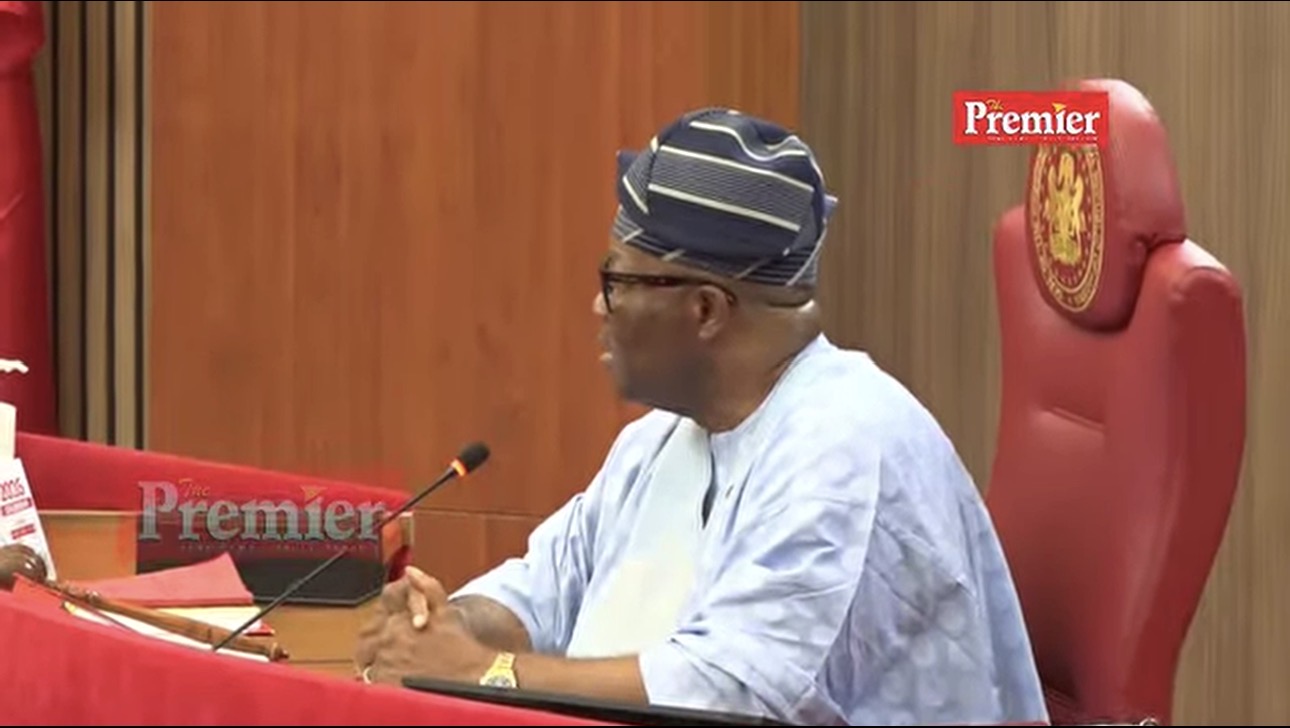
Senate President Godswill Akpabio has said Nigeria may establish state police in the coming weeks, disclosing that about 30 state Houses of Assembly have endorsed the proposed constitutional amendment to introduce a decentralised policing system in the country.
Akpabio made the disclosure when members of the Arewa Revival Project, a northern youth organisation with membership across the 19 northern states, visited him at his office in Abuja on Wednesday.
According to the Senate President, the growing support for the proposed amendment indicates that the process of establishing state police is nearing completion, raising the prospect of a major change in Nigeria’s policing structure.
He expressed confidence that the country could adopt a dual policing system comprising federal and state police services, which he said would complement existing security structures and strengthen efforts to address insecurity.
Akpabio said the proposed arrangement would bring policing closer to the people, allowing security agencies to respond more effectively to threats within their respective communities.
He stated that Nigeria could begin to witness the implementation of state policing within a short period, noting that the constitutional amendment had received substantial support from state legislatures.
“As I speak with you now, for the first time in the history of Nigeria, it may not take us a month before we have a state police system, a decentralised policing in the country, because about 30 states have endorsed the amendment to the Nigerian constitution to bring about a state police system, which will further increase the security of the nation,” Akpabio said.
The proposed reform is part of ongoing efforts to restructure the country’s policing framework amid persistent security challenges, including kidnapping, banditry, terrorism and other criminal activities.
Under the proposed arrangement, the existing national policing structure would be replaced by a dual system consisting of a Federal Police Service and State Police Services, with constitutional and legislative provisions governing their operations.
The development comes as the Presidential Working Group on the National Policing Bill, chaired by the Chief of Staff to the President, Femi Gbajabiamila, advances work on the legislation required to establish the new policing framework.
The working group disclosed on October 20 that it had completed the drafting of the National Policing Bill, 2026, alongside 29 consequential amendment bills, and submitted them to the Federal Ministry of Justice for legislative drafting review and validation.
The bills are expected to be returned to the working group after the review for final consideration before presentation to President Bola Tinubu and subsequent transmission to the National Assembly.
On October 23, the working group also announced that 24 State Houses of Assembly had approved the constitutional amendment providing for a dual policing system, meeting the constitutional threshold required for the amendment to proceed to the next stage.
However, the reported number of approvals requires careful distinction: Akpabio cited about 30 states in his remarks, while the working group’s October 23 statement officially confirmed that 24 state assemblies had met the required threshold at that time.
Akpabio further expressed optimism that Nigeria would overcome its security challenges, urging the visiting youth to remain confident in the country’s future.
He also called on them to mobilise support for President Bola Tinubu ahead of the 2027 general election, arguing that continuity would give the administration more time to consolidate its economic and security policies.
The Senate President urged young Nigerians to participate in national development and engage in grassroots mobilisation, while also criticising what he described as paid social media propaganda against the administration.
The proposed state police system remains subject to the completion of the constitutional and legislative processes required to establish its legal framework and operational arrangements.

