

|By Adejumo Adekunle
Abia State Governor, Alex Otti, has urged the National Assembly to adopt a practical, people-focused strategy in reviewing Nigeria’s 1999 Constitution, warning that superficial amendments will not heal the nation’s divisions.
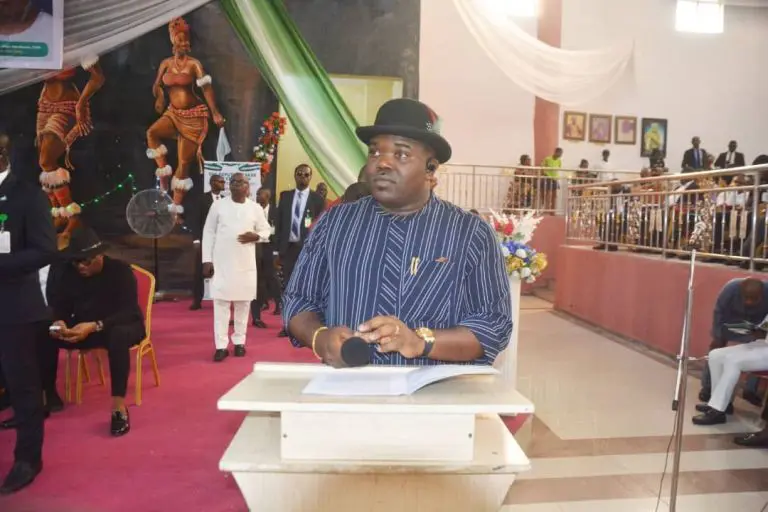
Speaking through his deputy, Ikechukwu Emetu, at the South East Zonal Public Hearing on Constitutional Review held on Saturday, Governor Otti stressed that a legitimate constitution in a pluralistic society like Nigeria must reflect the input of all ethnic, cultural, and religious groups.
“Constitutions are not cast in stone,” he said, “they must evolve with the dynamic aspirations of citizens. A review process that excludes the people cannot produce the unity we desire.”
Governor Otti spotlighted Abia’s inclusive governance style—particularly in resource allocation and decision-making—as a model of grassroots participation. He warned against the creation of new states, citing the heavy financial burden and the risk of bloating Nigeria’s already overstretched bureaucracy.
Backing the push for state police, Otti called for clear structures around recruitment, accountability, and human rights safeguards to avoid abuse of power. He stressed that effective coordination between state and federal agencies will be critical for success.
However, the governor expressed concern over granting full autonomy to local governments, noting that while it aims to deepen democracy, it could instead increase administrative costs and weaken service delivery if not properly structured.
On education, Governor Otti strongly advocated for the constitutional recognition of free and compulsory basic education, urging stakeholders to prioritize quality and financing. He insisted that no reform could be meaningful if it neglected the foundational pillars of national development like education and power.
To underscore the impact of constitutional flexibility, Otti cited Abia’s recent reforms in the power sector. Following constitutional amendments that allowed sub-national participation in electricity, the state established the Abia State Electricity Regulatory Agency (ASERA), and is now exercising shared regulatory oversight with the Nigerian Electricity Regulatory Commission (NERC).
“With these reforms, we have taken control of our energy future. That is what responsive constitutional changes can do,” he said.
Also speaking at the event, Deputy Speaker of the House of Representatives, Benjamin Kalu, described the public hearing as part of “a national conversation” aimed at producing a people-centered constitution that truly mirrors the hopes and values of every Nigerian.

