
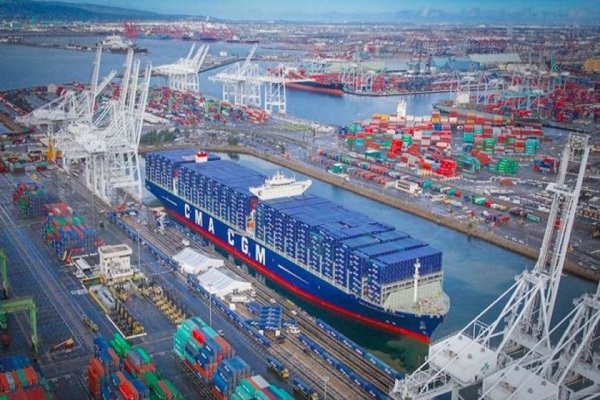
Tinubu Commissions Lekki Deep Sea Port Access Road, Flags Off Key Infrastructure Projects
By peterside Rejoice Eneky
President Bola Ahmed Tinubu, on Thursday, officially commissioned the Lekki Deep Sea Port Access Road in Lagos State, hailing it as a vital investment that will enhance trade, boost agricultural value chains, and deepen regional connectivity across Nigeria.
The event, held in Lagos, drew stakeholders from government, private sector, and logistics industries. Tinubu, speaking at the inauguration ceremony, described the project as a critical component of his administration’s Renewed Hope Agenda, noting that “roads are not just physical structures but economic lifelines that enable job creation, social inclusion, and national integration.”
Constructed under the federal government’s Tax Credit Scheme, the reinforced concrete road links the strategically located Lekki Deep Sea Port to major inland transport networks. The new route is expected to significantly improve cargo movement, reduce turnaround time at the port, and enhance logistics efficiency across West Africa’s busiest economic hub.
“This road is a symbol of our government’s commitment to infrastructure-led growth,” Tinubu said, stressing that improved connectivity will unlock new economic zones and empower Nigerian businesses to compete globally.
In addition to the Lekki Port project, President Tinubu also flagged off Section II of the Lagos-Calabar Coastal Highway and launched work on the 7th Axial Road, signaling his administration’s broader push to accelerate road development nationwide.
Ongoing projects across northern Nigeria, including the Kano–Kongolam Road and the Yakasai–Zalli Road, were also highlighted. Tinubu reaffirmed that these initiatives are designed to bridge regional development gaps and transform Nigeria into a fully integrated economy.
“These roads are vital to unlocking economic opportunities and improving the lives of Nigerians,” he emphasized.
The Lekki Deep Sea Port, widely regarded as one of the most ambitious maritime projects in West Africa, is expected to generate over $200 billion in revenue over the next few decades, according to recent projections by the National Assembly.
The commissioning underscores the government’s renewed focus on infrastructure as a catalyst for long-term economic stability, industrialization, and employment.
About Author


