
By Adekoya Samson, Abuja
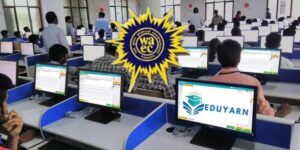
The House of Representatives has called on the Federal Government to suspend the planned introduction of computer-based examinations (CBE) for the 2026 West African Senior School Certificate Examination (WASSCE) conducted by the West African Examinations Council (WAEC), warning that the move could result in mass failure, frustration, and psychological stress for students across Nigeria.
The resolution followed a motion sponsored by Hon. Kelechi Nwosu, who expressed concern over the Ministry of Education’s decision to proceed with the CBE format despite growing opposition from teachers, principals, and education stakeholders—especially in rural areas where most schools lack digital infrastructure.
Lawmakers observed that WAEC examinations are critical to tertiary education entry, requiring students to obtain at least five credits, including English and Mathematics. They recalled that the 2025 WASSCE faced technical disruptions that led to the temporary withholding of results, underscoring the need for adequate preparation before adopting computer-based assessments.
The House noted that the proposed system demands well-equipped computer halls, stable internet connectivity, and reliable electricity—facilities still unavailable in many schools nationwide. It stressed that more than 25,000 schools are expected to participate in the 2026 exams simultaneously, yet most lack computer teachers or experience with digital exams.
In response, the lawmakers urged WAEC and the Federal Ministry of Education to delay implementation for at least three years and consider 2029 or 2030 as a more realistic timeline to allow for nationwide readiness.
They further directed the Ministry of Education, in partnership with state governments, to incorporate in future budgets (2026–2029) provisions for the recruitment of computer science teachers, construction of ICT-compliant halls, internet connectivity, and standby power supply for both public and private schools.
Additionally, the House mandated its Committees on Basic Education, Examination Bodies, Digital and Information Technology, and Labour, Employment and Productivity to engage with key stakeholders in the education and tech sectors and report back within four weeks for further legislative action.
Lawmakers reaffirmed their commitment to ensuring that education reforms are inclusive, equitable, and considerate of Nigeria’s infrastructural realities to prevent policies that could jeopardize students’ future or widen the digital divide.
About Author


